Building Blocks
Subcategories of "Building Blocks"
- Boronic Acids & Boronic Acid Derivatives(5,781 products)
- Chiral Building Blocks(1,242 products)
- Hydrocarbon Building Blocks(6,101 products)
- Organic Building Blocks(61,033 products)
Found 205320 products of "Building Blocks"
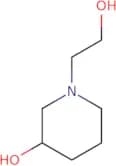
1-(2-Hydroxyethyl)piperidin-3-ol
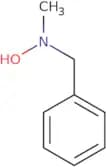
CAS:Versatile small molecule scaffoldFormula:C7H15NO2Purity:Min. 95%Molecular weight:145.2 g/molN-Benzyl-N-methylhydroxylamine
CAS:N-Benzyl-N-methylhydroxylamine is a compound that has been shown to react with carbon disulfide, forming an adduct. The structure of the adduct has been reinvestigated by electron spin resonance spectroscopy and magnetic resonance spectroscopy. The NMR spectrum of the adduct showed resonances at δ 1.05 (s, 6H), δ 2.50 (s, 3H), δ 4.78 (s, 3H) and δ 7.80 ppm (t, J = 9 Hz, 2H). The resonance spectrum of the adduct showed resonances at δ 1.05 ppm and δ 4.78 ppm. When reacted with carbon disulfide in benzene solution, the NMR spectrum of the product was observed to have resonances at δ 1.05 ppm and δ 4.78 ppm, which are similar to those observed in the resonance spectrum of the adduct when reactedFormula:C8H11NOPurity:Min. 95%Molecular weight:137.2 g/mol(2,4-Dimethoxyphenyl)(phenyl)methanone
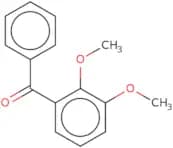
CAS:2,4-Dimethoxyphenyl)(phenyl)methanone (DMPM) is a quencher of light with an absorber capacity of approximately 2.5%. It is used in vitro as a marker for cationic polymerization and UV absorption. DMPM has also been shown to inhibit the mitochondrial membrane potential, which may be due to its ability to induce pro-apoptotic proteins. DMPM binds to fatty acids and can be extracted using dispersive solid-phase extraction, which allows for its detection by gas chromatography. This drug has been shown to react with radiation and produce reactive oxygen species that may lead to cellular damage.Formula:C15H14O3Purity:Min. 95%Molecular weight:242.3 g/mol2-(2,6-Dichlorophenoxymethyl)oxirane
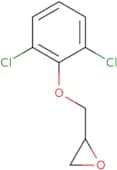
CAS:Versatile small molecule scaffoldFormula:C9H8Cl2O2Purity:Min. 95%Molecular weight:219.06 g/mol3-Fluoro-4-nitrobenzamide
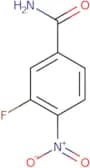
CAS:Versatile small molecule scaffoldFormula:C7H5FN2O3Purity:Min. 95%Molecular weight:184.13 g/mol1-Methyl-2-phenylindole
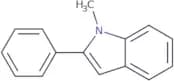
CAS:1-Methyl-2-phenylindole (1MPI) is an adenine nucleotide analog, which has been shown to cause oxidative injury in the cervical cancer cells. The hydrochloric acid present in 1MPI reacts with the hydroxyl group on the indole ring to form a reactive species that can damage cellular macromolecules and DNA. 1MPI also causes mitochondrial dysfunction and reduced ATP levels, leading to cell death. It has been shown to be effective against diabetic neuropathy and reduce the production of malondialdehyde in tissue culture experiments. This drug is also capable of inducing apoptosis by releasing nitrous oxide and activating caspases.
Formula:C15H13NPurity:Min. 95%Molecular weight:207.27 g/molPhenylethyl Methyl Ether
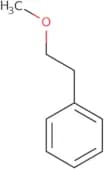
CAS:Phenylethyl methyl ether is an organic compound that is commonly used as a cross-linking agent for the preparation of polymers. It reacts with an unsaturated polymer to form a covalent bond, which improves the polymer's mechanical properties. Phenylethyl methyl ether also has acidic properties and can react with chloride ions to produce chloride salts, such as phenyl etherates, which can be detected using spectroscopy. The phenyl groups are alicyclic, whereas the product is particle in shape. Phenylethyl methyl ether is structurally similar to terpinen-4-ol and has been shown to have anti-inflammatory activities in mice. This compound forms a particle and has been shown to have anti-inflammatory activities in mice.Formula:C9H12OPurity:Min. 95%Molecular weight:136.19 g/molMethyl 2-methoxy-2-phenylacetate
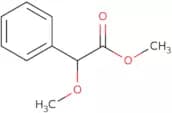
CAS:Methyl 2-methoxy-2-phenylacetate is a tautomer of the flavin mononucleotide. It has been shown to have mechanistic and metabolic properties that are similar to those of other flavins. Methyl 2-methoxy-2-phenylacetate can be obtained by UV irradiation of methyl 2,4-dimethoxyphenylacetate or by irradiating methyl 2,4,6-trimethoxyphenylacetate with UV light. This compound can be used as a flavin analogue for the study of flavin compounds in nature. Methyl 2-methoxy-2-phenylacetate was also used in a method to synthesize carbanions by reacting with alkoxycarbonyl groups.Formula:C10H12O3Purity:Min. 95%Molecular weight:180.2 g/molEmbramine
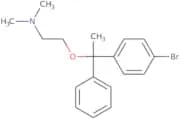
CAS:Controlled ProductEmbramine is a drug that belongs to the group of maleate salts and is used in the treatment of idiopathic urticaria. It has been shown to inhibit nitrite levels in the body and reduce inflammation by inhibiting fatty acid release from cells. The drug has also been found to have a general inhibitory effect on the release of histamine, leukotrienes, and prostaglandins that are associated with allergic reactions. Embramine has also been shown to have antioxidative properties, which may be due to its aldehyde groups.Formula:C18H22BrNOPurity:Min. 95%Molecular weight:348.28 g/mol3,4-Dihydroxy-5-methyl-2,5-dihydrofuran-2-one
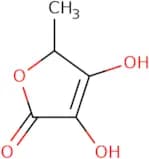
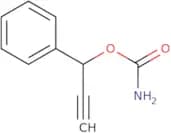
CAS:3,4-Dihydroxy-5-methyl-2,5-dihydrofuran-2-one is a chemical compound that has a colorless crystal appearance. It is an oxidative and nonoxidative compound with the chemical formula C8H10O3. The chromatogram shows the overlap of different compounds which are separated by their colored bands. This overlapped banding pattern indicates the presence of 3,4-dihydroxy-5-methyl-2,5-dihydrofuran-2one in the mixture.Formula:C5H6O4Purity:Min. 95%Molecular weight:130.1 g/mol1-Phenylprop-2-yn-1-yl carbamate
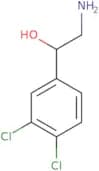
CAS:1-Phenylprop-2-yn-1-yl carbamate is an insoluble compound that can be used as a diluent for therapeutic proteins. It has no known adverse effects on humans and it is not known to be carcinogenic. 1-Phenylprop-2-yn-1-yl carbamate inhibits inflammatory bowel disease by inhibiting the release of inflammatory cytokines, such as TNFα and ILβ, from activated macrophages. This drug is also effective in treating bowel disease caused by implanting bacteria, such as Salmonella enterica serovar Typhi and Shigella sonnei. The mechanism of action of 1-phenylpropan-2-ynyl carbamate is unclear but may be due to the inhibition of bacterial biosynthesis or the reconstitution of the bowel lining cells.Formula:C10H9NO2Purity:Min. 95%Molecular weight:175.18 g/mol2-Amino-1-(3,4-dichloro-phenyl)-ethanol
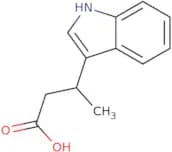
CAS:2-Amino-1-(3,4-dichloro-phenyl)-ethanol is a triazine that binds to the active site of senescent and increases the rate of senescent in vitro. 2-Amino-1-(3,4-dichloro-phenyl)-ethanol has been shown to be effective at reducing hepatic steatosis in mice. The redox potentials of 2-amino-1-(3,4-dichloro-phenyl)-ethanol are -0.14 V vs NHE (negative hydrogen electrode) and -0.92 V vs Ag/AgCl (silver chloride). The chelate ring of 2-amino-1-(3,4-dichloro-phenyl)-ethanol contains eight atoms: two nitrogen atoms, two carbon atoms, two oxygen atoms, and two chlorine atoms. It is a diphosphine with a transfer reaction mechanism that isFormula:C8H9Cl2NOPurity:Min. 95%Molecular weight:206.07 g/mol3-(1H-Indol-3-yl)butanoic acid
CAS:3-(1H-Indol-3-yl)butanoic acid is an antibiotic that inhibits the activity of lipases and other enzymes that are involved in the digestion of fats. It is also an enantiomerically pure product, which means that it has a single chiral center and only one stereoisomer is present in the compound. 3-(1H-Indol-3-yl)butanoic acid has been shown to inhibit the growth of pseudomonas fluorescens, which is a bacterium that causes infections in humans. The enzyme hydrolysis of this antibiotic can be done by either microorganisms or enzymes from human cells.
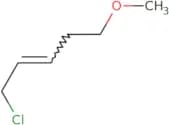
Formula:C12H13NO2Purity:Min. 95%Molecular weight:203.24 g/mol1-Chloro-5-methoxy-2-pentene
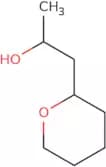
CAS:Versatile small molecule scaffoldFormula:C6H11ClOPurity:Min. 95%Molecular weight:134.6 g/mol1-(Oxan-2-yl)propan-2-ol
CAS:Versatile small molecule scaffoldFormula:C8H16O2Purity:Min. 95%Molecular weight:144.21 g/mol2-[4-(Ethylsulfanyl)phenyl]acetic acid
CAS:Versatile small molecule scaffold
Formula:C10H12O2SPurity:Min. 95%Molecular weight:196.27 g/mol2-[4-(Propan-2-ylsulfanyl)phenyl]acetic acid
CAS:Versatile small molecule scaffoldFormula:C11H14O2SPurity:Min. 95%Molecular weight:210.29 g/mol1-[4-(Ethylsulfanyl)phenyl]ethan-1-one
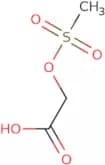
CAS:Versatile small molecule scaffoldFormula:C10H12OSPurity:Min. 95%Molecular weight:180.27 g/mol2-(Methanesulfonyloxy)acetic acid
CAS:2-Methanesulfonyloxyacetic acid (MSAA) is a nitrosated compound that is used in the food industry as a preservative. It has been shown to inhibit tumor growth by inhibiting the synthesis of DNA and RNA, as well as protein synthesis. MSAA also inhibits the production of dehydrogenase in thymus cells, which has been shown to be related to cancer development. The mechanism of this inhibition is not yet clear, but it may be due to an interaction with diazoacetate or imidazole. MSAA also inhibits catalysis by anion, which can be reinterpreted to mean that it catalyzes anion.
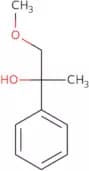
Formula:C3H6O5SPurity:Min. 95%Molecular weight:154.14 g/mol1-Methoxy-2-phenylpropan-2-ol
CAS:Versatile small molecule scaffold
Formula:C10H14O2Purity:Min. 95%Molecular weight:166.22 g/mol

![2-[4-(Ethylsulfanyl)phenyl]acetic acid](/_next/image/?url=https%3A%2Fstatic.cymitquimica.com%2Fproducts%2F3D%2Fthumb-webp%2FDAA58358.webp&w=3840&q=75)
![2-[4-(Propan-2-ylsulfanyl)phenyl]acetic acid](/_next/image/?url=https%3A%2Fstatic.cymitquimica.com%2Fproducts%2F3D%2Fthumb-webp%2FDAA58360.webp&w=3840&q=75)
![1-[4-(Ethylsulfanyl)phenyl]ethan-1-one](/_next/image/?url=https%3A%2Fstatic.cymitquimica.com%2Fproducts%2F3D%2Fthumb-webp%2FDAA58573.webp&w=3840&q=75)