Building Blocks
Subcategories of "Building Blocks"
- Boronic Acids & Boronic Acid Derivatives(5,781 products)
- Chiral Building Blocks(1,242 products)
- Hydrocarbon Building Blocks(6,101 products)
- Organic Building Blocks(61,038 products)
Found 205338 products of "Building Blocks"
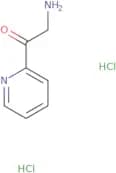
2-(2-Aminoacetyl)pyridine Dihydrochloride
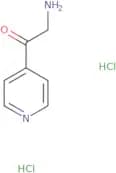
CAS:Versatile small molecule scaffoldFormula:C7H8N2O·2HClPurity:Min. 95%Molecular weight:209.07 g/mol2-Amino-1-(pyridin-4-yl)ethanone dihydrochloride
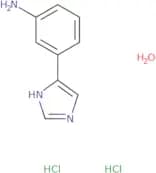
CAS:Versatile small molecule scaffoldFormula:C7H10Cl2N2OPurity:Min. 95%Molecular weight:209.07 g/mol3-(1H-Imidazol-4-yl)aniline dihydrochloride
CAS:Versatile small molecule scaffoldFormula:C9H13Cl2N3OPurity:Min. 95%Molecular weight:250.12 g/mol1',2',3',4',5',6'-Hexahydro-[2,3']bipyridinyl dihydrochloride
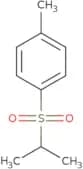
CAS:Versatile small molecule scaffoldFormula:C10H16Cl2N2Purity:Min. 95%Molecular weight:235.16 g/mol1-Methyl-4-(propane-2-sulfonyl)benzene
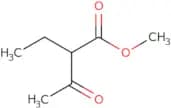
CAS:Versatile small molecule scaffoldFormula:C10H14O2SPurity:Min. 95%Molecular weight:198.28 g/molMethyl 2-ethylacetoacetate
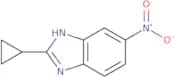
CAS:Methyl 2-ethylacetoacetate (MEAA) is a reactive chemical that is used in the industrial process of dry extraction. MEAA is used as an antibacterial agent and has been shown to be effective against a number of bacteria, including Escherichia coli and Pseudomonas aeruginosa. MEAA binds to fatty acids, disrupting their structure and inhibiting bacterial growth. It also inhibits fatty acid synthesis in bacteria, which leads to cell death by disruption of membrane integrity. The carboxylate group on MEAA can act as a diluent for other more reactive chemicals, such as formaldehyde or glutaraldehyde.Formula:C7H12O3Purity:Min. 95%Molecular weight:144.17 g/mol2-Cyclopropyl-5-nitro-1H-1,3-benzodiazole
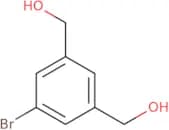
CAS:Versatile small molecule scaffoldFormula:C10H9N3O2Purity:Min. 95%Molecular weight:203.2 g/mol(5-Bromo-1,3-phenylene)dimethanol
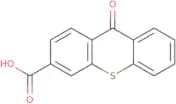
CAS:Versatile small molecule scaffoldFormula:C8H9BrO2Purity:Min. 95%Molecular weight:217.06 g/mol9-Oxo-9H-thioxanthene-3-carboxylic acid
CAS:9-Oxo-9H-thioxanthene-3-carboxylic acid is an organic compound that is used in the treatment of wastewater. It is used to inhibit the growth of microorganisms present in wastewater and has been shown to be effective at inhibiting enzymes involved in energy metabolism and citric acid production. 9-Oxo-9H-thioxanthene-3-carboxylic acid also acts as a potent inhibitor of pyrazinoic acid production, which is a major cause of chronic coughs. This chemical also inhibits glomerular filtration rate in rats, which can lead to proteinuria. The chemical's effect on kidney function can be determined by preparing a sample for titration calorimetry.
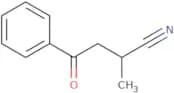
Formula:C14H8O3SPurity:Min. 95%Molecular weight:256.28 g/mol2-Methyl-4-oxo-4-phenylbutanenitrile
CAS:2-Methyl-4-oxo-4-phenylbutanenitrile is a chemical compound that is used in the synthesis of pharmaceuticals. It can be obtained by reacting an organic base with an organic acid. This reaction takes place in a reaction vessel and requires an inorganic base and inorganic reagents. The process also requires ethyl cyanoacetate as the starting material and produces 2-methyl-4-oxo-4-phenylbutanenitrile as the product. The use of this chemical has been linked to environmental pollution, so it should never be released into the environment or come into contact with water.
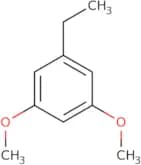
Formula:C11H11NOPurity:Min. 95%Molecular weight:173.21 g/mol1-Ethyl-3,5-dimethoxybenzene
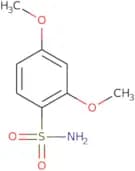
CAS:Versatile small molecule scaffoldFormula:C10H14O2Purity:Min. 95%Molecular weight:166.22 g/mol2,4-Dimethoxybenzenesulfonamide
CAS:Versatile small molecule scaffold
Formula:C8H11NO4SPurity:Min. 95%Molecular weight:217.25 g/molFenicoberan
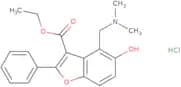
CAS:Fenicoberan is a bronchodilator that has been shown to be effective in the treatment of chronic bronchitis. Fenicoberan is also used as an antiarrhythmic and a medicinal preparation for treating gastritis, heart disease, and infarction. Fenicoberan has been shown to be an effective drug in the ligation of coronary artery thrombi, with normalization of heart function, and hepatoprotective properties. The active chemical component of fenicoberan is phenylephrine hydrochloride. It is a sympathomimetic amine that increases blood pressure by acting on alpha-adrenergic receptors in the vascular smooth muscle cells. Fenicoberan also induces phosphatidylcholine synthesis by activating phospholipase C (PLC) enzymes, which are involved in the hydrolysis of membrane phospholipids.Formula:C20H22ClNO4Purity:Min. 95%Molecular weight:375.8 g/moltrans-Decahydro-quinoxaline
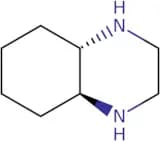
CAS:Versatile small molecule scaffoldFormula:C8H16N2Purity:Min. 95%Molecular weight:140.23 g/mol4-(Sulfanylmethyl)benzonitrile
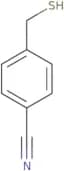
CAS:Versatile small molecule scaffoldFormula:C8H7NSPurity:Min. 95%Molecular weight:149.21 g/mol6-(Oxiran-2-ylmethoxy)-1,2,3,4-tetrahydroquinolin-2-one
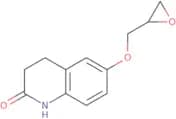
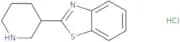
CAS:Versatile small molecule scaffoldFormula:C12H13NO3Purity:Min. 95%Molecular weight:219.24 g/mol2-(3-Piperidinyl)-1,3-benzothiazole hydrochloride
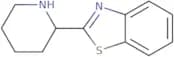
CAS:Versatile small molecule scaffoldFormula:C12H15ClN2SPurity:Min. 95%Molecular weight:254.78 g/mol2-(Piperidin-2-yl)-1,3-benzothiazole
CAS:Versatile small molecule scaffoldFormula:C12H14N2SPurity:Min. 95%Molecular weight:218.32 g/mol(2E)-3-[4-(Trifluoromethyl)phenyl]prop-2-enenitrile
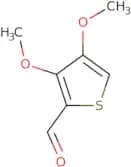
CAS:Versatile small molecule scaffoldFormula:C10H6F3NPurity:Min. 95%Molecular weight:197.16 g/mol3,4-Dimethoxythiophene-2-carbaldehyde
CAS:Versatile small molecule scaffoldFormula:C7H8O3SPurity:Min. 95%Molecular weight:172.2 g/mol

![1',2',3',4',5',6'-Hexahydro-[2,3']bipyridinyl dihydrochloride](/_next/image/?url=https%3A%2Fstatic.cymitquimica.com%2Fproducts%2F3D%2Fthumb-webp%2FBCA74700.webp&w=3840&q=75)
![(2E)-3-[4-(Trifluoromethyl)phenyl]prop-2-enenitrile](/_next/image/?url=https%3A%2Fstatic.cymitquimica.com%2Fproducts%2F3D%2Fthumb-webp%2FBCA79129.webp&w=3840&q=75)