Building Blocks
This section contains fundamental products for the synthesis of organic and biological compounds. Building blocks are the essential starting materials used to construct complex molecules through various chemical reactions. They play a critical role in drug discovery, material science, and chemical research. At CymitQuimica, we offer a diverse range of high-quality building blocks to support your innovative research and industrial projects, ensuring you have the essential components for successful synthesis.
Subcategories of "Building Blocks"
- Boronic Acids & Boronic Acid Derivatives(5,781 products)
- Chiral Building Blocks(1,242 products)
- Hydrocarbon Building Blocks(6,101 products)
- Organic Building Blocks(61,033 products)
Found 205320 products of "Building Blocks"
Sort by
Purity (%)
0
100
|
0
|
50
|
90
|
95
|
100
2H,3H,5H,6H-Benzo[H]cinnolin-3-one
CAS:Versatile small molecule scaffoldFormula:C12H10N2OPurity:Min. 95%Molecular weight:198.22 g/mol5-Chloro-3,4-diazatricyclo[9.4.0.0,2,7]pentadeca-1(15),2(7),3,5,11,13-hexaene
CAS:Versatile small molecule scaffoldFormula:C13H11ClN2Purity:Min. 95%Molecular weight:230.69 g/mol2,6-Diphenylpyrazine
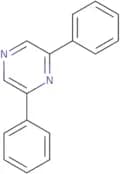
CAS:2,6-Diphenylpyrazine (2,6-DPP) is a cross-linked complex that contains 4-methoxyphenylboronic acid. It has been shown to react with anions and form coordination complexes with imidazoline ligands. The coordination chemistry of 2,6-DPP is dependent on the structure of the anion. For example, in acetonitrile or nitrate solutions, 2,6-DPP coordinates to the negative charge through two nitrogen atoms and two carbon atoms. In aqueous solutions containing halides such as chloride or fluoride ions, 2,6-DPP coordinates through three nitrogen atoms and one carbon atom.Formula:C16H12N2Purity:Min. 95%Molecular weight:232.28 g/mol2-Amino-N-phenylethane-1-sulfonamide
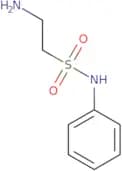
CAS:Versatile small molecule scaffold
Formula:C8H12N2O2SPurity:Min. 95%Molecular weight:200.26 g/mol2-Methanesulfonyl-2-methylpropan-1-ol
CAS:Versatile small molecule scaffoldFormula:C5H12O3SPurity:Min. 95%Molecular weight:152.21 g/mol2-Methanesulfonyl-2-methylpropanoic acid
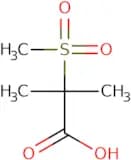
CAS:Versatile small molecule scaffoldFormula:C5H10O4SPurity:Min. 95%Molecular weight:166.2 g/mol2-Chloro-5-phenylpyrazine
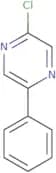
CAS:2-Chloro-5-phenylpyrazine (2CPP) is an amide nucleophile that reacts with diphenyl to form the corresponding diphenyl amide. 2CPP is a nucleophilic compound that yields the product in high yields. The attack of the nucleophile on the electrophilic carbon atom generates a new carbon-nucleus bond, and another molecule of 2CPP or other nucleophile can attack the same carbon atom to produce a second product. 2CPP reacts with potassium to form a white solid, which is then heated to release hydrogen chloride gas.Formula:C10H7ClN2Purity:Min. 95%Molecular weight:190.63 g/molN-Methylpropane-2-sulfonamide
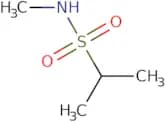
CAS:Versatile small molecule scaffold
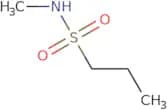
Formula:C4H11NO2SPurity:Min. 95%Molecular weight:137.2 g/molN-Methylpropane-1-sulfonamide
CAS:N-Methylpropane-1-sulfonamide (NMS) is an anti-inflammatory drug that has been shown to inhibit the production of cytokines, such as IL-6, IL-12, and TNF. It also inhibits the activation of immune cells by suppressing the production of proinflammatory cytokines, including IL-1β and TNFα. In addition, NMS has been shown to have a protective effect against rheumatoid arthritis by inhibiting inflammation in joints. NMS binds to kinases and blocks their activity by preventing phosphorylation. This prevents the formation of new inflammatory proteins and reduces the severity of rheumatoid arthritis symptoms.Formula:C4H11NO2SPurity:Min. 95%Molecular weight:137.2 g/mol1-(4-Bromophenyl)-3-phenylpropane-1,3-dione
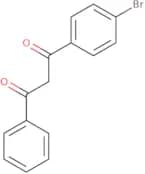
CAS:1-(4-Bromophenyl)-3-phenylpropane-1,3-dione is a ternary molecule that contains one electron in its ground state. It has a monochromatic emission spectrum with peaks at 468 nm and 544 nm. The fluorescence emission spectrum peaks at 488 nm and 527 nm. 1-(4-Bromophenyl)-3-phenylpropane-1,3-dione absorbs light in the visible range of the electromagnetic spectrum and emits light in the near infrared range of the electromagnetic spectrum. The ligand is connected to nitrogen atoms on one side of the molecule, while oxygen atoms are on the other side of the molecule. Luminescence occurs when electrons are transferred from an excited state to a lower energy state. The ternary complex is made up of three different parts: an organic compound, an inorganic compound and an electron donor or acceptor. This molecule's electron donor is carbon monoxideFormula:C15H11BrO2Purity:Min. 95%Molecular weight:303.15 g/mol2-(2-Diethylamino)ethylpyridine
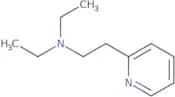
CAS:Versatile small molecule scaffoldFormula:C11H18N2Purity:Min. 95%Molecular weight:178.28 g/mol4-(5-Methyl-1,3,4-oxadiazol-2-yl)aniline
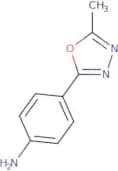
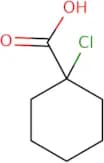
CAS:Versatile small molecule scaffoldFormula:C9H9N3OPurity:Min. 95%Molecular weight:175.19 g/mol1-Chlorocyclohexane-1-carboxylic acid
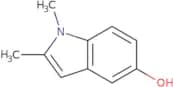
CAS:1-Chlorocyclohexane-1-carboxylic acid (1CCA) is an aryl halide that is used in the synthesis of polymers. It is used as an oxidation catalyst and as a structural formula for cationic polymerization. 1CCA has been shown to efficiently initiate the polymerization of aromatic hydrocarbons, such as styrene, divinylbenzene, and vinyl toluene. The structure of 1CCA is similar to that of aminoglycosides, which are antibiotics that inhibit bacterial protein synthesis by binding to ribosomes. This similarity suggests that 1CCA may have antibiotic properties and could be useful in treating lymphocytic leukemia. However, more research would be needed to confirm this hypothesis.Formula:C7H11ClO2Purity:Min. 95%Molecular weight:162.61 g/mol1,2-Dimethyl-1H-indol-5-ol
CAS:1,2-Dimethyl-1H-indol-5-ol is an indole with the chemical formula C8H9NO2. It is a colorless to white crystalline solid that is soluble in water and ethanol. The compound has an acidic nature and a pungent odor. It also has a nitro group and two substituents: methoxy and acetoxy. This compound is used as a precursor for the synthesis of other organic compounds, including pharmaceuticals, agrochemicals, and dyes.Formula:C10H11NOPurity:Min. 95%Molecular weight:161.2 g/mol2-[4-(Dimethylamino)phenyl]propanoic acid
CAS:Versatile small molecule scaffold
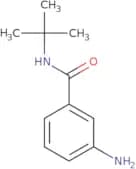
Formula:C11H15NO2Purity:Min. 95%Molecular weight:193.24 g/mol3-Amino-N-(tert-butyl)benzamide
CAS:Versatile small molecule scaffold
Formula:C11H16N2OPurity:Min. 95%Molecular weight:192.26 g/mol4-[(3-Nitrophenyl)carbamoyl]butanoic acid
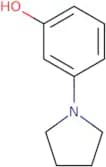
CAS:Versatile small molecule scaffoldFormula:C11H12N2O5Purity:Min. 95%Molecular weight:252.22 g/mol3-(Pyrrolidin-1-yl)phenol
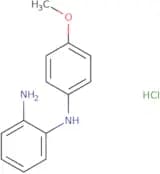
CAS:Versatile small molecule scaffoldFormula:C10H13NOPurity:Min. 95%Molecular weight:163.22 g/mol1-N-(4-Methoxyphenyl)benzene-1,2-diamine
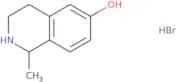
CAS:Versatile small molecule scaffoldFormula:C13H15ClN2OPurity:Min. 95%Molecular weight:250.72 g/mol1-Methyl-1,2,3,4-tetrahydroisoquinolin-6-ol hydrobromide
CAS:Versatile small molecule scaffoldFormula:C10H14BrNOPurity:Min. 95%Molecular weight:244.13 g/mol
![2H,3H,5H,6H-Benzo[H]cinnolin-3-one](/_next/image/?url=https%3A%2Fstatic.cymitquimica.com%2Fproducts%2F3D%2Fthumb-webp%2FABA82349.webp&w=3840&q=75)

![5-Chloro-3,4-diazatricyclo[9.4.0.0,2,7]pentadeca-1(15),2(7),3,5,11,13-hexaene](/_next/image/?url=https%3A%2Fstatic.cymitquimica.com%2Fproducts%2F3D%2Fthumb-webp%2FABA82353.webp&w=3840&q=75)

![2-[4-(Dimethylamino)phenyl]propanoic acid](/_next/image/?url=https%3A%2Fstatic.cymitquimica.com%2Fproducts%2F3D%2Fthumb-webp%2FABA89990.webp&w=3840&q=75)
![4-[(3-Nitrophenyl)carbamoyl]butanoic acid](/_next/image/?url=https%3A%2Fstatic.cymitquimica.com%2Fproducts%2F3D%2Fthumb-webp%2FABA90127.webp&w=3840&q=75)