Building Blocks
Subcategories of "Building Blocks"
- Boronic Acids & Boronic Acid Derivatives(5,780 products)
- Chiral Building Blocks(1,241 products)
- Hydrocarbon Building Blocks(6,100 products)
- Organic Building Blocks(61,023 products)
Found 205289 products of "Building Blocks"
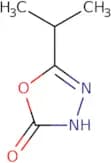
5-(Propan-2-yl)-2,3-dihydro-1,3,4-oxadiazol-2-one
CAS:Versatile small molecule scaffoldFormula:C5H8N2O2Purity:Min. 95%Molecular weight:128.13 g/mol5-(Methoxymethyl)-2,3-dihydro-1,3,4-oxadiazol-2-one
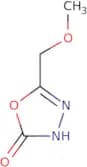
CAS:Versatile small molecule scaffold
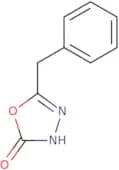
Formula:C4H6N2O3Purity:Min. 95%Molecular weight:130.1 g/mol5-Benzyl-2,3-dihydro-1,3,4-oxadiazol-2-one
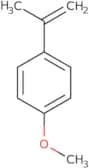
CAS:Versatile small molecule scaffoldFormula:C9H8N2O2Purity:Min. 95%Molecular weight:176.2 g/mol1-Isopropenyl-4-methoxybenzene
CAS:1-Isopropenyl-4-methoxybenzene is a halide that can be used as a catalyst for the hydroxylation of styrene, yielding 1-isopropenyl-3-methoxybenzene. This reaction is catalyzed by acid or base. The hydrogen peroxide present in the reaction mixture oxidizes the methoxy group to an aldehyde, which then reacts with the styrene. In addition, this reagent can be used to methylate chlorides and transfer alkyl groups. The electroreduction of this compound yields c–h bond and peroxide. This reagent can also act as an oxidant in organic synthesis.Formula:C10H12OPurity:Min. 95%Molecular weight:148.2 g/mol2-Chloro-1-[3-(2-chloroacetyl)phenyl]ethan-1-one
CAS:Versatile small molecule scaffoldFormula:C10H8Cl2O2Purity:Min. 95%Molecular weight:231.07 g/mol2-Cyclohexylideneacetaldehyde
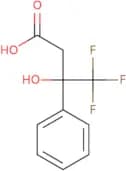
CAS:2-Cyclohexylideneacetaldehyde is a carbinol that is synthesized from the reaction of an alkyl group with phosphorus pentoxide and hydroxy group. It is used as a reagent in organic synthesis, specifically for the production of hyaluronic acid. 2-Cyclohexylideneacetaldehyde may be used as an additive in cosmetics and personal care products to provide moisturizing effects. It also has pheromone-like activity, which can be used to attract insects such as mosquitoes and fruit flies.Formula:C8H12OPurity:Min. 95%Molecular weight:124.18 g/mol4,4,4-Trifluoro-3-hydroxy-3-phenylbutanoic acid
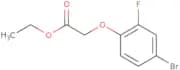
CAS:Versatile small molecule scaffoldFormula:C10H9F3O3Purity:Min. 95%Molecular weight:234.17 g/molEthyl 2-(4-bromo-2-fluorophenoxy)acetate
CAS:Versatile small molecule scaffoldFormula:C10H10BrFO3Purity:Min. 95%Molecular weight:277.09 g/molMethyl 4-(methoxymethyl)benzoate
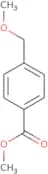
CAS:Methyl 4-(methoxymethyl)benzoate is a monomer that can be used to synthesize bioplastics. It is dehydrating and has a furanic ring, which makes it a good candidate for polymerization. Methyl 4-(methoxymethyl)benzoate can be used as an alternative to ethylene as the monomer in polyethylene terephthalate (PET). PET is a thermoplastic that has been shown to degrade slowly in the environment. The dehydration of methyl 4-(methoxymethyl)benzoate takes place at low temperatures with zirconium, which provides the activation energy needed for this reaction. The dehydration of methyl 4-(methoxymethyl)benzoate also produces 5-hydroxymethylfurfural (HMF), which can be used as a renewable fuel or chemical feedstock. Strategies for synthesizing methyl 4-(methoxymethyl)benzoateFormula:C10H12O3Purity:Min. 95%Molecular weight:180.2 g/mol1,9-Decadiyne
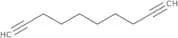
CAS:1,9-Decadiyne is a monolayer that has been synthesized from the coupling of two phenylacetylene molecules. This molecule has a molecular weight of 204. The interpunctella and pteleifolia species are the only known natural sources of 1,9-decadiyne. These species were bioassayed for antifungal activity against a number of fungi, including Aspergillus niger and Candida albicans. The optical properties of 1,9-decadiyne have been characterized using UV-visible spectroscopy and found to be similar to those of eugenol. Molecular modeling studies have shown that 1,9-decadiyne copolymerizes with polystyrene in an alternating fashion. Pharmacokinetic properties have been studied in rats and show that it is absorbed through the skin and metabolized by esterases in the liver. Gel permeation chromatography results show that there is a large amount
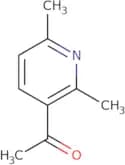
Formula:C10H14Purity:Min. 95%Molecular weight:134.22 g/mol1-(2,6-Dimethylpyridin-3-yl)ethan-1-one
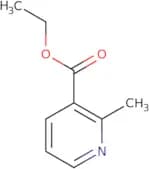
CAS:Versatile small molecule scaffoldFormula:C9H11NOPurity:Min. 95%Molecular weight:149.19 g/molEthyl 2-Methylnicotinate
CAS:Ethyl 2-methylnicotinate is a synthetic compound that has been used in the synthesis of other compounds. It is derived from nicotinic acid and ethyl alcohol, and its chemical formula is C9H11NO2. The compound is decarboxylated to give ethoxycarbonyl, which reacts with quinolizine to form an amide. Ethyl 2-Methylnicotinate can be synthesized by reacting hydrochloric acid with an amide, or it can be obtained from the reaction of acetaldehyde and amine. This process produces an n-oxide as a byproduct, which can then be converted into other products.Formula:C9H11NO2Purity:Min. 95%Molecular weight:165.19 g/mol2,3-dimethylquinoline
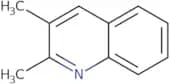
CAS:2,3-dimethylquinoline is a molecule that is used in wastewater treatment. It can be synthesized from 2,3-dimethylaniline and hydrochloric acid. This compound has been shown to have a high affinity for amines and other functional groups, which makes it a good candidate for use in activated sludge systems. The redox potential of this molecule also allows it to oxidize glyoxal and naphthalene. The immobilized form of this compound is used as an adsorbent for the removal of particles from wastewater.
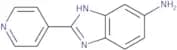
Formula:C11H11NPurity:Min. 95%Molecular weight:157.22 g/mol2-(Pyridin-4-yl)-1H-1,3-benzodiazol-5-amine
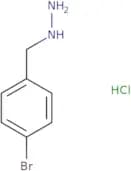
CAS:Versatile small molecule scaffoldFormula:C12H10N4Purity:Min. 95%Molecular weight:210.23 g/mol4-bromobenzylhydrazine hcl
CAS:Versatile small molecule scaffoldFormula:C7H10BrClN2Purity:Min. 95%Molecular weight:237.53 g/molrac-(1R,2S,4S)-7-Oxabicyclo[2.2.1]heptane-2-carbonitrile, endo
CAS:Versatile small molecule scaffold
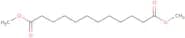
Formula:C7H9NOPurity:Min. 95%Molecular weight:123.15 g/molDimethyl Dodecanedioate
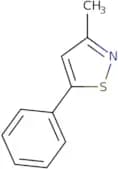
CAS:Dimethyl Dodecanedioate is a chemical compound that belongs to the group of glycol esters. It is a solid catalyst for the production of nitrogen-containing organic compounds. Dimethyl Dodecanedioate can be used as a starting material in the synthesis of various chemical structures, such as fatty acids, which are important in the chemical and pharmaceutical industries. This product also has catalytic properties, which make it useful for hydrogenation and oxidation reactions.Formula:C14H26O4Purity:Min. 95%Molecular weight:258.36 g/mol3-Methyl-5-phenyl-1,2-thiazole
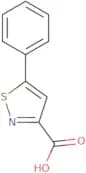
CAS:3-Methyl-5-phenyl-1,2-thiazole is a heterocycle that is biologically active. It is an intramolecular nucleophilic addition to a carbonyl group. This reaction has been shown to be one of the most efficient methods for the synthesis of 5-substituted isothiazoles, which are bioactive substances with anticancer properties. The strategy of using 3-methyl-5-phenyl-1,2-thiazole as a substrate in cross coupling reactions has been used in cancer chemotherapy.Formula:C10H9NSPurity:Min. 95%Molecular weight:175.25 g/mol5-Phenyl-1,2-thiazole-3-carboxylic acid
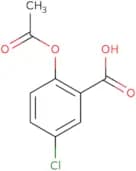
CAS:Versatile small molecule scaffoldFormula:C10H7NO2SPurity:Min. 95%Molecular weight:205.23 g/mol2-(Acetyloxy)-5-chlorobenzoic acid
CAS:2-(Acetyloxy)-5-chlorobenzoic acid is a potent apoptotic agent that is being investigated for its potential use in the treatment of cancer. It has been shown to inhibit tumor growth and increase survival in animal models and has been assessed in human clinical trials. 2-(Acetyloxy)-5-chlorobenzoic acid induces apoptosis by inhibiting DNA synthesis, protein synthesis, or both. It also inhibits the activity of caspases, enzymes that are involved in tumor cell death. This compound may be used to treat Alzheimer's disease because it inhibits tau phosphorylation, which is an important marker for Alzheimer's disease pathology.Formula:C9H7ClO4Purity:Min. 95%Molecular weight:214.6 g/mol

![2-Chloro-1-[3-(2-chloroacetyl)phenyl]ethan-1-one](/_next/image/?url=https%3A%2Fstatic.cymitquimica.com%2Fproducts%2F3D%2Fthumb-webp%2FBAA71316.webp&w=3840&q=75)

![rac-(1R,2S,4S)-7-Oxabicyclo[2.2.1]heptane-2-carbonitrile, endo](/_next/image/?url=https%3A%2Fstatic.cymitquimica.com%2Fproducts%2F3D%2Fthumb-webp%2FBAA72796.webp&w=3840&q=75)