Building Blocks
Subcategories of "Building Blocks"
- Boronic Acids & Boronic Acid Derivatives(5,780 products)
- Chiral Building Blocks(1,241 products)
- Hydrocarbon Building Blocks(6,100 products)
- Organic Building Blocks(61,024 products)
Found 205297 products of "Building Blocks"
4-Methylimidazolidine-2-thione
CAS:4-Methylimidazolidine-2-thione is a corrosion inhibitor that is used in the treatment of environmental pollution, such as dry weight and diameter. It has been shown to be an effective inhibitor of copper corrosion when used in combination with piperonyl butoxide. 4-Methylimidazolidine-2-thione has also been shown to have high detection ability as it reacts with hydrochloric acid to form a particle that can be detected by an optical microscope. This chemical is typically found in urine samples and has been shown to inhibit the formation of primary amino acids from ammonia. 4-Methylimidazolidine-2-thione also forms an acid complex with methylamine, which may be the reason for its inhibition of aminogenesis.
Formula:C4H2D6N2SPurity:Min. 95%Molecular weight:122.22 g/mol2,4-Dichloro-1-ethenylbenzene
CAS:2,4-Dichloro-1-ethenylbenzene is an aliphatic hydrocarbon that can be used in the production of alkylated products. It is a colorless liquid with a sweet smell and low toxicity. The photoelectron microscope has been used to study the immobilization of 2,4-dichloro-1-ethenylbenzene on silica gel. This compound is often admixed with acrylonitrile, styrene, methacrylates, aromatic hydrocarbons, inorganic compounds and primary alcohols. It can also be immobilized on silica gel by covalent bonding or adsorption.Formula:C8H6Cl2Purity:Min. 95%Molecular weight:173.04 g/molSpiro[5.5]undecan-3-amine hydrochloride
CAS:Versatile small molecule scaffoldFormula:C11H22ClNPurity:Min. 95%Molecular weight:203.75 g/molSpiro[4.5]decan-2-amine hydrochloride
CAS:Versatile small molecule scaffoldFormula:C10H20ClNPurity:Min. 95%Molecular weight:189.7 g/mol3-Bromophenyl Isothiocyanate
CAS:3-Bromophenyl isothiocyanate (3BP) is a thiohydantoin derivative that is used for the treatment of prostate cancer. 3BP has been shown to be an effective inhibitor of MDV3100, which is an oncogene that activates prostate cancer cells and leads to tumor growth. 3BP also inhibits the translocation of other oncogenes such as c-myc and p53, which are involved in the development of prostate cancer. It has been shown to be effective against activated and resistant prostate cancer cells, as well as against prostate cancers that have undergone a translocation event.Formula:C7H4BrNSPurity:Min. 95%Molecular weight:214.08 g/mol4-Isothiocyanatophenol
CAS:4-Isothiocyanatophenol (4ITCP) is an anticancer agent that has been shown to inhibit the growth of cancer cells in vivo. It is a metabolite of etoposide, which is used to treat certain types of cancer. 4ITCP inhibits the growth of cancer cells by enhancing mitochondrial membrane potential and inhibiting cell proliferation. This compound also inhibits cell growth by binding to phenyl groups on proteins, including enzymes and structural proteins. 4ITCP has been shown to act as a prodrug in vivo, where it is converted into 4-nitrophenol before being activated. 4ITCP also has optical properties that can be detected using spectroscopy and fluorescence.
Formula:C7H5NOSPurity:Min. 95%Molecular weight:151.19 g/mol4-Carboxyphenyl isothiocyanate
CAS:4-Carboxyphenyl isothiocyanate (4CPITC) is an antimicrobial agent that has been shown to inhibit the function of mitochondria by hyperpolarizing the mitochondrial membrane potential. It also inhibits cancer cell growth, which may be due to its effects on mitochondrial function. 4CPITC binds to mammalian cells and inhibits the production of reactive oxygen species and chloride ions. This inhibition has been shown to cause a decrease in hydrogen bond formation, which leads to a decrease in the rate of protein synthesis. 4CPITC has a chemical structure that includes ether linkages, which may contribute to its antimicrobial activity.Formula:C8H5NO2SPurity:Min. 95%Molecular weight:179.2 g/mol1H,2H-Cyclohepta[D]imidazol-2-one
CAS:1H,2H-Cyclohepta[D]imidazol-2-one is a chromophore that has resonance at wavelength of 370 nm with an optical density of 1.4 when exposed to an electron beam. The azulene group in the molecule causes it to absorb light and become excited. This excitation leads to the emission of light at a wavelength of 450 nm, which can be seen with a laser. The long-term recording properties are due to the stability of this chromophore as well as its ability to be sensitized by nitrogen atoms in the auxochrome.Formula:C8H6N2OPurity:Min. 95%Molecular weight:146.15 g/molEthyl 4-chloro-2-methylpyrimidine-5-carboxylate
CAS:Versatile small molecule scaffoldFormula:C8H9ClN2O2Purity:Min. 95%Molecular weight:200.62 g/mol2-Chlorobenzotrichloride
CAS:2-Chlorobenzotrichloride is a reactive chlorine donor. It reacts with metal carbonyls such as copper oxide to form chloro complexes, and it reacts with hydroxyl groups on organic molecules to form chlorides. 2-Chlorobenzotrichloride is used in the preparation of ferrocene, which is a useful molecule for organic synthesis. This chemical can be purified from the reaction mixture by chromatography.Formula:C7H4Cl4Purity:Min. 95%Molecular weight:229.92 g/mol(2Z)-4-(tert-Butoxy)but-2-enoic acid
CAS:Versatile small molecule scaffoldFormula:C8H14O3Purity:Min. 95%Molecular weight:158.2 g/mol1-(2-Ethylphenyl)ethanone
CAS:1-(2-Ethylphenyl)ethanone is a colorless liquid with a benzene-like odor. It is used as an intermediate in the manufacture of other chemicals. The reaction sequence starts with oxidative cleavage of the ethyl group, yielding aldehyde and ammonium chloride. The nitro group is then reduced to amine, which reacts with ammonium chloride to produce 1-(2-ethylphenyl)ethanone. 1-(2-Ethylphenyl)ethanone can be used as a precursor for other chemical compounds such as deuterated compounds and pentane, which are used in organic synthesis.Formula:C10H12OPurity:Min. 95%Molecular weight:148.2 g/mol2-Acetylbiphenyl
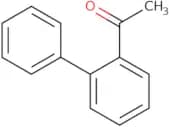
CAS:2-Acetylbiphenyl is a synthetic compound that is derived from the Friedel-Crafts reaction. It has been shown to inhibit the production of dopamine D3 in animals, which may be due to its structural similarity to dopamine. 2-Acetylbiphenyl also has an inhibitory effect on inflammatory diseases and autoimmune diseases. This compound has been shown to modulate the immune system and reduce inflammation by inhibiting the production of proinflammatory cytokines such as IL-1β and TNF-α. 2-Acetylbiphenyl can also be used as a solid catalyst for preparing pharmaceutical preparations that contain monocarboxylic acids, such as acetaminophen and ibuprofen.Formula:C14H12OPurity:Min. 95%Molecular weight:196.24 g/molcis-2,3,3a,4,7,7a-hexahydro-1h-isoindole
CAS:Versatile small molecule scaffold
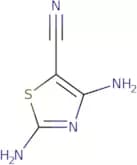
Formula:C8H13NPurity:Min. 95%Molecular weight:123.2 g/molDiamino-1,3-thiazole-5-carbonitrile
CAS:Versatile small molecule scaffoldFormula:C4H4N4SPurity:Min. 95%Molecular weight:140.17 g/mol[1-(2-Phenylethyl)pyrrolidin-3-yl]methanol
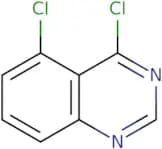
CAS:Versatile small molecule scaffoldFormula:C13H19NOPurity:Min. 95%Molecular weight:205.3 g/mol4,5-Dichloroquinazoline
CAS:4,5-Dichloroquinazoline is a chemical compound that has been shown to undergo a number of reactions. These include the formation of orthoesters, ketones, rearrangements, and nitrous compounds. 4,5-Dichloroquinazoline can be prepared by the reaction of hydrochloric acid and triethyl orthoformate with nitrous acid. It is also formed from the reaction of hydrazine and nitrous acid with an aldehyde or ketone. The product can be isolated by adding potassium dichromate to the solution and precipitating it with water.Formula:C8H4Cl2N2Purity:Min. 95%Molecular weight:199.04 g/molEthyl 2-(5,6-dimethyl-1H-1,3-benzodiazol-2-yl)acetate
CAS:Versatile small molecule scaffoldFormula:C13H16N2O2Purity:Min. 95%Molecular weight:232.28 g/mol3',4'-Dichloroacetanilide
CAS:3',4'-Dichloroacetanilide is a chemical that is used in the manufacture of industrial chemicals. It has been shown to inhibit bacterial growth by binding to their receptors and inhibiting their ability to acetylate amino acids. 3',4'-Dichloroacetanilide has also been shown to inhibit the growth of Gram-positive bacteria, including strains that are resistant to other antibiotics. 3',4'-Dichloroacetanilide can be toxic at high doses, but studies have shown that it does not have any effects on the central nervous system or locomotor activity in rats.Formula:C8H7Cl2NOPurity:Min. 95%Molecular weight:204.05 g/mol4-(2-Hydrazinylethyl)morpholine
CAS:4-(2-Hydrazinylethyl)morpholine is a fluorescent probe that has been used to study the lysosome. It is not cytotoxic and can be used for bioimaging and cell staining. This compound is water-soluble, which makes it useful as a tracer in living cells and organisms. 4-(2-Hydrazinylethyl)morpholine has been shown to be permeable through the cell membrane and is used as a probe for studying the cytotoxicity of cells.Formula:C6H15N3OPurity:Min. 95%Molecular weight:145.21 g/mol


![Spiro[5.5]undecan-3-amine hydrochloride](/_next/image/?url=https%3A%2Fstatic.cymitquimica.com%2Fproducts%2F3D%2Fthumb-webp%2FCAA12694.webp&w=3840&q=75)
![Spiro[4.5]decan-2-amine hydrochloride](/_next/image/?url=https%3A%2Fstatic.cymitquimica.com%2Fproducts%2F3D%2Fthumb-webp%2FCAA12695.webp&w=3840&q=75)


![1H,2H-Cyclohepta[D]imidazol-2-one](/_next/image/?url=https%3A%2Fstatic.cymitquimica.com%2Fproducts%2F3D%2Fthumb-webp%2FCAA13233.webp&w=3840&q=75)



![[1-(2-Phenylethyl)pyrrolidin-3-yl]methanol](/_next/image/?url=https%3A%2Fstatic.cymitquimica.com%2Fproducts%2F3D%2Fthumb-webp%2FCAA14852.webp&w=3840&q=75)