Building Blocks
This section contains fundamental products for the synthesis of organic and biological compounds. Building blocks are the essential starting materials used to construct complex molecules through various chemical reactions. They play a critical role in drug discovery, material science, and chemical research. At CymitQuimica, we offer a diverse range of high-quality building blocks to support your innovative research and industrial projects, ensuring you have the essential components for successful synthesis.
Subcategories of "Building Blocks"
- Boronic Acids & Boronic Acid Derivatives(5,781 products)
- Chiral Building Blocks(1,242 products)
- Hydrocarbon Building Blocks(6,101 products)
- Organic Building Blocks(61,033 products)
Found 205320 products of "Building Blocks"
Sort by
Purity (%)
0
100
|
0
|
50
|
90
|
95
|
100
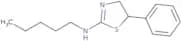
N-Pentyl-5-phenyl-4,5-dihydro-1,3-thiazol-2-amine
CAS:Versatile small molecule scaffoldFormula:C14H20N2SPurity:Min. 95%Molecular weight:248.39 g/molN-[(2-Aminophenyl)methyl]-N-methylthiophene-2-carboxamide
CAS:Versatile small molecule scaffoldFormula:C13H14N2OSPurity:Min. 95%Molecular weight:246.33 g/mol3-(2-Hydroxyethyl)-3H,4H-thieno[3,2-d]pyrimidin-4-one
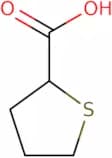
CAS:Versatile small molecule scaffoldFormula:C8H8N2O2SPurity:Min. 95%Molecular weight:196.23 g/molTetrahydrothiophene-2-carboxylic acid
CAS:Tetrahydrothiophene-2-carboxylic acid is a metabolite of tetrahydrothiophene-2-acetic acid. It has been found to be a demethylation product of the protein genes in testicular tissues. Tetrahydrothiophene-2-carboxylic acid has been shown to inhibit the production of human telomerase and consequently, cell proliferation. This compound also inhibits the growth factor activity of bovine erythropoietin, which may be due to its chloride anion. The optical imaging technique has been used to study the effect of tetrahydrothiophene-2-carboxylic acid on cultured cells, revealing that this metabolite may induce apoptosis by increasing oxidative stress and inhibiting the synthesis of proteins essential for cell division.Formula:C5H8O2SPurity:Min. 95%Molecular weight:132.2 g/mol3-Chloronaphthalene-2-carboxylic acid
CAS:3-Chloronaphthalene-2-carboxylic acid is a fluorescent compound that can be used as a fluorophore. It has been used in solid phase peptide synthesis, fluorescence resonance energy transfer, and fluorescence quantum yield experiments. 3-Chloronaphthalene-2-carboxylic acid has a high quantum yield of 0.21, which means that it emits light at a wavelength of 405 nm when it is excited with light at 350 nm. The excitation spectrum of this compound shows a single peak at 350 nm and two peaks at 395 nm and 410 nm. The emission spectrum has two peaks at 425 nm and 470 nm. This compound also has photochemical properties due to its ability to undergo oxidation by ozone or hydrogen peroxide.Formula:C11H7ClO2Purity:Min. 95%Molecular weight:206.62 g/molPropan-2-yl 2-[(2-hydroxyethyl)sulfanyl]acetate
CAS:Versatile small molecule scaffoldFormula:C7H14O3SPurity:Min. 95%Molecular weight:178.25 g/mol2-[4-(2-Methoxyethanesulfonyl)phenyl]acetic acid
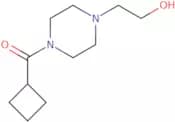
CAS:Versatile small molecule scaffoldFormula:C11H14O5SPurity:Min. 95%Molecular weight:258.29 g/mol2-(4-Cyclobutanecarbonylpiperazin-1-yl)ethan-1-ol
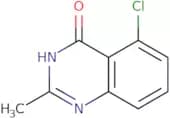
CAS:Versatile small molecule scaffoldFormula:C11H20N2O2Purity:Min. 95%Molecular weight:212.29 g/mol5-Chloro-2-methylquinazolin-4(3H)-one
CAS:Versatile small molecule scaffold
Formula:C9H7ClN2OPurity:Min. 95%Molecular weight:194.62 g/mol4-(4-Hydroxypiperidine-1-carbonyl)-1-methyl-1,2-dihydropyridin-2-one
CAS:Versatile small molecule scaffoldFormula:C12H16N2O3Purity:Min. 95%Molecular weight:236.27 g/molN-Ethyl-5-phenyl-4,5-dihydro-1,3-thiazol-2-amine
CAS:Versatile small molecule scaffoldFormula:C11H14N2SPurity:Min. 95%Molecular weight:206.31 g/molMethyl 2-oxotetrahydrofuran-3-carboxylate
CAS:Methyl 2-oxotetrahydrofuran-3-carboxylate is a synthetic compound that activates the PI3K pathway, which is a lipid kinase. It has been shown to be potent antiproliferative in cancer cell lines and xenografts. Methyl 2-oxotetrahydrofuran-3-carboxylate has been shown to inhibit the production of phosphatidylinositol, an important intermediate in the PI3K pathway. This inhibition leads to tumor cell apoptosis by inhibiting cyclic AMP synthesis, leading to decreased protein synthesis and DNA replication. In addition, this compound may also have antitumor activity by targeting the skeleton or structure of tumor cells.Formula:C6H8O4Purity:Min. 95%Molecular weight:144.13 g/mol2-{[(4-Bromo-2-fluorophenyl)methyl]sulfanyl}acetic acid
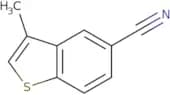
CAS:Versatile small molecule scaffoldFormula:C9H8BrFO2SPurity:Min. 95%Molecular weight:279.13 g/mol3-Methyl-1-benzothiophene-5-carbonitrile
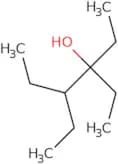
CAS:Versatile small molecule scaffoldFormula:C10H7NSPurity:Min. 95%Molecular weight:173.24 g/mol3,4-Diethyl-3-hexanol
CAS:3,4-Diethyl-3-hexanol is a chemical compound that is used as an ophthalmic agent. It is a colorless or white solid. 3,4-Diethyl-3-hexanol has been shown to be an antiviral agent that blocks the virus from entering the cells of the body. It also prevents the virus from replicating its genetic material and spreading throughout the body. This drug can be used in infants, pregnant women, and adults. 3,4-Diethyl-3-hexanol binds to plasma proteins and may interfere with levothyroxine metabolism in some cases. It has been shown to have no adverse effects on dihedral angles or boceprevir activity and has low toxicity levels in rats.Formula:C10H22OPurity:Min. 95%Molecular weight:158.28 g/molCedrelopsin
CAS:Cedrelopsin is a coumarin derivative that is used as a pesticide. It inhibits the growth of cancer cells by binding to the cell membrane, which prevents the entry of many substances into the cell. Cedrelopsin also has an inhibitory effect on mammalian monoamine oxidase (MAO) enzymes, which are important for neurotransmitter metabolism. This compound is active in a variety of different types of cancer cells, including breast cancer and prostate cancer cells. Cedrelopsin shows pesticidal activity against many insects and mites, although it has no effect on mammals. Cedrelopsin has been shown to have a significant effect on blood pressure and heart rate in rats, with moderate hypotensive effects in humans. This compound is not considered toxic to humans or animals, because it does not bind to proteins in high concentrations and does not accumulate in tissues.Formula:C15H16O4Purity:Min. 95%Molecular weight:260.28 g/mol2-Ethyl-6-phenoxy-1,4-dihydroquinolin-4-one
CAS:Versatile small molecule scaffoldFormula:C17H15NO2Purity:Min. 95%Molecular weight:265.31 g/mol1-Ethyl-5-methyl-1H-1,3-benzodiazol-2-amine
CAS:Versatile small molecule scaffoldFormula:C10H13N3Purity:Min. 95%Molecular weight:175.23 g/mol1-[3-(1H-Imidazol-1-yl)propyl]-5-methyl-1H-1,3-benzodiazol-2-amine
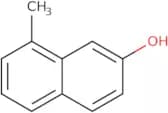
CAS:Versatile small molecule scaffoldFormula:C14H17N5Purity:Min. 95%Molecular weight:255.32 g/mol8-Methylnaphthalen-2-ol
CAS:8-Methylnaphthalen-2-ol is a hydrocarbon with the molecular formula CH3. It is a colorless liquid with an almond odor. It is used in the synthesis of aromatic compounds, including amines and pharmaceuticals. 8-Methylnaphthalen-2-ol is found in marine bacteria and has been shown to be a substrate for bioconversion to benzyl alcohol or benzaldehyde. Recombinant E. coli cells have been used to produce high yields of 8-methylnaphthalen-2-ol from inexpensive starting materials such as glycerol, formaldehyde, and ammonia.Formula:C11H10OPurity:Min. 95%Molecular weight:158.2 g/mol

![N-[(2-Aminophenyl)methyl]-N-methylthiophene-2-carboxamide](/_next/image/?url=https%3A%2Fstatic.cymitquimica.com%2Fproducts%2F3D%2Fthumb-webp%2FFWB61116.webp&w=3840&q=75)
![3-(2-Hydroxyethyl)-3H,4H-thieno[3,2-d]pyrimidin-4-one](/_next/image/?url=https%3A%2Fstatic.cymitquimica.com%2Fproducts%2F3D%2Fthumb-webp%2FFWB61054.webp&w=3840&q=75)

![Propan-2-yl 2-[(2-hydroxyethyl)sulfanyl]acetate](/_next/image/?url=https%3A%2Fstatic.cymitquimica.com%2Fproducts%2F3D%2Fthumb-webp%2FFWB61015.webp&w=3840&q=75)
![2-[4-(2-Methoxyethanesulfonyl)phenyl]acetic acid](/_next/image/?url=https%3A%2Fstatic.cymitquimica.com%2Fproducts%2F3D%2Fthumb-webp%2FFWB61014.webp&w=3840&q=75)


![2-{[(4-Bromo-2-fluorophenyl)methyl]sulfanyl}acetic acid](/_next/image/?url=https%3A%2Fstatic.cymitquimica.com%2Fproducts%2F3D%2Fthumb-webp%2FFWB60485.webp&w=3840&q=75)


![1-[3-(1H-Imidazol-1-yl)propyl]-5-methyl-1H-1,3-benzodiazol-2-amine](/_next/image/?url=https%3A%2Fstatic.cymitquimica.com%2Fproducts%2F3D%2Fthumb-webp%2FFWB59709.webp&w=3840&q=75)