Building Blocks
This section contains fundamental products for the synthesis of organic and biological compounds. Building blocks are the essential starting materials used to construct complex molecules through various chemical reactions. They play a critical role in drug discovery, material science, and chemical research. At CymitQuimica, we offer a diverse range of high-quality building blocks to support your innovative research and industrial projects, ensuring you have the essential components for successful synthesis.
Subcategories of "Building Blocks"
- Boronic Acids & Boronic Acid Derivatives(5,781 products)
- Chiral Building Blocks(1,242 products)
- Hydrocarbon Building Blocks(6,101 products)
- Organic Building Blocks(61,033 products)
Found 205320 products of "Building Blocks"
Sort by
Purity (%)
0
100
|
0
|
50
|
90
|
95
|
100
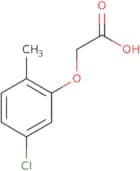
2-(5-Chloro-2-methylphenoxy)acetic acid
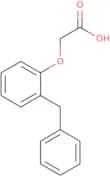
CAS:2-(5-Chloro-2-methylphenoxy)acetic acid is a chemical compound used in the synthesis of herbicides, such as glyphosate. It is an inhibitor of plant growth. 2-(5-Chloro-2-methylphenoxy)acetic acid has been shown to induce apoptosis and inhibit cell growth in breast cancer cells. The compound interacts with reactive oxygen species to form hydroxyl radicals that react with DNA and cause DNA damage. This genotoxic potential may be responsible for its anticancer activity. The compound has been shown to be mutagenic, although it can also act as a mutational blocker and suppress the production of mutations by other carcinogens.Formula:C9H9ClO3Purity:Min. 95%Molecular weight:200.62 g/mol2-(2-Benzylphenoxy)acetic acid
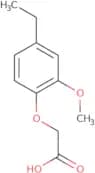
CAS:Versatile small molecule scaffoldFormula:C15H14O3Purity:Min. 95%Molecular weight:242.27 g/mol2-(4-Ethyl-2-methoxyphenoxy)acetic acid
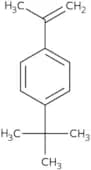
CAS:Versatile small molecule scaffoldFormula:C11H14O4Purity:Min. 95%Molecular weight:210.23 g/mol1-tert-Butyl-4-(prop-1-en-2-yl)benzene
CAS:Versatile small molecule scaffoldFormula:C13H18Purity:Min. 95%Molecular weight:174.28 g/molrac-(1R,5R,7S)-7-Methylbicyclo[3.2.0]hept-2-en-6-one
CAS:Versatile small molecule scaffold
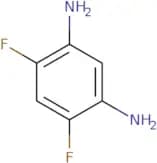
Formula:C8H10OPurity:Min. 95%Molecular weight:122.2 g/mol4,6-Difluorobenzene-1,3-diamine
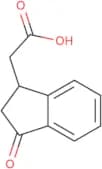
CAS:Versatile small molecule scaffoldFormula:C6H6F2N2Purity:Min. 95%Molecular weight:144.12 g/mol2-(3-Oxo-2,3-dihydro-1H-inden-1-yl)acetic acid
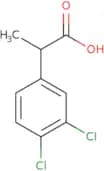
CAS:Versatile small molecule scaffoldFormula:C11H10O3Purity:Min. 95%Molecular weight:190.2 g/mol2-(3,4-Dichlorophenyl)propanoic acid
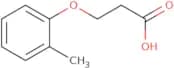
CAS:Versatile small molecule scaffoldFormula:C9H8Cl2O2Purity:Min. 95%Molecular weight:219.06 g/mol3-o-Tolyloxy-propionic acid
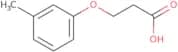
CAS:3-o-Tolyloxy-propionic acid (3TP) is a monomer that can be used in the production of polymers. 3TP has been shown to have high emission efficiency, which is attributed to its low density and inductive properties. It also has a low melting point, making it suitable for use in the production of polymers at low temperatures. 3TP is also known to have an acid group and vinyl group, making it useful in the production of polymers with a variety of functions. 3TP is soluble in water and other solvents, making it easy to handle during polymerization processes. It is non-toxic and environmentally friendly because it does not emit any harmful substances when heated or mixed with other materials.Formula:C10H12O3Purity:Min. 95%Molecular weight:180.2 g/mol3-(3-Methylphenoxy)propanoic acid
CAS:3-(3-Methylphenoxy)propanoic acid (3MPPA) is a phenol with a 3-methyl group substituted for the hydroxyl group. It is a crystalline solid that melts at 96°C and decomposes when heated to 130°C. 3MPPA is a substrate for the enzyme catechol O-methyltransferase, which converts it to 3-O-methyldopa. This reaction occurs in both viable and nonviable cells. The kinetics of this reaction has been studied in detail and it has been shown that 3MPPA preferentially reacts with the active site of catechol O-methyltransferase.Formula:C10H12O3Purity:Min. 95%Molecular weight:180.2 g/mol3-(4-Methylphenoxy)propionic acid
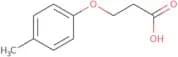
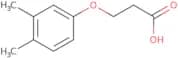
CAS:Versatile small molecule scaffoldFormula:C10H12O3Purity:Min. 95%Molecular weight:180.2 g/mol3-(3,4-Dimethylphenoxy)propanoic acid
CAS:Versatile small molecule scaffold
Formula:C11H14O3Purity:Min. 95%Molecular weight:194.23 g/mol6-(1H-Indol-3-yl)hexanoic acid
CAS:Versatile small molecule scaffoldFormula:C14H17NO2Purity:Min. 95%Molecular weight:231.29 g/mol2-[4-(3-Chlorophenyl)piperazin-1-yl]acetonitrile
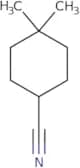
CAS:Versatile small molecule scaffoldFormula:C12H14ClN3Purity:Min. 95%Molecular weight:235.71 g/mol4,4-Dimethylcyclohexane-1-carbonitrile
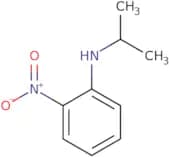
CAS:Versatile small molecule scaffoldFormula:C9H15NPurity:Min. 95%Molecular weight:137.22 g/molIsopropyl-(2-nitro-phenyl)-amine
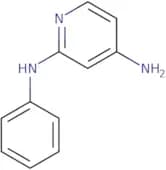
CAS:Versatile small molecule scaffoldFormula:C9H12N2O2Purity:Min. 95%Molecular weight:180.21 g/molN-2-Phenylpyridine-2,4-diamine
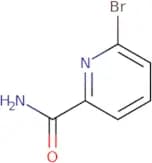
CAS:Versatile small molecule scaffoldFormula:C11H11N3Purity:Min. 95%Molecular weight:185.22 g/mol6-Bromopyridine-2-carboxamide
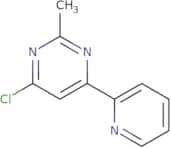
CAS:6-Bromopyridine-2-carboxamide is a dibenzazepine and an azacycle. It is used to study its affinity for the dopamine receptors, sodium channels, and histamine receptors. 6-Bromopyridine-2-carboxamide has been shown to block histamine receptors in the rat brain. This drug also has affinity for sodium channels and blocks them at lower concentrations than other drugs. Functional assays have demonstrated that 6-bromopyridine-2-carboxamide is a functional blocker of the ion channel receptor in human erythrocytes.Formula:C6H5BrN2OPurity:Min. 95%Molecular weight:201.02 g/mol4-Chloro-2-methyl-6-(pyridin-2-yl)pyrimidine
CAS:Versatile small molecule scaffold
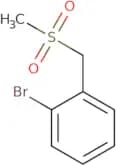
Formula:C10H8ClN3Purity:Min. 95%Molecular weight:205.64 g/mol1-Bromo-2-((methylsulfonyl)methyl)benzene
CAS:Versatile small molecule scaffoldFormula:C8H9BrO2SPurity:Min. 95%Molecular weight:249.12 g/mol

![rac-(1R,5R,7S)-7-Methylbicyclo[3.2.0]hept-2-en-6-one](/_next/image/?url=https%3A%2Fstatic.cymitquimica.com%2Fproducts%2F3D%2Fthumb-webp%2FABA16969.webp&w=3840&q=75)

![2-[4-(3-Chlorophenyl)piperazin-1-yl]acetonitrile](/_next/image/?url=https%3A%2Fstatic.cymitquimica.com%2Fproducts%2F3D%2Fthumb-webp%2FABA17891.webp&w=3840&q=75)