Building Blocks
This section contains fundamental products for the synthesis of organic and biological compounds. Building blocks are the essential starting materials used to construct complex molecules through various chemical reactions. They play a critical role in drug discovery, material science, and chemical research. At CymitQuimica, we offer a diverse range of high-quality building blocks to support your innovative research and industrial projects, ensuring you have the essential components for successful synthesis.
Subcategories of "Building Blocks"
- Boronic Acids & Boronic Acid Derivatives(5,780 products)
- Chiral Building Blocks(1,241 products)
- Hydrocarbon Building Blocks(6,100 products)
- Organic Building Blocks(61,029 products)
Found 205306 products of "Building Blocks"
Sort by
Purity (%)
0
100
|
0
|
50
|
90
|
95
|
100
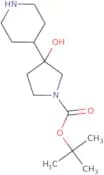
tert-Butyl 3-hydroxy-3-(piperidin-4-yl)pyrrolidine-1-carboxylate
CAS:Versatile small molecule scaffoldFormula:C14H26N2O3Purity:Min. 95%Molecular weight:270.4 g/mol4H,5H,6H,7H-Pyrazolo[1,5-a]pyrazine-2-carboxylic acid hydrochloride
CAS:Versatile small molecule scaffoldFormula:C7H10ClN3O2Purity:Min. 95%Molecular weight:203.62 g/mol1-[3-(Trifluoromethyl)phenyl]prop-2-yn-1-one
CAS:Versatile small molecule scaffoldFormula:C10H5F3OPurity:Min. 95%Molecular weight:198.14 g/molrac-(3aR,6aR)-Octahydrocyclopenta[b]pyrrol-2-one
CAS:Versatile small molecule scaffold
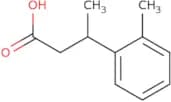
Formula:C7H11NOPurity:Min. 95%Molecular weight:125.17 g/molBenzenepropanoic acid, β,2-dimethyl-
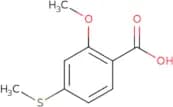
CAS:Versatile small molecule scaffoldFormula:C11H14O2Purity:Min. 95%Molecular weight:178.23 g/mol2-Methoxy-4-(methylsulfanyl)benzoic acid
CAS:2-Methoxy-4-(methylsulfanyl)benzoic acid is a thiazolopyridine prodrug that is converted to its active form, 2-methoxy-4-(methylsulfanyl)benzoyl chloride (MMBC), by esterases. MMBC inhibits the replication of both influenza A and B viruses in cell culture, with an IC50 of 0.5 μM. MMBC also has an inotropic effect on isolated rat cardiomyocytes, which may be due to inhibition of the virus-mediated inhibition of cardiac myosin ATPase activity. The pharmacokinetic properties of MMBC are determined experimentally by administering the drug orally to rats and measuring its concentration in serum. These data show that MMBC has a low oral bioavailability and a short elimination half-life.Formula:C9H10O3SPurity:Min. 95%Molecular weight:198.24 g/molrac-[(1R,3S,5S)-3,5-Bis(hydroxymethyl)cyclohexyl]methanol
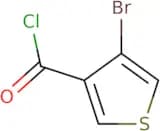
CAS:Versatile small molecule scaffoldFormula:C9H18O3Purity:Min. 95%Molecular weight:174.2 g/mol4-Bromothiophene-3-carbonyl chloride
CAS:Versatile small molecule scaffold
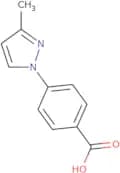
Formula:C5H2BrClOSPurity:Min. 95%Molecular weight:225.49 g/mol4-(3-Methyl-1H-pyrazol-1-yl)benzoic acid
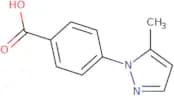
CAS:4-(3-Methyl-1H-pyrazol-1-yl)benzoic acid is a potent inhibitor of the human voltage gated sodium channel (Nav). This compound has been shown to inhibit Nav channels at concentrations as low as 10 μM.Formula:C11H10N2O2Purity:Min. 95%Molecular weight:202.21 g/mol4-(5-Methyl-1H-pyrazol-1-yl)benzoic acid
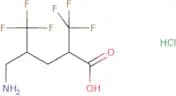
CAS:Versatile small molecule scaffoldFormula:C11H10N2O2Purity:Min. 95%Molecular weight:202.21 g/mol5-Amino-2,4-bis(trifluoromethyl)pentanoic acid hydrochloride
CAS:Versatile small molecule scaffold
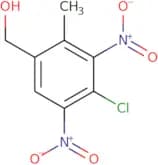
Formula:C7H10ClF6NO2Purity:Min. 95%Molecular weight:289.6 g/mol(4-Chloro-2-methyl-3,5-dinitrophenyl)methanol
CAS:Versatile small molecule scaffoldFormula:C8H7ClN2O5Purity:Min. 95%Molecular weight:246.6 g/mol6,7-Dihydropyrrolo[2,3-c]azepine-4,8(1H,5H)-dione
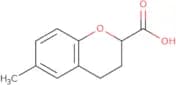
CAS:6,7-Dihydropyrrolo[2,3-c]azepine-4,8(1H,5H)-dione is a heterocyclic organic compound with the chemical formula CHN. It is one of the many pyrrole compounds that are synthesized from phosphorus pentoxide. This heterocyclic compound has been shown to have acylation reactions with tertiary amines and alcohols. 6,7-Dihydropyrrolo[2,3-c]azepine-4,8(1H,5H)-dione has been found in pharmaceutical preparations and is used as a growth factor for cancer cells. It also has anti-inflammatory properties and can be used for the treatment of inflammatory diseases such as psoriasis.Formula:C8H8N2O2Purity:Min. 95%Molecular weight:164.16 g/mol6-Methyl-3,4-dihydro-2H-1-benzopyran-2-carboxylic acid
CAS:Versatile small molecule scaffold
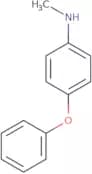
Formula:C11H12O3Purity:Min. 95%Molecular weight:192.21 g/molN-Methyl-4-phenoxyaniline
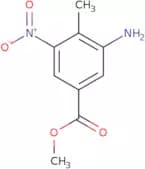
CAS:N-Methyl-4-phenoxyaniline is a molecule that inhibits chitinase, an enzyme that catalyzes the hydrolysis of chitin, and molting. N-Methyl-4-phenoxyaniline has been shown to be potent inhibitor of the enzyme amide in vitro. It also inhibits onchocerca volvulus and in vivo, which may be due to its ability to inhibit the synthesis of fatty acids. This drug has not been tested against other parasites or mammals, but it is an anthelmintic drug.Formula:C13H13NOPurity:Min. 95%Molecular weight:199.25 g/molMethyl 3-amino-4-methyl-5-nitrobenzoate
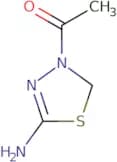
CAS:Versatile small molecule scaffoldFormula:C12H6N2O2Purity:Min. 95%Molecular weight:210.19 g/mol1-(5-Amino-2,3-dihydro-1,3,4-thiadiazol-3-yl)ethan-1-one
CAS:Versatile small molecule scaffoldFormula:C4H7N3OSPurity:Min. 95%Molecular weight:145.19 g/mol[3-(Methoxymethyl)-6-oxabicyclo[3.1.0]hexan-3-yl]methanol
CAS:Versatile small molecule scaffoldFormula:C8H14O3Purity:Min. 95%Molecular weight:158.2 g/mol6-(Methylsulfanyl)hexanenitrile
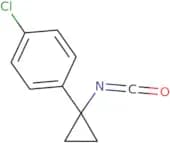
CAS:6-(Methylsulfanyl)hexanenitrile is a fatty acid that has been used as an antioxidant. 6-(Methylsulfanyl)hexanenitrile is synthesized by the reaction of methylmalonyl-CoA with acetoacetyl-CoA and has been shown to have strong antioxidant activity. It is also found in natural products such as the glucosinolates, which are secondary plant metabolites. 6-(Methylsulfanyl)hexanenitrile is produced by the plant in response to microbial infection, and it can inhibit Candida glabrata growth. It also has antimicrobial properties against other types of fungi.Formula:C7H13NSPurity:Min. 95%Molecular weight:143.25 g/mol1-Chloro-4-(1-isocyanatocyclopropyl)benzene
CAS:Versatile small molecule scaffold
Formula:C10H8ClNOPurity:Min. 95%Molecular weight:193.63 g/mol

![4H,5H,6H,7H-Pyrazolo[1,5-a]pyrazine-2-carboxylic acid hydrochloride](/_next/image/?url=https%3A%2Fstatic.cymitquimica.com%2Fproducts%2F3D%2Fthumb-webp%2FJFD01381.webp&w=3840&q=75)
![1-[3-(Trifluoromethyl)phenyl]prop-2-yn-1-one](/_next/image/?url=https%3A%2Fstatic.cymitquimica.com%2Fproducts%2F3D%2Fthumb-webp%2FXCA83912.webp&w=3840&q=75)
![rac-(3aR,6aR)-Octahydrocyclopenta[b]pyrrol-2-one](/_next/image/?url=https%3A%2Fstatic.cymitquimica.com%2Fproducts%2F3D%2Fthumb-webp%2FXCA84514.webp&w=3840&q=75)
![rac-[(1R,3S,5S)-3,5-Bis(hydroxymethyl)cyclohexyl]methanol](/_next/image/?url=https%3A%2Fstatic.cymitquimica.com%2Fproducts%2F3D%2Fthumb-webp%2FXCA89046.webp&w=3840&q=75)
![6,7-Dihydropyrrolo[2,3-c]azepine-4,8(1H,5H)-dione](/_next/image/?url=https%3A%2Fstatic.cymitquimica.com%2Fproducts%2F3D%2Fthumb-webp%2FXCA90887.webp&w=3840&q=75)
![[3-(Methoxymethyl)-6-oxabicyclo[3.1.0]hexan-3-yl]methanol](/_next/image/?url=https%3A%2Fstatic.cymitquimica.com%2Fproducts%2F3D%2Fthumb-webp%2FKQD93637.webp&w=3840&q=75)