Building Blocks
This section contains fundamental products for the synthesis of organic and biological compounds. Building blocks are the essential starting materials used to construct complex molecules through various chemical reactions. They play a critical role in drug discovery, material science, and chemical research. At CymitQuimica, we offer a diverse range of high-quality building blocks to support your innovative research and industrial projects, ensuring you have the essential components for successful synthesis.
Subcategories of "Building Blocks"
- Boronic Acids & Boronic Acid Derivatives(5,780 products)
- Chiral Building Blocks(1,241 products)
- Hydrocarbon Building Blocks(6,100 products)
- Organic Building Blocks(61,029 products)
Found 205306 products of "Building Blocks"
Sort by
Purity (%)
0
100
|
0
|
50
|
90
|
95
|
100
Ropinirole methylene dimer
CAS:Please enquire for more information about Ropinirole methylene dimer including the price, delivery time and more detailed product information at the technical inquiry form on this pageFormula:C33H48N4O2Purity:Min. 95%Molecular weight:532.76 g/molRTI-13951-33 hydrochloride
CAS:Please enquire for more information about RTI-13951-33 hydrochloride including the price, delivery time and more detailed product information at the technical inquiry form on this pageFormula:C28H33N3O3•(HCl)2Purity:Min. 95%Molecular weight:532.5 g/molRuthenium(III) chloride
CAS:Ruthenium(III) chloride is a compound of ruthenium and chlorine that is used in the preparation of pharmaceuticals. Ruthenium(III) chloride reacts with potassium dichromate to form stable complexes, as well as being oxidized by picolinic acid or other oxidizing agents to form stable complexes. It has been shown to be an effective catalyst for organic synthesis reactions and biological studies have shown it can inhibit the growth of bacteria such as Mycobacterium tuberculosis by inhibiting the synthesis of proteins necessary for cell division. Ruthenium(III) chloride also forms complexes with amines and nitrogen atoms, which may be due to its ability to bind with these groups.Formula:RuCl3Purity:Min. 95%Color and Shape:Black SolidMolecular weight:207.43 g/molN-Methyl-1-(pyridin-2-yl)piperidin-4-amine
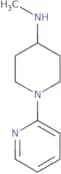
CAS:Versatile small molecule scaffoldFormula:C11H17N3Purity:Min. 95%Molecular weight:191.27 g/mol3-(Phenoxymethyl)piperidine
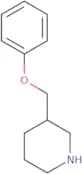
CAS:Versatile small molecule scaffoldFormula:C12H17NOPurity:Min. 95%Molecular weight:191.27 g/moltert-Butyl 3-(oxiran-2-yl)piperidine-1-carboxylate
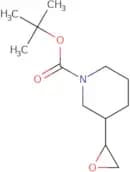
CAS:Versatile small molecule scaffoldFormula:C12H21NO3Purity:Min. 95%Molecular weight:227.3 g/molMethyl 6-[(4-hydroxyphenyl)formamido]hexanoate
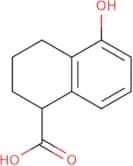
CAS:Versatile small molecule scaffoldFormula:C14H19NO4Purity:Min. 95%Molecular weight:265.3 g/mol5-Hydroxy-1,2,3,4-tetrahydronaphthalene-1-carboxylic acid
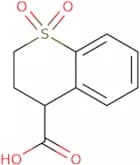
CAS:Versatile small molecule scaffoldFormula:C11H12O3Purity:Min. 95%Molecular weight:192.21 g/mol1,1-dioxo-3,4-dihydro-2H-thiochromene-4-carboxylic acid
CAS:Versatile small molecule scaffold
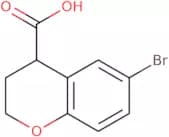
Formula:C10H10O4SPurity:Min. 95%Molecular weight:226.25 g/mol6-Bromo-3,4-dihydro-2H-1-benzopyran-4-carboxylic acid
CAS:Versatile small molecule scaffold
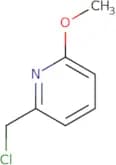
Formula:C10H9BrO3Purity:Min. 95%Molecular weight:257.08 g/mol2-(Chloromethyl)-6-methoxypyridine
CAS:2-(Chloromethyl)-6-methoxypyridine (2CMP) is a potent anti-tuberculosis agent that also has antibacterial activity. It is an analogue of 2,6-dichloropyridine. The compound is synthesised from 2-bromo-4,5-dimethoxyaniline and methyl chloroformate in the presence of potassium carbonate. It has been shown to have oral bioavailability and a good bioavailability. 2CMP has antibacterial potency but its potency varies unpredictably with changes in heterocycles or thiophenes.Formula:C7H8ClNOPurity:Min. 95%Molecular weight:157.6 g/mol5H,6H,7H,8H-Pyrido[3,4-b]pyrazine
CAS:Versatile small molecule scaffold
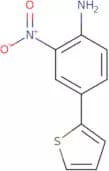
Formula:C7H9N3Purity:Min. 95%Molecular weight:135.17 g/mol2-Nitro-4-(thiophen-2-yl)aniline
CAS:Versatile small molecule scaffold
Formula:C10H8N2O2SPurity:Min. 95%Molecular weight:220.25 g/mol2,3-Dihydro-4H-pyrano[3,2-b]pyridin-4-one
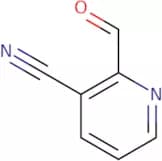
CAS:Versatile small molecule scaffoldFormula:C8H7NO2Purity:Min. 95%Molecular weight:149.15 g/mol2-Formylnicotinonitrile
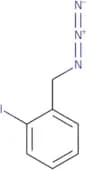
CAS:2-Formylnicotinonitrile is a functional group that has been shown to react with glycosylases, which are enzymes that catalyze the hydrolysis of glycosidic bonds. 2-Formylnicotinonitrile has been shown to inhibit the activity of photosynthetic pigments such as chlorophylls and carotenoids in plants. This compound is able to form a complex with palladium and other transition metals to produce oxidative damage in DNA. It can also be used as a chromatographic method for determining nitrogen atoms in organic compounds or for simulating nmr spectra.Formula:C7H4N2OPurity:Min. 95%Molecular weight:132.12 g/mol1-(Azidomethyl)-2-iodobenzene
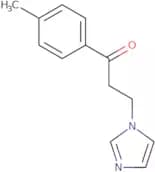
CAS:Versatile small molecule scaffoldFormula:C7H6IN3Purity:Min. 95%Molecular weight:259.05 g/mol3-(1H-Imidazol-1-yl)-1-(4-methylphenyl)propan-1-one
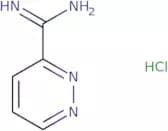
CAS:Versatile small molecule scaffoldFormula:C13H14N2OPurity:Min. 95%Molecular weight:214.26 g/molPyridazine-3-carboximidamide hydrochloride
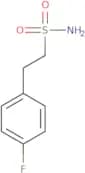
CAS:Versatile small molecule scaffoldFormula:C5H7ClN4Purity:Min. 95%Molecular weight:158.59 g/mol2-(4-Fluorophenyl)ethane-1-sulfonamide
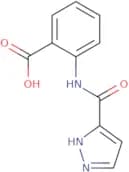
CAS:Versatile small molecule scaffoldFormula:C8H10FNO2SPurity:Min. 95%Molecular weight:203.24 g/mol2-(1H-Pyrazole-3-amido)benzoic acid
CAS:Versatile small molecule scaffoldFormula:C11H9N3O3Purity:Min. 95%Molecular weight:231.21 g/mol


![Methyl 6-[(4-hydroxyphenyl)formamido]hexanoate](/_next/image/?url=https%3A%2Fstatic.cymitquimica.com%2Fproducts%2F3D%2Fthumb-webp%2FFRA09612.webp&w=3840&q=75)
![5H,6H,7H,8H-Pyrido[3,4-b]pyrazine](/_next/image/?url=https%3A%2Fstatic.cymitquimica.com%2Fproducts%2F3D%2Fthumb-webp%2FFRA16262.webp&w=3840&q=75)
![2,3-Dihydro-4H-pyrano[3,2-b]pyridin-4-one](/_next/image/?url=https%3A%2Fstatic.cymitquimica.com%2Fproducts%2F3D%2Fthumb-webp%2FFRA17448.webp&w=3840&q=75)