Building Blocks
This section contains fundamental products for the synthesis of organic and biological compounds. Building blocks are the essential starting materials used to construct complex molecules through various chemical reactions. They play a critical role in drug discovery, material science, and chemical research. At CymitQuimica, we offer a diverse range of high-quality building blocks to support your innovative research and industrial projects, ensuring you have the essential components for successful synthesis.
Subcategories of "Building Blocks"
- Boronic Acids & Boronic Acid Derivatives(5,781 products)
- Chiral Building Blocks(1,242 products)
- Hydrocarbon Building Blocks(6,101 products)
- Organic Building Blocks(61,033 products)
Found 205320 products of "Building Blocks"
Sort by
Purity (%)
0
100
|
0
|
50
|
90
|
95
|
100
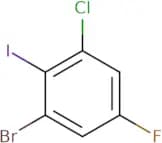
1-Bromo-3-chloro-5-fluoro-2-iodobenzene
CAS:Versatile small molecule scaffold
Formula:C6H2BrClFIPurity:Min. 95%Molecular weight:335.34 g/molHexahydropyrrolo[1,2-a]pyrazin-4(1H)-one
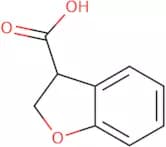
CAS:Versatile small molecule scaffoldFormula:C7H12N2OPurity:Min. 95%Molecular weight:140.19 g/mol2,3-Dihydrobenzofuran-3-carboxylic acid
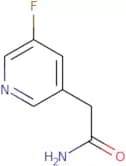
CAS:Versatile small molecule scaffoldFormula:C9H8O3Purity:Min. 95%Molecular weight:164.16 g/mol2-(5-Fluoropyridin-3-yl)acetamide
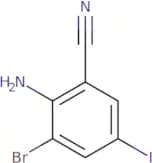
CAS:Versatile small molecule scaffoldFormula:C7H7FN2OPurity:Min. 95%Molecular weight:154.14 g/mol2-Amino-3-bromo-5-iodobenzonitrile
CAS:Versatile small molecule scaffold
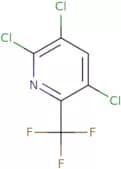
Formula:C7H4BrIN2Purity:Min. 95%Molecular weight:322.93 g/mol2,3,5-Trichloro-6-(trifluoromethyl)pyridine
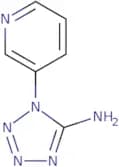
CAS:Versatile small molecule scaffoldFormula:C6HCl3F3NPurity:Min. 95%Molecular weight:250.4 g/mol1-(Pyridin-3-yl)-1H-1,2,3,4-tetrazol-5-amine
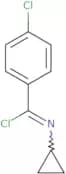
CAS:Versatile small molecule scaffoldFormula:C6H6N6Purity:Min. 95%Molecular weight:162.2 g/mol4-Chloro-N-cyclopropylbenzene-1-carbonimidoyl chloride
CAS:Versatile small molecule scaffold
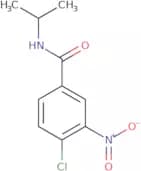
Formula:C10H9Cl2NPurity:Min. 95%Molecular weight:214.09 g/mol4-Chloro-3-nitro-N-(propan-2-yl)benzamide
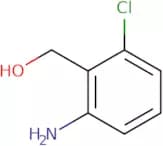
CAS:Versatile small molecule scaffoldFormula:C10H11ClN2O3Purity:Min. 95%Molecular weight:242.66 g/mol(2-Amino-6-chlorophenyl)methanol
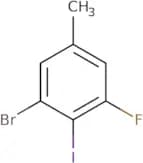
CAS:2-Amino-6-chlorophenyl)methanol is a cyclic amine with a chloro substituent. It has been used as a precursor for the synthesis of carbamates and iminium compounds. The synthesis of 2-aminopyridine (1) from 2-amino-6-chlorophenol (2) involves an oxidative coupling reaction followed by an iminium formation. This process can be done in one step or in two steps, depending on the type of coupling agent used. The yields of this process are dependent on the reagents used, but can be up to 98% when using potassium permanganate as the coupling agent.Formula:C7H8ClNOPurity:Min. 95%Molecular weight:157.6 g/mol3-Bromo-5-fluoro-4-iodotoluene
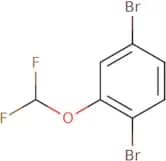
CAS:Versatile small molecule scaffoldFormula:C7H5BrFIPurity:Min. 95%Molecular weight:314.92 g/mol1,4-dibromo-2-(difluoromethoxy)benzene
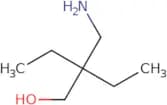
CAS:Versatile small molecule scaffoldFormula:C7H4Br2F2OPurity:Min. 95%Molecular weight:301.9 g/mol2-(Aminomethyl)-2-ethylbutan-1-ol
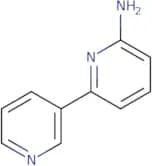
CAS:Versatile small molecule scaffoldFormula:C7H17NOPurity:Min. 95%Molecular weight:131.22 g/mol3-(6-Aminopyridin-2-yl)pyridine
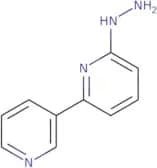
CAS:Versatile small molecule scaffoldFormula:C10H9N3Purity:Min. 95%Molecular weight:171.2 g/mol2-Hydrazinyl-6-(pyridin-3-yl)pyridine
CAS:Versatile small molecule scaffoldFormula:C10H10N4Purity:Min. 95%Molecular weight:186.21 g/mol2-Oxo-6-(pyridin-4-yl)-1,2-dihydropyridine-3-carbonitrile
CAS:Versatile small molecule scaffold
Formula:C11H7N3OPurity:Min. 95%Molecular weight:197.19 g/molN-Methylthiophene-2-carboxamide
CAS:N-Methylthiophene-2-carboxamide is an organic compound with a carbonyl group. The conformational and molecular parameters of this compound have been determined using X-ray diffraction and validated by quantum chemical calculations. It has been shown that N-Methylthiophene-2-carboxamide can modulate the conformational behavior of proteins, including their function as enzyme inhibitors, and it is also able to bind to DNA in a covalent manner. N-Methylthiophene-2-carboxamide can be used as a solvent for other molecules that are insoluble in water or other solvents.Formula:C6H7NOSPurity:Min. 95%Molecular weight:141.19 g/mol8-Azabicyclo[5.2.0]nonane
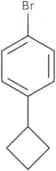
CAS:Versatile small molecule scaffoldFormula:C8H15NPurity:Min. 95%Molecular weight:125.21 g/molBenzene, 1-bromo-4-cyclobutyl-
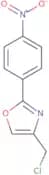
CAS:Versatile small molecule scaffoldFormula:C10H11BrPurity:Min. 95%Molecular weight:211.1 g/mol4-(Chloromethyl)-2-(4-nitrophenyl)-1,3-oxazole
CAS:Versatile small molecule scaffoldFormula:C10H7ClN2O3Purity:Min. 95%Molecular weight:238.63 g/mol

![Hexahydropyrrolo[1,2-a]pyrazin-4(1H)-one](/_next/image/?url=https%3A%2Fstatic.cymitquimica.com%2Fproducts%2F3D%2Fthumb-webp%2FAQB57763.webp&w=3840&q=75)


![8-Azabicyclo[5.2.0]nonane](/_next/image/?url=https%3A%2Fstatic.cymitquimica.com%2Fproducts%2F3D%2Fthumb-webp%2FPBA87295.webp&w=3840&q=75)