


Building Blocks
Subcategories of "Building Blocks"
- Boronic Acids & Boronic Acid Derivatives(5,783 products)
- Chiral Building Blocks(1,242 products)
- Hydrocarbon Building Blocks(6,105 products)
- Organic Building Blocks(61,055 products)
Found 205383 products of "Building Blocks"
2-Amino-5-tert-butylbenzoic acid
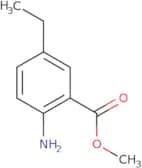
CAS:Versatile small molecule scaffoldFormula:C11H15NO2Purity:90%MinMolecular weight:193.24 g/molMethyl 2-amino-5-ethylbenzoate
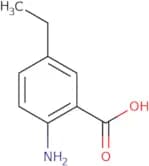
CAS:Versatile small molecule scaffoldFormula:C10H13NO2Purity:Min. 95%Molecular weight:179.22 g/mol2-Amino-5-ethylbenzoic acid
CAS:2-Amino-5-ethylbenzoic acid (2A5EB) is a chalcone that has been shown to have antimicrobial and antitumor properties. 2A5EB inhibits the synthesis of proteins by binding to the ribosomal RNA, which prevents the production of proteins vital for cell division. 2A5EB also inhibits protein synthesis by binding to the ribosomal RNA in mammalian cells. 2A5EB has been shown to have anticancer activity against human cancer cell lines and has also been used as a lead compound in drug discovery programs.Formula:C9H11NO2Purity:Min. 95%Molecular weight:165.19 g/molDiheptylae hydrochloride
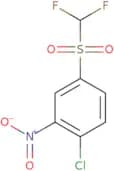
CAS:Versatile small molecule scaffoldFormula:C14H32ClNPurity:Min. 95%Molecular weight:249.86 g/mol1-Chloro-4-difluoromethanesulfonyl-2-nitrobenzene
CAS:Versatile small molecule scaffoldFormula:C7H4ClF2NO4SPurity:Min. 95%Molecular weight:271.63 g/mol5-Isocyanatobicyclo[2.2.1]hept-2-enes
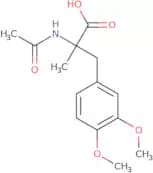
CAS:Versatile small molecule scaffoldFormula:C8H9NOPurity:Min. 95%Molecular weight:135.2 g/mol(2R)-3-(3,4-Dimethoxyphenyl)-2-acetamido-2-methylpropanoic acid
CAS:Versatile small molecule scaffold
Formula:C14H19NO5Purity:Min. 95%Molecular weight:281.3 g/mol2-Nonylquinolin-4-ol
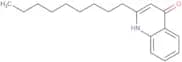
CAS:2-Nonylquinolin-4-ol is a molecule that binds to the human receptor and has a trajectory. It has been shown to be a potent antimicrobial agent against bacteria, fungi, and viruses. The lysing of cells in vitro is an indication of the cytotoxicity of 2-nonylquinolin-4-ol. This molecule is also known for its ability to inhibit HIV infection by binding to CD4 receptors. This compound has an n-oxide group, which is formed from the reaction of oxygen with a hydroxyl group on the C2 position of the quinoline ring. 2-Nonylquinolin-4-ol can be found in chemical structures such as polymers and dyes.Formula:C18H25NOPurity:Min. 95%Molecular weight:271.4 g/molN-Tert-butylbenzenesulfonamide
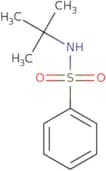
CAS:N-Tert-butylbenzenesulfonamide is a sulfonamide that reacts with an azide to form a five-membered ring. This reaction is known as the aziridination reaction. N-Tert-butylbenzenesulfonamide is insoluble in water and has a molecular weight of 200 g/mol. It is used in polymerase chain reactions, which are experiments where the enzyme DNA polymerase replicates the DNA molecule by adding nucleotides to each end of the strand. N-Tert-butylbenzenesulfonamide has been shown to inhibit RNA polymerase activity and cellular growth in vitro. This agent also inhibits protein synthesis by interfering with the binding of tRNA molecules to ribosomes, preventing amino acids from being incorporated into proteins.
Formula:C10H15NO2SPurity:Min. 95%Molecular weight:213.3 g/mol2-(4-methylphenyl)-1,2-benzisothiazol-3(2H)-one
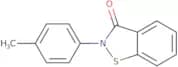
CAS:2-(4-methylphenyl)-1,2-benzisothiazol-3(2H)-one (BMS) is a chemical compound that has been shown to have inhibitory properties against infectious diseases. BMS is an analog of ethylene diamine and selenium compounds, which are known for their inhibitory effects against bowel disease. It has been found to be effective against subcutaneous tumors in mice. In addition, it has been shown to have a beneficial effect on inflammatory bowel disease in mouse models and skin cancer in rats. BMS also inhibits the proliferation of granulosa cells and K562 cells by inhibiting cell signaling pathways.Formula:C14H11NOSPurity:Min. 95%Molecular weight:241.31 g/mol5-Chloro-2,3-dihydro-1,2-benzisothiazole 1,1-dioxide
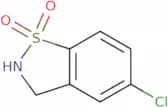
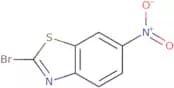
CAS:Versatile small molecule scaffoldFormula:C7H6ClNO2SPurity:Min. 95%Molecular weight:203.65 g/mol2-Bromo-6-nitro-1,3-benzothiazole
CAS:2-Bromo-6-nitro-1,3-benzothiazole is a synthetic compound that is used in optical chemistry. It functions as a coupling agent and has been shown to be efficient in its use. 2-Bromo-6-nitro-1,3-benzothiazole also has magnetic properties, which can be useful for synthesizing polymers. This compound is an organic compound that belongs to the family of heterocycles and has redox properties, electrochemical properties, and structural properties. The synthesis of 2-bromo-6 nitrobenzothiazole involves the following steps:
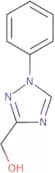
Formula:C7H3BrN2O2SPurity:Min. 95%Molecular weight:259.08 g/mol(1-Phenyl-1H-1,2,4-triazol-3-yl)methanol
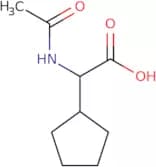
CAS:Versatile small molecule scaffoldFormula:C9H9N3OPurity:Min. 95%Molecular weight:175.19 g/mol(R)-2-Acetamido-2-cyclopentylacetic acid
CAS:Versatile small molecule scaffold
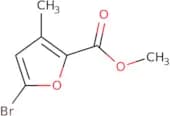
Formula:C9H15NO3Purity:Min. 95%Molecular weight:185.22 g/molMethyl 5-bromo-3-methylfuran-2-carboxylate
CAS:Methyl 5-bromo-3-methylfuran-2-carboxylate (MBM) is a metabolite that is synthesised from the sesquiterpenoid, furan. MBM is an efficient sponge for atmospheric bromine and has been shown to be an intermediate in the biosynthesis of acyclic compounds.Formula:C7H7BrO3Purity:Min. 95%Molecular weight:219.03 g/molHeptanoyl chloride
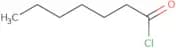
CAS:Heptanoyl chloride is an organic chemical compound that belongs to the group of acyl halides. It is a colorless gas that has a strong, unpleasant smell. Heptanoyl chloride reacts with hydrochloric acid and trifluoroacetic acid to form heptanoic acid and trifluoroacetone. The nucleophilic attack on the carbonyl carbon leads to formation of the corresponding alkyl halide. The reaction of heptanoyl chloride with nitro leads to formation of the corresponding nitroalkane. Heptanoyl chloride can be used in detergent compositions as a fatty acid or galacturonic acid substitute. It is also used in pharmaceutical preparations for the treatment of inflammatory diseases such as arthritis, asthma, and psoriasis.Formula:C7H13ClOPurity:Min. 95%Molecular weight:148.63 g/molEthyl 2-nitropropionate
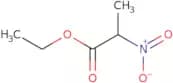
CAS:Ethyl 2-nitropropionate is an organic compound that is a monosubstituted nitroalkane. It is a colorless liquid with a characteristic odor. This compound has been used in the production of polyacrylamide, polyacrylic acid, and polyacrylonitrile resins. It is also used as a chemical intermediate in the production of quaternary ammonium salts or alkylating agents. Ethyl 2-nitropropionate is activated by chloride and reacts with amines to form nitrosamines. The nitro group on this compound can undergo nucleophilic attack by alcohols to form nitrate esters (e.g., ethyl 2-nitropentanoate).Formula:C5H9NO4Purity:Min. 95%Molecular weight:147.13 g/mol2-(1-Methyl-1H-indol-3-yl)-ethanol
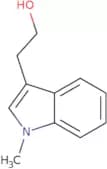
CAS:Controlled ProductVersatile small molecule scaffoldFormula:C11H13NOPurity:Min. 95%Molecular weight:175.23 g/mol2,2,2-Trichloro-N'-hydroxyethanimidamide
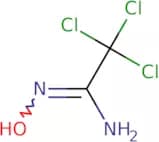
CAS:2,2,2-Trichloro-N'-hydroxyethanimidamide (TCEH) is a potent antibacterial agent that has been used in analytical chemistry as a reagent for the determination of anilines. It inhibits bacterial growth by binding to DNA and RNA. The profile of TCEH was determined by ultrasonication and found to be active against most Gram-positive bacteria, but inactive against Gram-negative bacteria. In addition, this drug was shown to be effective against oxadiazole-resistant strains of bacteria. The mechanism of TCEH is based on the reaction with an acyl halide to generate a reactive intermediate which attacks the nucleophilic center of the DNA molecule. This results in strand breakage and subsequent inhibition of bacterial growth. TCEH can be used as a substitute for other more toxic compounds such as mercury or arsenic compounds that are often used in chemical synthesis reactions.
Formula:C2H3Cl3N2OPurity:Min. 95%Molecular weight:177.41 g/mol2-Oxobicyclo[2.2.1]heptane-1-carboxylic acid
CAS:2-Oxobicyclo[2.2.1]heptane-1-carboxylic acid is an organic compound that belongs to the group of carboxylic acids. It can be synthesized by dehydration of formic acid with ethyl bromoacetate, followed by hydrolysis of the resulting 2-formylbicyclo[2.2.1]heptane-1-carboxylic acid with base. The compound can also be obtained by catalytic demercuration of oxymercuration products of tetrahydrofuran, and has been shown to have analogous reactions as methyl formate and acetone.Formula:C8H10O3Purity:Min. 95%Molecular weight:154.16 g/mol



![5-Isocyanatobicyclo[2.2.1]hept-2-enes](/_next/image/?url=https%3A%2Fstatic.cymitquimica.com%2Fproducts%2F3D%2Fthumb-webp%2FCAA49545.webp&w=3840&q=75)
![2-Oxobicyclo[2.2.1]heptane-1-carboxylic acid](/_next/image/?url=https%3A%2Fstatic.cymitquimica.com%2Fproducts%2F3D%2Fthumb-webp%2FCAA53470.webp&w=3840&q=75)