Building Blocks
This section contains fundamental products for the synthesis of organic and biological compounds. Building blocks are the essential starting materials used to construct complex molecules through various chemical reactions. They play a critical role in drug discovery, material science, and chemical research. At CymitQuimica, we offer a diverse range of high-quality building blocks to support your innovative research and industrial projects, ensuring you have the essential components for successful synthesis.
Subcategories of "Building Blocks"
- Boronic Acids & Boronic Acid Derivatives(5,783 products)
- Chiral Building Blocks(1,242 products)
- Hydrocarbon Building Blocks(6,105 products)
- Organic Building Blocks(61,055 products)
Found 205383 products of "Building Blocks"
Sort by
Purity (%)
0
100
|
0
|
50
|
90
|
95
|
100
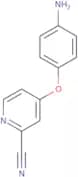
4-(4-Aminophenoxy)pyridine-2-carbonitrile
CAS:Versatile small molecule scaffold
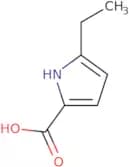
Formula:C12H9N3OPurity:Min. 95%Molecular weight:211.22 g/mol5-Ethyl-1H-pyrrole-2-carboxylic acid
CAS:Versatile small molecule scaffold
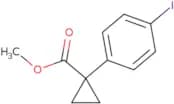
Formula:C7H9NO2Purity:Min. 95%Molecular weight:139.15 g/molMethyl 1-(4-iodophenyl)cyclopropanecarboxylate
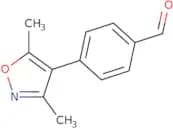
CAS:Versatile small molecule scaffoldFormula:C11H11IO2Purity:Min. 95%Molecular weight:302.11 g/mol4-(3,5-Dimethylisoxazol-4-yl)benzaldehyde
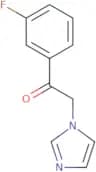
CAS:Versatile small molecule scaffoldFormula:C12H11NO2Purity:Min. 95%Molecular weight:201.22 g/mol1-(3-Fluorophenyl)-2-(1H-imidazol-1-yl)ethan-1-one
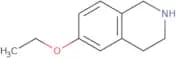
CAS:Versatile small molecule scaffoldFormula:C11H9FN2OPurity:Min. 95%Molecular weight:204.2 g/mol6-Ethoxy-1,2,3,4-tetrahydroisoquinoline
CAS:Versatile small molecule scaffoldFormula:C11H15NOPurity:Min. 95%Molecular weight:177.24 g/mol2-Bromoethanol
CAS:2-Bromoethanol is a chemical used in the manufacture of sodium salts and ethylene. It has been shown to inhibit the enzyme activity of wild-type strains of E. coli, but not resistant mutants. 2-Bromoethanol was found to cause cell lysis, which may be due to its hydroxyl group reacting with argon, forming reactive oxygen species. The reaction mechanism for 2-bromoethanol is as follows: 2-bromoethanol + H2O → 2-(hydroxyethyl) bromide + HBr + heat
Formula:C2H5BrOPurity:Min. 95%Color and Shape:Colorless Clear LiquidMolecular weight:124.96 g/molBis(tri-tert-butylphosphine)palladium(0)
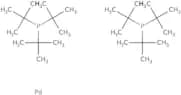
CAS:Bis(tri-tert-butylphosphine)palladium(0) is a chemical compound, insoluble in organic solvents. It has been used as a catalyst for cross-coupling reactions in organic chemistry. Bis(tri-tert-butylphosphine)palladium(0) reacts with sodium salts and palladium-catalyzed cross-coupling to form an insoluble complex in the presence of hexane, which is soluble in organic solvents. The reaction proceeds through reductive elimination, yielding a trisubstituted product. This process can be used for the synthesis of halides and transmetallation.Formula:C24H54P2PdPurity:Min. 95%Color and Shape:White PowderMolecular weight:511.05 g/mol5-Bromobenzo[d]oxazol-2-amine
CAS:5-Bromobenzo[d]oxazol-2-amine is a chemical that is used in the treatment of cancer. It is synthesized from benzoic acid and bromoacetonitrile. 5-Bromobenzo[d]oxazol-2-amine is an anticancer agent that has been shown to have a depressant activity on animal tissues, which may be due to its ability to neutralize cyanogen chloride, a chemical that reacts with organic solvents and produces toxic gases such as hydrogen cyanide. This drug also binds to DNA, preventing cell growth and causing cell death. 5-Bromobenzo[d]oxazol-2-amine can be used to treat cancer cells in mice and has been shown to inhibit the proliferation of MCT7 cells. It also inhibits the growth of human breast cancer cells by blocking protein synthesis at the ribosome level.Formula:C7H5BrN2OPurity:Min. 95%Molecular weight:213.03 g/mol4-tert-Butylbenzaldehyde
CAS:4-tert-Butylbenzaldehyde is an organic compound with the molecular formula CH3COCH2C6H5. It is a viscous liquid that is insoluble in water and has a boiling point of 146 °C. 4-tert-Butylbenzaldehyde reacts with cationic surfactants to form polymeric micelles, which are spherical structures composed of many small spherical subunits. These polymeric micelles are used as model systems for studying the properties of surfactant aggregates in solution. The reaction mechanism for this polymerization process involves the oxidation of 4-tert-butylbenzaldehyde by hydrogen peroxide and the subsequent condensation of 4-tert-butylbenzoic acid with malonic acid or other cinnamic acid derivatives to form the corresponding esters. The oxidized product, 4-tert-butylbenzoic acid, can be regenerated by boiling a mixture containing itFormula:C11H14OPurity:Min. 96.5%Color and Shape:Colorless Clear LiquidMolecular weight:162.23 g/mol1-Phenyl-1H-pyrrole-2-carbaldehyde
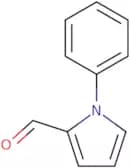
CAS:Versatile small molecule scaffoldFormula:C11H9NOPurity:Min. 95%Molecular weight:171.2 g/mol1-tert-Butyl-1H-pyrrole-3-carbaldehyde
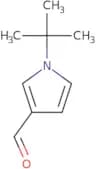
CAS:Versatile small molecule scaffoldFormula:C9H13NOPurity:Min. 95%Molecular weight:151.21 g/mol1-Benzyl-1H-pyrrole-3-carbaldehyde
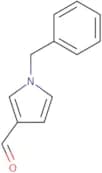
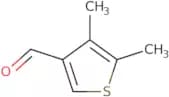
CAS:1-Benzyl-1H-pyrrole-3-carbaldehyde is an acylpyrrole that can be synthesized from the reaction of sodium borohydride with acetaldehyde or benzaldehyde. It is used in heteroarylation reactions, which are efficient methods for the synthesis of a variety of indoles. 1-Benzyl-1H-pyrrole-3-carbaldehyde has also been shown to be effective in reductive amination reactions, which are used to generate pyrroles from indole and aldehyde precursors.Formula:C12H11NOPurity:Min. 95%Molecular weight:185.22 g/mol4,5-Dimethylthiophene-3-carbaldehyde
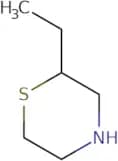
CAS:Versatile small molecule scaffoldFormula:C7H8OSPurity:Min. 95%Molecular weight:140.2 g/mol2-Ethylthiomorpholine
CAS:Versatile small molecule scaffoldFormula:C6H13NSPurity:Min. 95%Molecular weight:131.24 g/mol2-Methylthiomorpholine hydrochloride
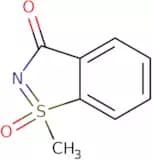
CAS:Versatile small molecule scaffoldFormula:C5H12ClNSPurity:Min. 95%Molecular weight:153.7 g/mol1-Methyl-3H-1λ⁶,2-benzothiazole-1,3-dione
CAS:Versatile small molecule scaffoldFormula:C8H7NO2SPurity:Min. 95%Molecular weight:181.21 g/molrac-(3aR,6aR)-Hexahydrofuro[3,4-d][1,3]oxazol-2-one
CAS:Versatile small molecule scaffold
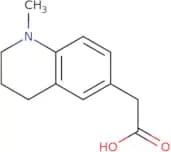
Formula:C5H7NO3Purity:Min. 95%Molecular weight:129.1 g/mol2-(1-Methyl-1,2,3,4-tetrahydroquinolin-6-yl)acetic acid
CAS:Versatile small molecule scaffold
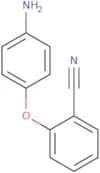
Formula:C12H15NO2Purity:Min. 95%Molecular weight:205.25 g/mol2-(4-Aminophenoxy)benzonitrile
CAS:Versatile small molecule scaffoldFormula:C13H10N2OPurity:Min. 95%Molecular weight:210.23 g/mol


![5-Bromobenzo[d]oxazol-2-amine](/_next/image/?url=https%3A%2Fstatic.cymitquimica.com%2Fproducts%2F3D%2Fthumb-webp%2FFB32511.webp&w=3840&q=75)

![rac-(3aR,6aR)-Hexahydrofuro[3,4-d][1,3]oxazol-2-one](/_next/image/?url=https%3A%2Fstatic.cymitquimica.com%2Fproducts%2F3D%2Fthumb-webp%2FFBA19756.webp&w=3840&q=75)