Building Blocks
This section contains fundamental products for the synthesis of organic and biological compounds. Building blocks are the essential starting materials used to construct complex molecules through various chemical reactions. They play a critical role in drug discovery, material science, and chemical research. At CymitQuimica, we offer a diverse range of high-quality building blocks to support your innovative research and industrial projects, ensuring you have the essential components for successful synthesis.
Subcategories of "Building Blocks"
- Boronic Acids & Boronic Acid Derivatives(5,783 products)
- Chiral Building Blocks(1,242 products)
- Hydrocarbon Building Blocks(6,105 products)
- Organic Building Blocks(61,055 products)
Found 205383 products of "Building Blocks"
Sort by
Purity (%)
0
100
|
0
|
50
|
90
|
95
|
100
(2-Aminoethyl)(decyl)amine
CAS:(2-Aminoethyl)(decyl)amine is an orthogonal and metallic amino acid that can be used as a ligand for monolayer formation. This amino acid is synthesized from the reaction of 2-aminopropane and decanol, which are both readily available in industry. The unique properties of (2-aminoethyl)(decyl)amine make it an ideal candidate for use in tailored nanoparticles to form a monolayer.Formula:C12H28N2Purity:Min. 95%Molecular weight:200.36 g/molEthyl [(2-methoxyphenyl)carbamoyl]formate
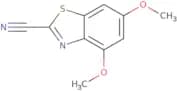
CAS:Versatile small molecule scaffoldFormula:C11H13NO4Purity:Min. 95%Molecular weight:223.22 g/mol4,6-Dimethoxy-2-benzothiazolecarbonitrile
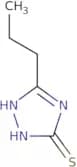
CAS:Versatile small molecule scaffoldFormula:C10H8N2O2SPurity:Min. 95%Molecular weight:220.25 g/mol5-Propyl-4H-1,2,4-triazole-3-thiol
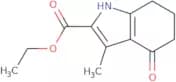
CAS:Versatile small molecule scaffoldFormula:C5H9N3SPurity:Min. 95%Molecular weight:143.21 g/molEthyl 3-methyl-4-oxo-4,5,6,7-tetrahydro-1H-indole-2-carboxylate
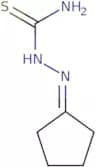
CAS:Versatile small molecule scaffoldFormula:C12H15NO3Purity:Min. 95%Molecular weight:221.25 g/mol(Cyclopentylideneamino)thiourea
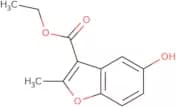
CAS:(Cyclopentylideneamino)thiourea is a chemical compound that is also known as CPT. CPT is a tautomer of the amino acid cysteine and has been shown to have anti-cancer properties in vitro. It chelates with ferric ions, forming a redox cycle that produces reactive oxygen species (ROS). This leads to lipid peroxidation and cell death. CPT has been shown to be effective against neurodegenerative diseases such as Alzheimer's disease, Parkinson's disease, and Huntington's disease. However, it does not work on cancer cells that are resistant to chemotherapy drugs such as 5-fluorouracil or cisplatin. The mechanism of action for these types of cancers is not yet fully understood.Formula:C6H11N3SPurity:Min. 95%Molecular weight:157.24 g/molEthyl 5-hydroxy-2-methyl-1-benzofuran-3-carboxylate
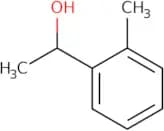
CAS:Ethyl 5-hydroxy-2-methyl-1-benzofuran-3-carboxylate (EHMBFC) is a novel photocurrent sensitizer that has been shown to be effective in the treatment of prostate cancer cells. It is formed by the formylation of an ethyl ester of 5,6,7,8-tetrahydroquinoline. EHMBFC is capable of inducing demethylation reactions with DNA glycosylases and polymerases. The quantum efficiency of this compound has been determined to be greater than 0.5%. This efficiency can be increased by adding ruthenium nanoparticles as a catalyst. EHMBFC is also used in solar cell technology because it can generate charge carriers from visible light and can function as an electron donor or acceptor in organic semiconductors.Formula:C12H12O4Purity:Min. 95%Molecular weight:220.23 g/mol1-(2-Methylphenyl)ethanol
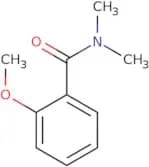
CAS:1-(2-Methylphenyl)ethanol is a colorless liquid with a pleasant odor. It can be used as an intermediate in the synthesis of various pharmaceuticals, such as diazepam and lorazepam. 1-(2-Methylphenyl)ethanol is oxidized to produce toxic metabolites that have been shown to have cytotoxic effects on mitochondria. In addition, 1-(2-Methylphenyl)ethanol has been shown to inhibit the formation of cyclic amides from carboxylic acids and amines by competing for the same enzyme binding site. The toxicity of this compound was studied in rats using acute toxicity tests, and it induced hematological parameters indicative of renal toxicity.Formula:C9H12OPurity:Min. 95%Molecular weight:136.19 g/mol2-Methoxy-N,N-dimethylbenzamide
CAS:Versatile small molecule scaffoldFormula:C10H13NO2Purity:Min. 95%Molecular weight:179.22 g/mol2-[(4-Nitrophenyl)methyl]-1H-1,3-benzodiazole
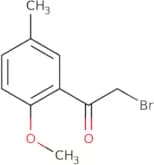
CAS:2-[(4-Nitrophenyl)methyl]-1H-1,3-benzodiazole (NPDB) is an antioxidant that can be used to protect cells against free radical damage. It has significant antioxidant activity and can inhibit the production of reactive oxygen species (ROS). NPDB has been shown to have a protective effect on cells by inhibiting lipid peroxidation and the oxidation of thiadiazole. The antioxidant activities of NPDB are due to its ability to inhibit the activity of various enzymes, such as oxidase, triazole or moieties that significantly affect ROS production.Formula:C14H11N3O2Purity:Min. 95%Molecular weight:253.26 g/mol2-Bromo-1-(2-methoxy-5-methylphenyl)ethan-1-one
CAS:Versatile small molecule scaffoldFormula:C10H11BrO2Purity:Min. 95%Molecular weight:243.1 g/mol[4-(1,3-Dioxaindan-5-yl)butan-2-yl]hydrazine hydrochloride
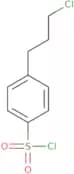
CAS:Controlled Product4-(1,3-Dioxaindan-5-yl)butan-2-yl]hydrazine hydrochloride (4ODBH) is a selective inhibitor of the enzyme dopamine β-hydroxylase. It is used in the treatment of inflammatory bowel disease and has been shown to decrease symptoms of this disease. 4ODBH has also been shown to inhibit adipose tissue inflammation, increase weight loss in obese subjects, and reduce inflammation in the epididymal adipose tissue. This drug can cause toxic epidermal necrolysis and Stevens-Johnson syndrome when taken at high doses. 4ODBH has also been shown to have effects on toll-like receptor signaling pathways and may be an effective drug for treating diabetic neuropathy.Formula:C11H17ClN2O2Purity:Min. 95%Molecular weight:244.72 g/mol4-(3-Chloropropyl)benzene-1-sulfonyl chloride
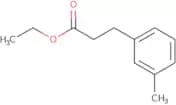
CAS:Versatile small molecule scaffoldFormula:C9H10Cl2O2SPurity:Min. 95%Molecular weight:253.14 g/molEthyl 3-(3-methylphenyl)propanoate
CAS:Versatile small molecule scaffoldFormula:C12H16O2Purity:Min. 95%Molecular weight:192.26 g/mol5'-Acetamido-2'-hydroxyacetophenone
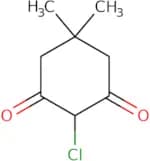
CAS:5'-Acetamido-2'-hydroxyacetophenone is a monoclonal antibody that has been shown to inhibit the growth of cancer cells. The antibody elicits its effect by binding to the benzofuran derivatives, which are oncogenic proteins that promote the development of cancer. In vitro assays have shown that 5'-Acetamido-2'-hydroxyacetophenone inhibits the activity of cromakalim and prognosis in patients with malignant melanoma. There is also evidence suggesting that this drug may be effective against other types of cancer, including prostate, breast, lung, and colon cancers. 5'-Acetamido-2'-hydroxyacetophenone binds to the benzofuran derivatives oncogenic proteins by preventing them from interacting with their receptor and inhibiting protein synthesis. This process leads to cell death by inhibiting the production of proteins vital for cell division. !--END-->/p>Formula:C10H11NO3Purity:Min. 95%Molecular weight:193.2 g/mol2-Chlorodimedone
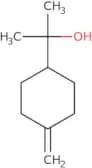
CAS:2-Chlorodimedone is an antimicrobial agent that inhibits the growth of bacteria by binding to chloroperoxidase and preventing the conversion of chloride ions to hypochlorous acid. It has been shown to be effective against a wide variety of microorganisms, including Gram-positive and Gram-negative bacteria, fungi, and yeast. The effectiveness of 2-chlorodimedone has been demonstrated in a model system in which it inhibited the growth of hl-60 cells at concentrations over 10 mM. This anti-microbial agent also has a linear calibration curve with optical sensor measurements and can be used for monitoring chlorination levels in water systems. 2-Chlorodimedone belongs to a class of compounds called chlorinating agents. Chlorinating agents are chemical reagents that produce chlorine when they react with water or other substances. These reactions typically involve oxidation by transfer of electrons from hydrogen peroxide or another substance, such as myeloperoxidase inFormula:C8H11ClO2Purity:Min. 95%Molecular weight:174.62 g/mol2-(4-Methylidenecyclohexyl)propan-2-ol
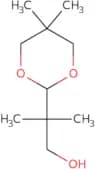
CAS:Terpinen-4-ol is a fatty acid that is found in a variety of plants, including camphor and tea tree. It has been shown to have antibacterial properties. Terpinen-4-ol also interacts with proteins on the surface of bacteria, inhibiting their growth. This inhibition is related to the formation of fatty acid esters, which cause changes in the cell membrane and inhibit protein synthesis. Terpinen-4-ol has been shown to reduce the growth of Camphora and other bacteria by interfering with energy metabolism.Formula:C10H18OPurity:Min. 95%Molecular weight:154.25 g/mol2-(5,5-Dimethyl-1,3-dioxan-2-yl)-2-methylpropan-1-ol
CAS:Versatile small molecule scaffoldFormula:C10H20O3Purity:Min. 95%Molecular weight:188.26 g/mol1,4-Butanediol Bis(3-aminopropyl) Ether
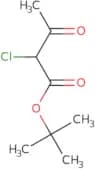
CAS:Controlled Product1,4-Butanediol Bis(3-aminopropyl) Ether is a ether compound that can be used as a chemical reagent. It is a heterobifunctional reagent that can react with two different functional groups to form ether linkages. 1,4-Butanediol Bis(3-aminopropyl) Ether has been shown to be an efficient catalyst for the synthesis of nicotinic acetylcholine in oocytes from the frog Xenopus laevis. More importantly, it has been shown to be an effective catalyst for the synthesis of chiral amines. This chemical reaction occurs through an activating hydrogen atom transfer (HAT) process between nitrogen atoms and chloride ions. The activation energy for this reaction is significantly lower than that of other reactions involving chlorine ions or thallium ions.Formula:C10H24N2O2Purity:Min. 95%Molecular weight:204.31 g/moltert-Butyl 2-chloro-3-oxobutanoate
CAS:Versatile small molecule scaffoldFormula:C8H13ClO3Purity:Min. 95%Molecular weight:192.64 g/mol


![Ethyl [(2-methoxyphenyl)carbamoyl]formate](/_next/image/?url=https%3A%2Fstatic.cymitquimica.com%2Fproducts%2F3D%2Fthumb-webp%2FHAA26726.webp&w=3840&q=75)
![2-[(4-Nitrophenyl)methyl]-1H-1,3-benzodiazole](/_next/image/?url=https%3A%2Fstatic.cymitquimica.com%2Fproducts%2F3D%2Fthumb-webp%2FHAA29196.webp&w=3840&q=75)
![[4-(1,3-Dioxaindan-5-yl)butan-2-yl]hydrazine hydrochloride](/_next/image/?url=https%3A%2Fstatic.cymitquimica.com%2Fproducts%2F3D%2Fthumb-webp%2FHAA29630.webp&w=3840&q=75)