Building Blocks
This section contains fundamental products for the synthesis of organic and biological compounds. Building blocks are the essential starting materials used to construct complex molecules through various chemical reactions. They play a critical role in drug discovery, material science, and chemical research. At CymitQuimica, we offer a diverse range of high-quality building blocks to support your innovative research and industrial projects, ensuring you have the essential components for successful synthesis.
Subcategories of "Building Blocks"
- Boronic Acids & Boronic Acid Derivatives(5,781 products)
- Chiral Building Blocks(1,242 products)
- Hydrocarbon Building Blocks(6,101 products)
- Organic Building Blocks(61,033 products)
Found 205320 products of "Building Blocks"
Sort by
Purity (%)
0
100
|
0
|
50
|
90
|
95
|
100
Cyclohexanecarbonyl isothiocyanate
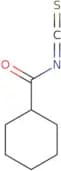
CAS:Cyclohexanecarbonyl isothiocyanate (CHITC) is a reactive thiocyanation agent that can be used to modify proteins. CHITC reacts with amines in the presence of an organocatalyst to form a new molecule, N-isothiocyanato-L-cysteine. This reaction produces reactive intermediates that react with other amine groups on the same protein or with other proteins present in solution. This process has been shown to lead to the selective modification of proteins without affecting the biological activity of these proteins.Formula:C8H11NOSPurity:Min. 95%Molecular weight:169.25 g/mol2,2-Dichloro-1-(3-nitrophenyl)ethan-1-one
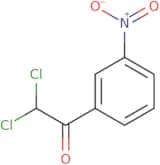
CAS:Versatile small molecule scaffoldFormula:C8H5Cl2NO3Purity:Min. 95%Molecular weight:234.03 g/molMethyl 2-bromo-3-methoxypropionate
CAS:Methyl 2-bromo-3-methoxypropionate is a nucleophilic alcohol. It has been used as a reagent in the preparation of an ether, diethyl ether, and hexane. Methyl 2-bromo-3-methoxypropionate is stable in the presence of light and heat, but reacts very quickly with water. The reaction time can be decreased by using dicarbonate or acetonitrile instead of water. This chemical is also used to study tumour growth and tumor development in animals.Formula:C5H9BrO3Purity:Min. 95%Molecular weight:197.03 g/molN-Methyl-N-[2-(methylamino)ethyl]acetamide
CAS:Versatile small molecule scaffoldFormula:C6H14N2OPurity:Min. 95%Molecular weight:130.19 g/mol4-Chloro-1H-pyrrole-2-carboxylic acid
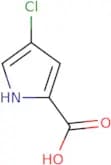
CAS:4-Chloro-1H-pyrrole-2-carboxylic acid is an intermediate in the synthesis of pyrroles. It can be demethylated with formaldehyde and hydrochloric acid to 4-chloropyridine, or chlorinated with phosphorus pentachloride to 4-chloroquinoline.Formula:C5H4ClNO2Purity:Min. 95%Molecular weight:145.54 g/mol5-Chloro-1H-pyrrole-2-carboxylic acid
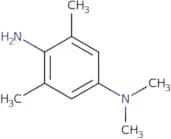
CAS:Versatile small molecule scaffoldFormula:C5H4ClNO2Purity:Min. 95%Molecular weight:145.54 g/mol1-N,1-N,3,5-Tetramethylbenzene-1,4-diamine
CAS:Versatile small molecule scaffold
Formula:C10H16N2Purity:Min. 95%Molecular weight:164.25 g/mol(N-1,N-1)-2-Trimethyl-1,4-benzenediamine
CAS:Versatile small molecule scaffoldFormula:C9H14N2Purity:Min. 95%Molecular weight:150.22 g/molCyclohexylmethylboronic acid
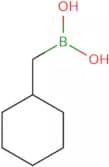
CAS:Cyclohexylmethylboronic acid is a hydroxyalkyl, triazine, formyl, cyanoalkyl, carboxy, sulfur, triazines, heterocycle and alkoxycarbonyl. Cyclohexylmethylboronic acid has been shown to inhibit the growth of bacteria by inhibiting the enzyme DNA gyrase. It also inhibits protein synthesis by blocking the formation of aminoacyl-tRNA complexes. Cyclohexylmethylboronic acid is also able to bind to nitro groups and form a stable adduct with nitrogen atoms in other molecules.Formula:C7H15BO2Purity:Min. 95%Molecular weight:142 g/molEthyl 4,5-dihydro-1,3-oxazole-4-carboxylate
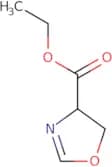
CAS:Versatile small molecule scaffoldFormula:C6H9NO3Purity:Min. 95%Molecular weight:143.14 g/mol6-Aminonaphthalene-2-sulfonamide
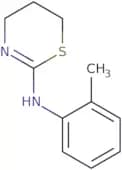
CAS:Versatile small molecule scaffoldFormula:C10H10N2O2SPurity:Min. 95%Molecular weight:222.3 g/molN-(2-Methylphenyl)-5,6-dihydro-4H-1,3-thiazin-2-amine
CAS:Versatile small molecule scaffoldFormula:C11H14N2SPurity:Min. 95%Molecular weight:206.31 g/molN-(2-Chlorophenyl)-5,6-dihydro-4H-1,3-thiazin-2-amine
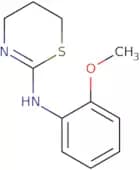
CAS:Versatile small molecule scaffoldFormula:C10H11ClN2SPurity:Min. 95%Molecular weight:226.73 g/molN-(2-Methoxyphenyl)-5,6-dihydro-4H-1,3-thiazin-2-amine
CAS:Versatile small molecule scaffold
Formula:C11H14N2OSPurity:Min. 95%Molecular weight:222.31 g/molEthyl 2-(1-hydroxycyclobutyl)acetate
CAS:Versatile small molecule scaffoldFormula:C8H14O3Purity:Min. 95%Molecular weight:158.19 g/mol5-Oxa-7-azaspiro[3.4]octan-6-one
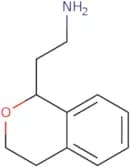
CAS:Versatile small molecule scaffoldFormula:C6H9NO2Purity:Min. 95%Molecular weight:127.14 g/mol2-(3,4-Dihydro-1H-2-benzopyran-1-yl)ethan-1-amine
CAS:Versatile small molecule scaffoldFormula:C11H15NOPurity:Min. 95%Molecular weight:177.24 g/mol1-Benzyl-3-bromobenzene
CAS:Versatile small molecule scaffold
Formula:C13H11BrPurity:Min. 95%Molecular weight:247.13 g/mol2-Methoxyphenylacetic acid methyl ester
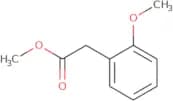
CAS:2-Methoxyphenylacetic acid methyl ester is an enolate that is formed by the demethylation of cinchonidine. The proton of the methyl group can be displaced and 2-methoxyphenylacetic acid methyl ester becomes a nucleophile, attacking the electrophilic carbon atom in malonate to form an intermediate. The molecular modeling and optimized structures have been obtained using quantum mechanics calculations. The chloride ion is used as a counterion to stabilize the negative charge on the phenyl groups, which are substituted with isoflavonoid. Metal ions such as lithium cations are also important for stabilization purposes. Ammonium nitrate is used as an efficient method to produce this compound in high yield.Formula:C10H12O3Purity:Min. 95%Molecular weight:180.2 g/mol1-Methyl-1H-1,2,3-benzotriazol-4-amine
CAS:Versatile small molecule scaffoldFormula:C7H8N4Purity:Min. 95%Molecular weight:148.17 g/mol


![N-Methyl-N-[2-(methylamino)ethyl]acetamide](/_next/image/?url=https%3A%2Fstatic.cymitquimica.com%2Fproducts%2F3D%2Fthumb-webp%2FCBA72541.webp&w=3840&q=75)




![5-Oxa-7-azaspiro[3.4]octan-6-one](/_next/image/?url=https%3A%2Fstatic.cymitquimica.com%2Fproducts%2F3D%2Fthumb-webp%2FCBA78433.webp&w=3840&q=75)