Building Blocks
This section contains fundamental products for the synthesis of organic and biological compounds. Building blocks are the essential starting materials used to construct complex molecules through various chemical reactions. They play a critical role in drug discovery, material science, and chemical research. At CymitQuimica, we offer a diverse range of high-quality building blocks to support your innovative research and industrial projects, ensuring you have the essential components for successful synthesis.
Subcategories of "Building Blocks"
- Boronic Acids & Boronic Acid Derivatives(5,778 products)
- Chiral Building Blocks(1,242 products)
- Hydrocarbon Building Blocks(6,098 products)
- Organic Building Blocks(61,059 products)
Found 199580 products of "Building Blocks"
Sort by
Purity (%)
0
100
|
0
|
50
|
90
|
95
|
100
4-bromo-3-sulfamoylbenzoic acid
CAS:<p>Versatile small molecule scaffold</p>Formula:C7H6BrNO4SPurity:Min. 95%Molecular weight:280.1 g/mol3-(tert-Butylsulfamoyl)-4-chlorobenzoic acid
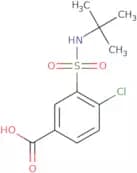
CAS:<p>Versatile small molecule scaffold</p>Formula:C11H14ClNO4SPurity:Min. 95%Molecular weight:291.75 g/mol7-Methyl-2,3-dihydro-1,4-benzodioxin-6-amine
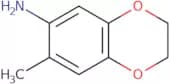
CAS:<p>Versatile small molecule scaffold</p>Formula:C9H11NO2Purity:Min. 95%Molecular weight:165.19 g/mol2H,3H,6H-[1,4]Dioxino[2,3-F]indole-7-carboxylic acid
CAS:2H,3H,6H-[1,4]Dioxino[2,3-F]indole-7-carboxylic acid is an indole that reacts with electrophiles such as chlorine and bromine to form chloro and bromo derivatives. These derivatives can be used to produce a wide variety of compounds. The reactivity of this chemical is determined by the presence of electron withdrawing groups on the ring. When these groups are present, the compound is more reactive. This reactivity can be seen in the reaction with sodium hydroxide, which produces an alkoxide ion when reacted with 2H,3H,6H-[1,4]Dioxino[2,3-F]indole-7-carboxylic acid.Formula:C11H9NO4Purity:Min. 95%Molecular weight:219.19 g/mol7-bromo-2,3-dihydrobenzo[b][1,4]dioxine-6-carboxylic acid
CAS:<p>Versatile small molecule scaffold</p>Formula:C9H7BrO4Purity:Min. 95%Molecular weight:259.05 g/mol6-Bromo-7-nitro-2,3-dihydrobenzo[b][1,4]dioxine
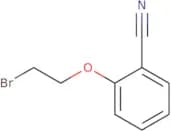
CAS:<p>Versatile small molecule scaffold</p>Formula:C8H6BrNO4Purity:Min. 95%Molecular weight:260.04 g/mol2-(2-Bromoethoxy)benzonitrile
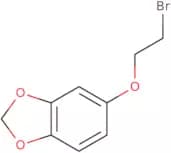
CAS:<p>Versatile small molecule scaffold</p>Formula:C9H8BrNOPurity:Min. 95%Molecular weight:226.07 g/mol5-(2-Bromoethoxy)-1,3-dioxaindane
CAS:Versatile small molecule scaffoldFormula:C9H9BrO3Purity:Min. 95%Molecular weight:245.07 g/mol4-(1,2,3-Thiadiazol-4-yl)phenol
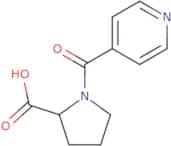
CAS:<p>4-(1,2,3-Thiadiazol-4-yl)phenol is an antibiotic that belongs to the group of antimicrobials. It has an inhibitory concentration (IC) of 0.5 micrograms/ml against pyogenic bacteria and 1.0 micrograms/ml against a number of other bacterial strains. 4-(1,2,3-Thiadiazol-4-yl)phenol also has antimicrobial properties against fungi and may be used for the treatment of catalase-producing bacteria such as Streptococcus pyogenes or Staphylococcus aureus. Elemental analysis revealed that this compound is composed entirely of carbon, hydrogen, and oxygen. The molecular weight was found to be 166.16 g/mol. This compound inhibits bacterial growth by binding to DNA-dependent RNA polymerase and preventing transcription and replication of DNA. This active form is metabolized through a number of metabolic transformations including hydro</p>Formula:C8H6N2OSPurity:Min. 95%Molecular weight:178.21 g/mol1-(Pyridine-4-carbonyl)pyrrolidine-2-carboxylic acid
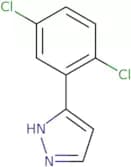
CAS:Versatile small molecule scaffoldFormula:C11H12N2O3Purity:Min. 95%Molecular weight:220.22 g/mol3-(2,5-Dichlorophenyl)pyrazole
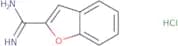
CAS:<p>Versatile small molecule scaffold</p>Formula:C9H6Cl2N2Purity:Min. 95%Molecular weight:213.06 g/mol1-Benzofuran-2-carboximidamide hydrochloride
CAS:<p>1-Benzofuran-2-carboximidamide hydrochloride is a selective serotonin reuptake inhibitor that is used in research to investigate the effects of serotonin on the central nervous system. It binds to the 5-HT1A receptor and inhibits serotonin uptake, preventing it from being broken down by neurons. This drug has also been shown to bind to 5-HT2C and D2 dopamine receptors, which may explain its ability to inhibit dopamine uptake. 1-Benzofuran-2-carboximidamide hydrochloride has been shown to have a high affinity for 5-HT1A receptors and has been used in animal studies at temperatures ranging from 0°C to 40°C.</p>Formula:C9H9ClN2OPurity:Min. 95%Molecular weight:196.63 g/mol2H,3H-[1,3]Oxazolo[4,5-c]pyridin-2-one
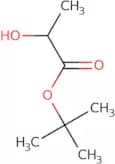
CAS:<p>Versatile small molecule scaffold</p>Formula:C6H4N2O2Purity:Min. 95%Molecular weight:136.11 g/moltert-Butyl 2-hydroxypropanoate
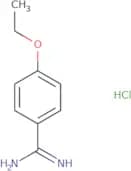
CAS:Tert-Butyl 2-hydroxypropanoate (TBHP) is a lactate compound that is synthesized in the vapor phase. It is a liquid at room temperature and has a molecular weight of 147. TBHP has been shown to have neuroprotective effects, which are due to its ability to reduce oxidative stress. TBHP also possesses potent antagonist activity against GABAA receptors, which may be due to its ability to inhibit the binding of GABA.Formula:C7H14O3Purity:Min. 95%Molecular weight:146.18 g/mol4-Ethoxybenzene-1-carboximidamide hydrochloride
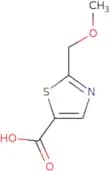
CAS:<p>Versatile small molecule scaffold</p>Formula:C9H13ClN2OPurity:Min. 95%Molecular weight:200.66 g/mol2-(Methoxymethyl)-1,3-thiazole-5-carboxylic acid
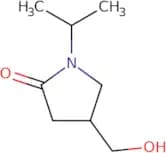
CAS:Versatile small molecule scaffoldFormula:C6H7NO3SPurity:Min. 95%Molecular weight:173.19 g/mol4-(Hydroxymethyl)-1-isopropylpyrrolidin-2-one
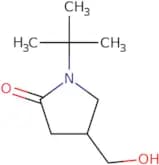
CAS:<p>Versatile small molecule scaffold</p>Formula:C8H15NO2Purity:Min. 95%Molecular weight:157.21 g/mol1-tert-Butyl-4-(hydroxymethyl)pyrrolidin-2-one
CAS:Versatile small molecule scaffoldFormula:C9H17NO2Purity:Min. 95%Molecular weight:171.24 g/molMethyl 3-bromofuran-2-carboxylate
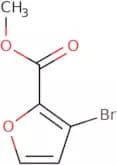
CAS:Methyl 3-bromofuran-2-carboxylate is a methoxylated furan that can be synthesized by the oxidation of methyl 2-bromofuran-2-carboxylate. It has a methoxyl group, which is a reactive functional group. With this reaction, it can be used to create other compounds. Furan rings are found in many natural and manmade molecules such as drugs and plastics. The graphs show that the reaction mechanism for furan carboxylic acid involves the removal of a proton from sulfuric acid, followed by an electrophilic addition by bromine to form methyl 3-bromofuran-2-carboxylate.Formula:C6H5BrO3Purity:Min. 95%Molecular weight:205.01 g/mol2,4-Dimethoxypyrimidine-6-carboxylic acid
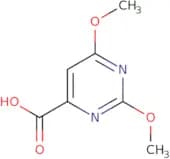
CAS:<p>Versatile small molecule scaffold</p>Formula:C7H8N2O4Purity:Min. 95%Molecular weight:184.15 g/mol

![2H,3H,6H-[1,4]Dioxino[2,3-F]indole-7-carboxylic acid](/_next/image/?url=https%3A%2Fstatic.cymitquimica.com%2Fproducts%2F3D%2Fthumb-webp%2FJCA82087.webp&w=3840&q=75)
![7-bromo-2,3-dihydrobenzo[b][1,4]dioxine-6-carboxylic acid](/_next/image/?url=https%3A%2Fstatic.cymitquimica.com%2Fproducts%2F3D%2Fthumb-webp%2FJCA82091.webp&w=3840&q=75)
![6-Bromo-7-nitro-2,3-dihydrobenzo[b][1,4]dioxine](/_next/image/?url=https%3A%2Fstatic.cymitquimica.com%2Fproducts%2F3D%2Fthumb-webp%2FJCA82092.webp&w=3840&q=75)
![2H,3H-[1,3]Oxazolo[4,5-c]pyridin-2-one](/_next/image/?url=https%3A%2Fstatic.cymitquimica.com%2Fproducts%2F3D%2Fthumb-webp%2FJCA85150.webp&w=3840&q=75)