Building Blocks
This section contains fundamental products for the synthesis of organic and biological compounds. Building blocks are the essential starting materials used to construct complex molecules through various chemical reactions. They play a critical role in drug discovery, material science, and chemical research. At CymitQuimica, we offer a diverse range of high-quality building blocks to support your innovative research and industrial projects, ensuring you have the essential components for successful synthesis.
Subcategories of "Building Blocks"
- Boronic Acids & Boronic Acid Derivatives(5,778 products)
- Chiral Building Blocks(1,242 products)
- Hydrocarbon Building Blocks(6,098 products)
- Organic Building Blocks(61,059 products)
Found 199580 products of "Building Blocks"
Sort by
Purity (%)
0
100
|
0
|
50
|
90
|
95
|
100
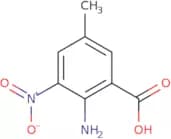
2-Amino-5-methyl-3-nitrobenzoic acid
CAS:<p>2-Amino-5-methyl-3-nitrobenzoic acid is a heterocyclic compound that has been shown to rearrange under acidic conditions. It can be synthesized by the reaction of 2-amino-5-methylbenzoic acid and sodium nitrite in the presence of benzotriazole. This compound is used as a reagent for spectroscopy, such as NMR and IR. The IR spectrum of this compound shows absorption bands at 3351, 1707, 1671, 1533, 1492, 1377, 1283, 1166 cm−1.</p>Formula:C8H8N2O4Purity:Min. 95%Molecular weight:196.16 g/mol2-Bromobenzylamine hydrochloride
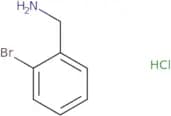
CAS:<p>Versatile small molecule scaffold</p>Formula:BrC6H4CH2NH2·HClPurity:Min. 95%Molecular weight:222.51 g/molEthyl 2-{[(benzyloxy)carbonyl]amino}-3-sulfamoylpropanoate
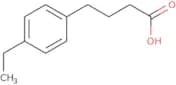
CAS:Versatile small molecule scaffoldFormula:C13H18N2O6SPurity:Min. 95%Molecular weight:330.36 g/mol4-(4-Ethylphenyl)butanoic acid
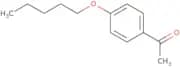
CAS:<p>Versatile small molecule scaffold</p>Formula:C12H16O2Purity:Min. 95%Molecular weight:192.25 g/mol1-(4-Pentoxyphenyl)ethanone
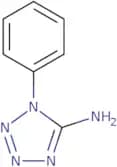
CAS:<p>1-(4-Pentoxyphenyl)ethanone is a derivative of the drug molecule, which is an analog. It has been shown to have anti-cancer properties in vitro and in vivo, as well as to be effective against multi-drug resistant tumors. 1-(4-Pentoxyphenyl)ethanone binds to calcium ions with low affinity and blocks the transport of drugs across membranes by inhibiting ion channels. This drug may also be used as an antifungal agent, although it is not active against yeast cells.</p>Formula:C13H18O2Purity:Min. 95%Molecular weight:206.28 g/mol1-Phenyl-1H-1,2,3,4-tetrazol-5-amine
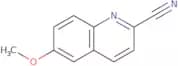
CAS:<p>The compound 1-Phenyl-1H-1,2,3,4-tetrazol-5-amine is a growth factor that is used in pharmaceutical preparations. The reactive functional group is amine and the drug has been shown to be biocompatible and non-toxic. It is used as a diagnostic agent for diabetes mellitus type 2 and cardiac diseases. It has also been shown to have cytotoxic effects on cancer cells lines including MDA-MB-231 cell line with EC50 of 0.8 μM.</p>Formula:C7H7N5Purity:Min. 95%Molecular weight:161.16 g/mol6-Methoxy-2-quinolinecarbonitrile
CAS:<p>The 6-methoxy-2-quinolinecarbonitrile (6MQC) is an acceptor molecule that is a part of the pharmacophore model. The pharmacophore model is generated by a process of optimization and validation. The optimization process uses a vector to find the best combination of molecules. Histamine, which is monitored during the optimization process, is a molecular property that has been validated. The 6MQC was found to be effective as a lead compound in the treatment of phospholipidosis and naphthalene toxicity in rats, and it has also been shown to have antihistaminergic activity.</p>Formula:C11H8N2OPurity:Min. 95%Molecular weight:184.19 g/mol1,3-Bis(2-phenylethyl)urea
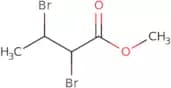
CAS:<p>Versatile small molecule scaffold</p>Formula:C17H20N2OPurity:Min. 95%Molecular weight:268.35 g/molMethyl 2,3-dibromobutanoate
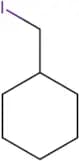
CAS:Versatile small molecule scaffoldFormula:C5H8Br2O2Purity:Min. 95%Molecular weight:259.92 g/mol(Iodomethyl)cyclohexane
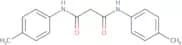
CAS:<p>Iodomethylcyclohexane is a cyclohexane compound that is used as an ingredient in the production of other substances. It has been shown to have inhibitory effects on bowel disease and has a stereoisomer with a ph optimum of 7. Iodomethylcyclohexane also has an average particle diameter of 6.5 micrometers, which means it is a liquid crystal composed of molecules that are arranged in a regular and periodic manner. Iodomethylcyclohexane binds to receptors on cells, such as chloride and acid phosphatase, which are important for the regulation of cell growth. Iodomethylcyclohexane also binds to adrenergic receptors and can cause constriction of blood vessels. END>></p>Formula:C7H13IPurity:Min. 95%Molecular weight:224.08 g/molN,N'-Bis(4-methylphenyl)propanediamide
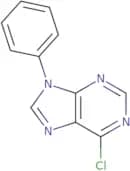
CAS:Versatile small molecule scaffoldFormula:C17H18N2O2Purity:Min. 95%Molecular weight:282.34 g/mol6-Chloro-9-phenyl-9H-purine
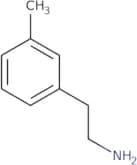
CAS:<p>6-Chloro-9-phenyl-9H-purine is an antipurinic agent that inhibits the production of nucleic acids. It is a derivative of 6,6'-dichloro-2,2'-diimidazole and is used as a precursor in the synthesis of other analogues. The yield of this compound can be increased by using carbon tetrachloride as a catalyst. 6-Chloro-9-phenyl-9H-purine has been shown to be an effective catalyst for imidazolium and benzimidazolium salts. This compound also exhibits nucleophilic properties which may be due to the dipole moment created by the nitrogen atom on one side and the oxygen atom on the other side.</p>Formula:C11H7ClN4Purity:Min. 95%Molecular weight:230.65 g/mol3-Methylphenethylamine hydrochloride
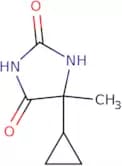
CAS:Controlled Product<p>Versatile small molecule scaffold</p>Formula:C9H14ClNPurity:Min. 95%Molecular weight:171.67 g/mol5-Cyclopropyl-5-methylimidazolidine-2,4-dione
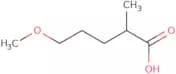
CAS:<p>Versatile small molecule scaffold</p>Formula:C7H10N2O2Purity:Min. 95%Molecular weight:154.17 g/mol5-Methoxy-2-methylpentanoic acid
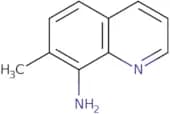
CAS:<p>Versatile small molecule scaffold</p>Formula:C7H14O3Purity:Min. 95%Molecular weight:146.18 g/mol7-Methylquinolin-8-amine
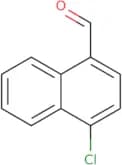
CAS:<p>7-Methylquinolin-8-amine is a chemical compound that belongs to the group of quinoline derivatives. It has been shown to inhibit collagen synthesis, which may be due to its alkalizing effect on the extracellular matrix. This agent also acts as an inhibitor of cardiac hypertrophy and modulates cardiac muscle cell proliferation. 7-Methylquinolin-8-amine also represses the transcription of protein genes and prevents the activation of cardiac tissues by chloride ions.</p>Formula:C10H10N2Purity:Min. 95%Molecular weight:158.2 g/mol4-Chloronaphthalene-1-carbaldehyde
CAS:<p>Versatile small molecule scaffold</p>Formula:C11H7ClOPurity:Min. 95%Molecular weight:190.62 g/mol1-Cyclohexylpropan-2-amine hydrochloride
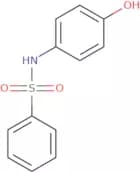
CAS:Versatile small molecule scaffoldFormula:C9H20ClNPurity:Min. 95%Molecular weight:177.71 g/molN-(4-Hydroxyphenyl)benzenesulfonamide
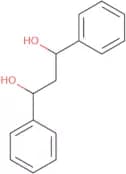
CAS:<p>N-(4-Hydroxyphenyl)benzenesulfonamide (NPSA) is a potentiator of chlorine that increases the activity of monooxygenases, such as epoxide hydrolase. NPSA also has the ability to inhibit glutathione synthesis in the liver and kidneys. This inhibition leads to liver cell necrosis. It is believed that NPSA may act by inhibiting the synthesis of an intermediate in the biosynthesis of cholesterol, 3-methylcholanthrene. The chlorobenzenesulfonamide moiety reacts with glutathione to form a reactive chloride ion, which then reacts with other cellular components to cause damage.</p>Formula:C12H11NO3SPurity:Min. 95%Molecular weight:249.29 g/mol1,3-Diphenylpropane-1,3-diol
CAS:<p>1,3-Diphenylpropane-1,3-diol is a synthetic compound that can be used as an intermediate in organic synthesis. It is a chiral molecule with the (R) configuration at the phenyl ring. 1,3-Diphenylpropane-1,3-diol has been studied for its effects on acidemia and aciduria in humans. This chemical also inhibits phosphine toxicity by inhibiting alcohol dehydrogenase and acetaldehyde dehydrogenase. Clinical studies have shown that 1,3-diphenylpropane-1,3-diol can alleviate methylmalonic acidemia and congenital methylmalonic aciduria.</p>Formula:C15H16O2Purity:Min. 95%Molecular weight:228.29 g/mol

![Ethyl 2-{[(benzyloxy)carbonyl]amino}-3-sulfamoylpropanoate](/_next/image/?url=https%3A%2Fstatic.cymitquimica.com%2Fproducts%2F3D%2Fthumb-webp%2FFAA46660.webp&w=3840&q=75)