Building Blocks
This section contains fundamental products for the synthesis of organic and biological compounds. Building blocks are the essential starting materials used to construct complex molecules through various chemical reactions. They play a critical role in drug discovery, material science, and chemical research. At CymitQuimica, we offer a diverse range of high-quality building blocks to support your innovative research and industrial projects, ensuring you have the essential components for successful synthesis.
Subcategories of "Building Blocks"
- Boronic Acids & Boronic Acid Derivatives(5,778 products)
- Chiral Building Blocks(1,243 products)
- Hydrocarbon Building Blocks(6,098 products)
- Organic Building Blocks(61,057 products)
Found 200710 products of "Building Blocks"
Sort by
Purity (%)
0
100
|
0
|
50
|
90
|
95
|
100
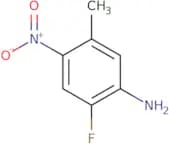
2-Fluoro-5-methyl-4-nitroaniline
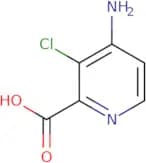
CAS:<p>Versatile small molecule scaffold</p>Formula:C7H7FN2O2Purity:Min. 95%Molecular weight:170.14 g/mol4-Amino-3-chloropyridine-2-carboxylic acid
CAS:4-Amino-3-chloropyridine-2-carboxylic acid (4ACPC) is an herbicide that has been used to control weeds in rice fields, sugar cane, and other crops. 4ACPC inhibits the growth of plants by inhibiting photosynthesis. It binds to the electron transport system in chloroplasts and reduces the amount of ATP available for use. This leads to a decrease in chlorophyll production and photosynthetic activity, which ultimately causes plant death. 4ACPC also binds to DNA and has been shown to inhibit transcription in calf thymus cells.Formula:C6H5ClN2O2Purity:Min. 95%Molecular weight:172.57 g/molethyl 3-aminoimidazo[1,2-a]pyridine-2-carboxylate
CAS:Versatile small molecule scaffoldFormula:C10H11N3O2Purity:Min. 95%Molecular weight:205.2 g/mol(1R)-1-[4-(trifluoromethyl)phenyl]ethan-1-ol
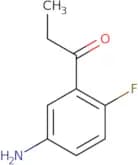
CAS:(1R)-1-[4-(trifluoromethyl)phenyl]ethan-1-ol is a chiral alcohol that is used as a catalyst in organic synthesis. It reacts with many types of compounds, including choline, to produce the corresponding ester or amide. The reaction time is typically less than an hour, and the substrate concentration can be scaled up to 100 grams per liter. (1R)-1-[4-(trifluoromethyl)phenyl]ethan-1-ol is soluble in solvents such as benzene and chloroform. This compound has been shown to have chemokine activity against human monocytes and T lymphocytes.Formula:C9H9F3OPurity:Min. 95%Molecular weight:190.16 g/mol1-(5-Amino-2-fluorophenyl)propan-1-one
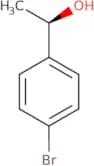
CAS:Versatile small molecule scaffoldFormula:C9H10FNOPurity:Min. 95%Molecular weight:167.18 g/mol(R)-1-(4-Bromophenyl)ethanol
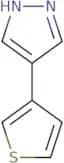
CAS:<p>(R)-1-(4-Bromophenyl)ethanol is a reactive chemical that has been shown to be enantiopure and have a high degree of purity. It can be used in microscopy to detect the presence of bacteria, as well as in biological properties studies. The compound is an isomer of (S)-1-(4-bromophenyl)ethanol and can be chiral or racemic. (R)-1-(4-Bromophenyl)ethanol has been sequenced and found to have a molecular weight of 156.2 g/mol. It also has a melting point of 78°C and a boiling point of 201°C. This compound's fluorescence emission maxima are at 400 nm and 440 nm, with an extinction coefficient of 100,000 M-1cm-1 at 400 nm. The compound's sigmoidal curve can be seen in the graph below:</p>Formula:C8H9BrOPurity:Min. 95%Molecular weight:201.06 g/mol4-(Thiophen-3-yl)-1H-pyrazole
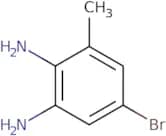
CAS:<p>Versatile small molecule scaffold</p>Formula:C7H6N2SPurity:Min. 95%Molecular weight:150.2 g/mol5-Bromo-3-methylbenzene-1,2-diamine
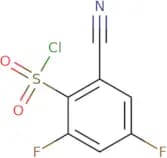
CAS:<p>Versatile small molecule scaffold</p>Formula:C7H9BrN2Purity:Min. 95%Molecular weight:201.06 g/mol2-Cyano-4,6-difluorobenzene-1-sulfonyl chloride
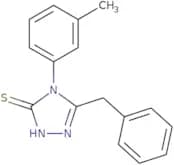
CAS:<p>Versatile small molecule scaffold</p>Formula:C7H2ClF2NO2SPurity:Min. 95%Molecular weight:237.61 g/mol5-Benzyl-4-(3-methylphenyl)-4H-1,2,4-triazole-3-thiol
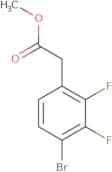
CAS:Versatile small molecule scaffoldFormula:C16H15N3SPurity:Min. 95%Molecular weight:281.4 g/molMethyl 2-(4-bromo-2,3-difluorophenyl)acetate
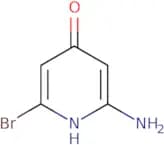
CAS:<p>Versatile small molecule scaffold</p>Formula:C9H7BrF2O2Purity:Min. 95%Molecular weight:265.05 g/mol2-Amino-6-bromopyridin-4-ol
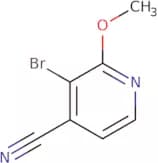
CAS:<p>Versatile small molecule scaffold</p>Formula:C5H5BrN2OPurity:Min. 95%Molecular weight:189.01 g/mol3-Bromo-2-methoxypyridine-4-carbonitrile
CAS:Versatile small molecule scaffoldFormula:C7H5BrN2OPurity:Min. 95%Molecular weight:213.03 g/mol2-Bromo-3,4-difluorobenzyl chloride
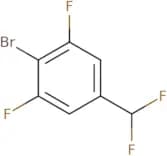
CAS:<p>Versatile small molecule scaffold</p>Formula:C7H4BrClF2Purity:Min. 95%Molecular weight:241.46 g/mol4-Bromo-3,5-difluorobenzodifluoride
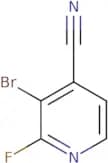
CAS:Versatile small molecule scaffoldFormula:C7H3BrF4Purity:Min. 95%Molecular weight:243 g/mol3-Bromo-2-fluoroisonicotinonitrile
CAS:<p>Versatile small molecule scaffold</p>Formula:C6H2BrFN2Purity:Min. 95%Molecular weight:201 g/mol3-Bromo-2-chloro-5-fluorobenzaldehyde
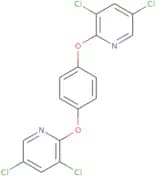
CAS:<p>Versatile small molecule scaffold</p>Formula:C7H3BrClFOPurity:Min. 95%Molecular weight:237.45 g/molTCPOBOP
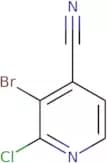
CAS:<p>Tcpobop is an enzyme inducer that increases the metabolic rate and alters lipid metabolism. It has been shown to up-regulate genes involved in energy metabolism, such as fatty acid synthase, and genes involved in iron homeostasis, such as hepcidin. Tcpobop also inhibits cellular growth by causing cell cycle arrest at G1 phase and inducing apoptosis. Tcpobop enhances the expression of epidermal growth factor receptor (EGFR) in CD-1 mice. This may be due to its effects on protein synthesis and gene transcription.</p>Formula:C16H8N2O2Cl4Purity:Min. 95%Molecular weight:402.06 g/mol3-Bromo-2-chloropyridine-4-carbonitrile
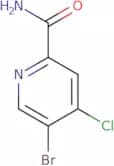
CAS:<p>Versatile small molecule scaffold</p>Formula:C6H2BrClN2Purity:Min. 95%Molecular weight:217.45 g/mol5-Bromo-4-chloropyridine-2-carboxamide
CAS:Versatile small molecule scaffoldFormula:C6H4BrClN2OPurity:Min. 95%Molecular weight:235.46 g/mol

![ethyl 3-aminoimidazo[1,2-a]pyridine-2-carboxylate](/_next/image/?url=https%3A%2Fstatic.cymitquimica.com%2Fproducts%2F3D%2Fthumb-webp%2FBDA15713.webp&w=3840&q=75)
![(1R)-1-[4-(trifluoromethyl)phenyl]ethan-1-ol](/_next/image/?url=https%3A%2Fstatic.cymitquimica.com%2Fproducts%2F3D%2Fthumb-webp%2FBDA15579.webp&w=3840&q=75)