


Building Blocks
This section contains fundamental products for the synthesis of organic and biological compounds. Building blocks are the essential starting materials used to construct complex molecules through various chemical reactions. They play a critical role in drug discovery, material science, and chemical research. At CymitQuimica, we offer a diverse range of high-quality building blocks to support your innovative research and industrial projects, ensuring you have the essential components for successful synthesis.
Subcategories of "Building Blocks"
- Boronic Acids & Boronic Acid Derivatives(5,778 products)
- Chiral Building Blocks(1,243 products)
- Hydrocarbon Building Blocks(6,098 products)
- Organic Building Blocks(61,057 products)
Found 200716 products of "Building Blocks"
Sort by
Purity (%)
0
100
|
0
|
50
|
90
|
95
|
100
4-Chloro-2-ethylthieno[2,3-d]pyrimidine
CAS:Versatile small molecule scaffoldFormula:C8H7ClN2SPurity:Min. 95%Molecular weight:198.67 g/mol4-Chloro-6-nitrothieno[2,3-d]pyrimidine
CAS:Versatile small molecule scaffoldFormula:C6H2ClN3O2SPurity:Min. 95%Molecular weight:215.62 g/mol2-Ethyl-3H,4H-thieno[2,3-d]pyrimidin-4-one
CAS:<p>Versatile small molecule scaffold</p>Formula:C8H8N2OSPurity:Min. 95%Molecular weight:180.23 g/mol6-Bromothieno[2,3-d]pyrimidin-4(3h)-one
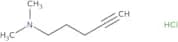
CAS:<p>Versatile small molecule scaffold</p>Formula:C6H3BrN2OSPurity:Min. 95%Molecular weight:231.07 g/molDimethyl(pent-4-yn-1-yl)amine hydrochloride
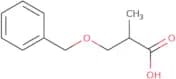
CAS:Versatile small molecule scaffoldFormula:C7H14ClNPurity:Min. 95%Molecular weight:147.64 g/mol3-(Benzyloxy)-2-methylpropanoic acid
CAS:3-(Benzyloxy)-2-methylpropanoic acid is a benzyloxymethyl derivative that reacts with formic acid to produce a hydroxypropionitrile. It is used in the industrial production of formic acid and as an intermediate in the synthesis of other organic compounds. 3-(Benzyloxy)-2-methylpropanoic acid can be reduced by sodium borohydride to give cyclopropane carboxylic acid, which can then be oxidized to cyclohexanone. The reduction reaction also results in debenzylation of the molecule, with subsequent preparation methods involving esterification or hydrolysis.Formula:C11H14O3Purity:Min. 95%Molecular weight:194.23 g/molMethyl 4-(2-bromoethoxy)benzenecarboxylate
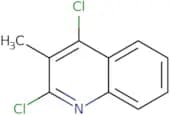
CAS:Methyl 4-(2-bromoethoxy)benzenecarboxylate is a histamine receptor antagonist that has been shown to be active at the histamine H3 receptor. Methyl 4-(2-bromoethoxy)benzenecarboxylate can be used to treat depression and other disorders related to histamine, such as allergic reactions. This drug has also been shown to inhibit serotonin reuptake by acting on the serotonin transporter, thereby increasing serotonin levels in the brain. Methyl 4-(2-bromoethoxy)benzenecarboxylate is an effective drug for the treatment of depression with few side effects.Formula:C10H11BrO3Purity:Min. 95%Molecular weight:259.1 g/mol2,4-dichloro-3-methylquinoline
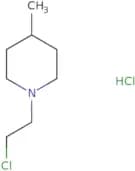
CAS:<p>Versatile small molecule scaffold</p>Formula:C10H7Cl2NPurity:Min. 95%Molecular weight:212.08 g/mol1-(2-Chloroethyl)-4-methylpiperidine hydrochloride
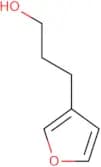
CAS:Versatile small molecule scaffoldFormula:C8H17Cl2NPurity:Min. 95%Molecular weight:198.13 g/mol3-(Furan-3-yl)propan-1-ol
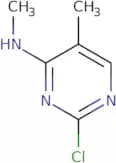
CAS:<p>Versatile small molecule scaffold</p>Formula:C7H10O2Purity:Min. 95%Molecular weight:126.15 g/mol(2-Chloro-5-methyl-pyrimidin-4-yl)-methyl-amine
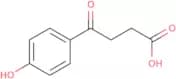
CAS:<p>Versatile small molecule scaffold</p>Formula:C6H8ClN3Purity:Min. 95%Molecular weight:157.6 g/mol4-(4-hydroxyphenyl)-4-oxobutanoic acid
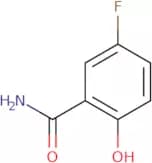
CAS:Versatile small molecule scaffoldFormula:C10H10O4Purity:Min. 95%Molecular weight:194.18 g/mol5-Fluoro-2-hydroxybenzamide
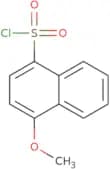
CAS:Versatile small molecule scaffoldFormula:C7H6FNO2Purity:Min. 95%Molecular weight:155.13 g/mol4-Methoxynaphthalene-1-Sulfonyl Chloride
CAS:<p>Versatile small molecule scaffold</p>Formula:C11H9ClO3SPurity:Min. 95%Molecular weight:256.71 g/mol3-[(1-Hydroxy-2-methylpropan-2-yl)amino]-1λ⁶-thiolane-1,1-dione
CAS:Versatile small molecule scaffoldFormula:C8H17NO3SPurity:Min. 95%Molecular weight:207.29 g/molEthyl 7-aminothieno[2,3-b]pyrazine-6-carboxylate
CAS:<p>Versatile small molecule scaffold</p>Formula:C9H9N3O2SPurity:Min. 95%Molecular weight:223.26 g/mol7-Aminothieno[2,3-b]pyrazine-6-carboxylic acid
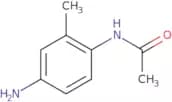
CAS:<p>7-Aminothieno[2,3-b]pyrazine-6-carboxylic acid is an organic solvent that is soluble in water. It has a nitrogen atom, two silver atoms and a fatty acid. This compound has shown to have insulin resistance properties when it was expressed in mice and rats. 7-Aminothieno[2,3-b]pyrazine-6-carboxylic acid also has the ability to inhibit the growth of bacteria. It binds to silver halide and halide ions, which are found in tissues, and can be used as a contrast agent for X-rays or MRI scans of tissues.</p>Formula:C7H5N3O2SPurity:Min. 95%Molecular weight:195.2 g/molN-(4-Amino-2-methylphenyl)acetamide
CAS:4-Amino-2-methylphenylacetic acid (AMPA) is a chemical compound that has been used in the treatment of skin disorders. AMPA is not active when applied to the skin, but it can be converted to 4-amino-2-methylphenylacetamide (AMPAA), which is an effective treatment for psoriasis. This conversion can be achieved with keratinocyte cells, which are found in the outer layer of skin. The optimal conditions for this conversion include coculturing keratinocytes and thp-1 cells over a period of 48 hours. This process was demonstrated using a human keratinocyte cell line and thp-1 cells. The sensitivity of these cells to AMPA was tested by exposing them to increasing concentrations of AMPA until they were killed. The results showed that AMPA had no effect on keratinocyte cells, but at higher concentrations it had an adverse effect on thp-1 cells. It was alsoFormula:C9H12N2OPurity:Min. 95%Molecular weight:164.21 g/mol4,6-Dimethylisothiazolo[5,4-b]pyridin-3-amine
CAS:<p>Versatile small molecule scaffold</p>Formula:C8H9N3SPurity:Min. 95%Molecular weight:179.24 g/mol2-[5-(2-Chlorophenyl)-1,3,4-oxadiazol-2-yl]benzoic acid
CAS:<p>Versatile small molecule scaffold</p>Formula:C15H9ClN2O3Purity:Min. 95%Molecular weight:300.69 g/mol
![4-Chloro-2-ethylthieno[2,3-d]pyrimidine](/_next/image/?url=https%3A%2Fstatic.cymitquimica.com%2Fproducts%2F3D%2Fthumb-webp%2FGCA84411.webp&w=3840&q=75)

![4-Chloro-6-nitrothieno[2,3-d]pyrimidine](/_next/image/?url=https%3A%2Fstatic.cymitquimica.com%2Fproducts%2F3D%2Fthumb-webp%2FGCA84413.webp&w=3840&q=75)
![2-Ethyl-3H,4H-thieno[2,3-d]pyrimidin-4-one](/_next/image/?url=https%3A%2Fstatic.cymitquimica.com%2Fproducts%2F3D%2Fthumb-webp%2FGCA84439.webp&w=3840&q=75)
![6-Bromothieno[2,3-d]pyrimidin-4(3h)-one](/_next/image/?url=https%3A%2Fstatic.cymitquimica.com%2Fproducts%2F3D%2Fthumb-webp%2FGCA84440.webp&w=3840&q=75)

![3-[(1-Hydroxy-2-methylpropan-2-yl)amino]-1λ⁶-thiolane-1,1-dione](/_next/image/?url=https%3A%2Fstatic.cymitquimica.com%2Fproducts%2F3D%2Fthumb-webp%2FGCA87892.webp&w=3840&q=75)
![Ethyl 7-aminothieno[2,3-b]pyrazine-6-carboxylate](/_next/image/?url=https%3A%2Fstatic.cymitquimica.com%2Fproducts%2F3D%2Fthumb-webp%2FGCA88121.webp&w=3840&q=75)
![7-Aminothieno[2,3-b]pyrazine-6-carboxylic acid](/_next/image/?url=https%3A%2Fstatic.cymitquimica.com%2Fproducts%2F3D%2Fthumb-webp%2FGCA88131.webp&w=3840&q=75)
![4,6-Dimethylisothiazolo[5,4-b]pyridin-3-amine](/_next/image/?url=https%3A%2Fstatic.cymitquimica.com%2Fproducts%2F3D%2Fthumb-webp%2FGCA89166.webp&w=3840&q=75)
![2-[5-(2-Chlorophenyl)-1,3,4-oxadiazol-2-yl]benzoic acid](/_next/image/?url=https%3A%2Fstatic.cymitquimica.com%2Fproducts%2F3D%2Fthumb-webp%2FGCA89441.webp&w=3840&q=75)