Building Blocks
This section contains fundamental products for the synthesis of organic and biological compounds. Building blocks are the essential starting materials used to construct complex molecules through various chemical reactions. They play a critical role in drug discovery, material science, and chemical research. At CymitQuimica, we offer a diverse range of high-quality building blocks to support your innovative research and industrial projects, ensuring you have the essential components for successful synthesis.
Subcategories of "Building Blocks"
- Boronic Acids & Boronic Acid Derivatives(5,778 products)
- Chiral Building Blocks(1,242 products)
- Hydrocarbon Building Blocks(6,098 products)
- Organic Building Blocks(61,084 products)
Found 198714 products of "Building Blocks"
Sort by
Purity (%)
0
100
|
0
|
50
|
90
|
95
|
100
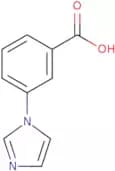
3-(1H-Imidazol-1-yl)benzoic acid
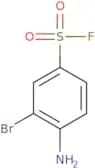
CAS:<p>3-(1H-Imidazol-1-yl)benzoic acid is a heterocyclic organic compound that is used as an excitatory neurotransmitter. It has a high affinity for the metabotropic glutamate receptor and is able to induce excitatory postsynaptic potentials in neurons. 3-(1H-Imidazol-1-yl)benzoic acid binds to the postsynaptic membrane and blocks the ion channels, leading to depolarization of the neuron membrane. The glutamate binding site on the metabotropic glutamate receptor is low nanomolar and five membered, making it a competitive antagonist at this site.</p>Formula:C10H8N2O2Purity:Min. 95%Molecular weight:188.19 g/mol4-Amino-3-bromobenzene-1-sulfonyl fluoride
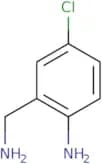
CAS:<p>Versatile small molecule scaffold</p>Formula:C6H5BrFNO2SPurity:Min. 95%Molecular weight:254.08 g/mol2-(aminomethyl)-4-chloroaniline
CAS:<p>2-(Aminomethyl)-4-chloroaniline is an organic compound that can be synthesized in a sustainable manner. It has been used as an additive for the oxidation of benzyl amines with transition metal catalysts. 2-(Aminomethyl)-4-chloroaniline is also a reagent for the synthesis of quinazoline derivatives and quinazolines. The efficiency of this process has been shown to increase with the substitution of n-substituted benzylamines.</p>Formula:C7H9ClN2Purity:Min. 95%Molecular weight:156.61 g/mol7-Bromo-2,3,4,9-tetrahydro-1H-pyrido[3,4-b]indole
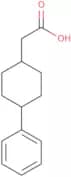
CAS:<p>Versatile small molecule scaffold</p>Formula:C11H11BrN2Purity:Min. 95%Molecular weight:251.13 g/mol2-(4-Phenylcyclohexyl)acetic acid
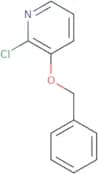
CAS:<p>Versatile small molecule scaffold</p>Formula:C14H18O2Purity:Min. 95%Molecular weight:218.29 g/mol2-Chloro-3-benzyloxymethylpyridine
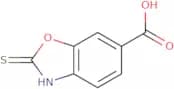
CAS:<p>Versatile small molecule scaffold</p>Formula:C13H12NOClPurity:Min. 95%Molecular weight:233.69 g/mol2-Sulfanyl-1,3-benzoxazole-6-carboxylic acid
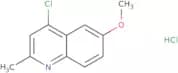
CAS:<p>Versatile small molecule scaffold</p>Formula:C8H5NO3SPurity:Min. 95%Molecular weight:195.2 g/mol4-Chloro-6-methoxy-2-methylquinoline hydrochloride
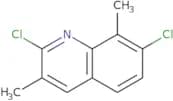
CAS:<p>Versatile small molecule scaffold</p>Formula:C11H11Cl2NOPurity:Min. 95%Molecular weight:244.11 g/mol2,7-Dichloro-3,8-dimethylquinoline
CAS:<p>Versatile small molecule scaffold</p>Formula:C11H9Cl2NPurity:Min. 95%Molecular weight:226.1 g/mol6-(Bromomethyl)-4-chlorothieno[2,3-d]pyrimidine
CAS:<p>Versatile small molecule scaffold</p>Formula:C7H4BrClN2SPurity:Min. 95%Molecular weight:263.54 g/mol(1S)-1-(2-Methoxyphenyl)ethan-1-ol
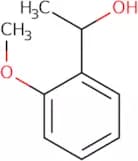
CAS:<p>(1S)-1-(2-Methoxyphenyl)ethan-1-ol is a synthetic intermediate that belongs to the class of alcohols. It has been shown to be an enantioselective hydrogenation substrate for the transfer hydrogenation of acetophenones. The compound can also be used in biological synthesis and organic synthesis as a chiral, optically pure building block.</p>Formula:C9H12O2Purity:Min. 95%Molecular weight:152.19 g/mol2-Oxo-1H,2H,5H,6H,7H-cyclopenta[b]pyridine-3-carbonitrile
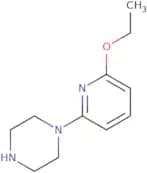
CAS:<p>The compound 2-oxo-1H,2H,5H,6H,7H-cyclopenta[b]pyridine-3-carbonitrile is a heterocyclic compound that belongs to the class of tricyclic compounds. It has an anisotropic crystal system and a single crystal x-ray diffraction pattern. The molecular geometry of this compound is a trigonal planar with three atoms in the plane. The molecular weight of 2-oxo-1H,2H,5H,6H,7H-cyclopenta[b]pyridine-3-carbonitrile is 205.08 g/mol.</p>Formula:C9H8N2OPurity:Min. 95%Molecular weight:160.17 g/mol1-(6-ethoxypyridin-2-yl)piperazine
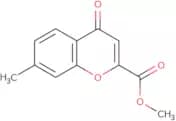
CAS:<p>Versatile small molecule scaffold</p>Formula:C11H17N3OPurity:Min. 95%Molecular weight:207.28 g/molMethyl 7-methyl-4-oxo-4-chromene-2-carboxylate
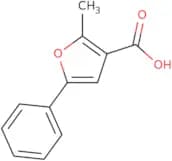
CAS:<p>Versatile small molecule scaffold</p>Formula:C12H10O4Purity:Min. 95%Molecular weight:218.2 g/mol2-Methyl-5-phenylfuran-3-carboxylic acid
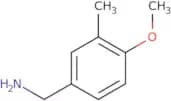
CAS:2-Methyl-5-phenylfuran-3-carboxylic acid (2MPFC) is a ligand that binds to the agonist binding site of the 5HT1A receptor. It has been shown to have potent effects on red blood cells, cell function and Alzheimer’s disease. 2MPFC has been shown to activate microglial cells and increase blood pressure in some models. The compound activates the receptor by binding it in an allosteric manner, which is a different mechanism than other ligands that bind at the orthosteric site. This compound also has been shown to be able to reduce dehydration and increase water intake in mice.Formula:C12H10O3Purity:Min. 95%Molecular weight:202.21 g/mol(4-Methoxy-3-methylphenyl)methanamine
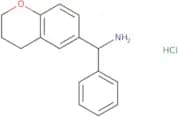
CAS:<p>Versatile small molecule scaffold</p>Formula:C9H13NOPurity:Min. 95%Molecular weight:151.21 g/mol3,4-Dihydro-2H-1-benzopyran-6-yl(phenyl)methanamine hydrochloride
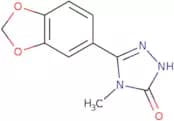
CAS:<p>Versatile small molecule scaffold</p>Formula:C16H18ClNOPurity:Min. 95%Molecular weight:275.77 g/mol3-(1,3-Dioxaindan-5-yl)-4-methyl-4,5-dihydro-1H-1,2,4-triazol-5-one
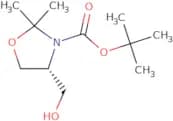
CAS:Versatile small molecule scaffoldFormula:C10H9N3O3Purity:Min. 95%Molecular weight:219.2 g/mol(R)-4-Hydroxymethyl-2,2-dimethyl-oxazolidine-3-carboxylic acid tert-butyl ester
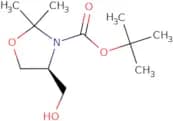
CAS:<p>Versatile small molecule scaffold</p>Formula:C11H21NO4Purity:Min. 95%Molecular weight:231.29 g/mol(S)-1-Boc-2,2-Dimethyl-4-hydroxymethyl-oxazolidine
CAS:<p>Versatile small molecule scaffold</p>Formula:C11H21NO4Purity:Min. 95%Molecular weight:231.29 g/mol

![7-Bromo-2,3,4,9-tetrahydro-1H-pyrido[3,4-b]indole](/_next/image/?url=https%3A%2Fstatic.cymitquimica.com%2Fproducts%2F3D%2Fthumb-webp%2FIEA06147.webp&w=3840&q=75)
![6-(Bromomethyl)-4-chlorothieno[2,3-d]pyrimidine](/_next/image/?url=https%3A%2Fstatic.cymitquimica.com%2Fproducts%2F3D%2Fthumb-webp%2FIEA09955.webp&w=3840&q=75)
![2-Oxo-1H,2H,5H,6H,7H-cyclopenta[b]pyridine-3-carbonitrile](/_next/image/?url=https%3A%2Fstatic.cymitquimica.com%2Fproducts%2F3D%2Fthumb-webp%2FIEA10697.webp&w=3840&q=75)