Building Blocks
This section contains fundamental products for the synthesis of organic and biological compounds. Building blocks are the essential starting materials used to construct complex molecules through various chemical reactions. They play a critical role in drug discovery, material science, and chemical research. At CymitQuimica, we offer a diverse range of high-quality building blocks to support your innovative research and industrial projects, ensuring you have the essential components for successful synthesis.
Subcategories of "Building Blocks"
- Boronic Acids & Boronic Acid Derivatives(5,778 products)
- Chiral Building Blocks(1,242 products)
- Hydrocarbon Building Blocks(6,098 products)
- Organic Building Blocks(61,059 products)
Found 199580 products of "Building Blocks"
Sort by
Purity (%)
0
100
|
0
|
50
|
90
|
95
|
100
Methyl 3-[2-oxo-5-(trifluoromethyl)-1,2-dihydropyridin-1-yl]propanoate
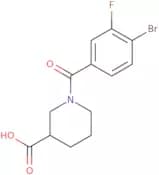
CAS:Versatile small molecule scaffoldFormula:C10H10F3NO3Purity:Min. 95%Molecular weight:249.19 g/mol1-(4-Bromo-3-fluorobenzoyl)piperidine-3-carboxylic acid
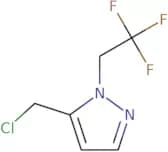
CAS:Versatile small molecule scaffoldFormula:C13H13BrFNO3Purity:Min. 95%Molecular weight:330.15 g/mol5-(Chloromethyl)-1-(2,2,2-trifluoroethyl)-1H-pyrazole
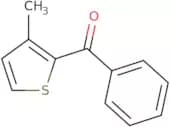
CAS:Versatile small molecule scaffoldFormula:C6H6ClF3N2Purity:Min. 95%Molecular weight:198.57 g/mol(3-Methylthiophen-2-yl)(phenyl)methanone
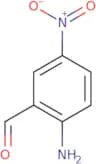
CAS:(3-Methylthiophen-2-yl)(phenyl)methanone is an organic compound that belongs to the class of substituted thiophenes. This compound has been synthesized by thermally or photochemically induced cycloaddition of 2-benzoylthiophene and methyl acetylene. The compound has a triplet emission with a maximum at 637 nm. It also reacts with isobutylene in the presence of ultraviolet light to form a carbonyl group. This reaction is used for the detection of isobutylene in air, as it produces a strong absorption band at 515 nm.Formula:C12H10OSPurity:Min. 95%Molecular weight:202.27 g/molBenzaldehyde, 2-amino-5-nitro-
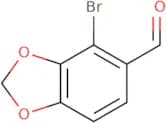
CAS:<p>Benzaldehyde, 2-amino-5-nitro-, is a reagent that can be used in organic synthesis as an optical and functionalized nitro compound. It has been used to synthesize chiral nitriles and has been used in the synthesis of some ligands. This compound contains two nitro groups and one cyano group, which are both activated for nucleophilic substitution reactions. Benzaldehyde, 2-amino-5-nitro-, also has a phenylhydrazone functionality that can be converted into azo compounds. This reagent is an analogue of benzaldehyde with the addition of two nitro groups.</p>Formula:C7H6N2O3Purity:Min. 95%Molecular weight:166.13 g/mol4-Bromo-1,3-dioxaindane-5-carbaldehyde
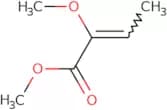
CAS:<p>Versatile small molecule scaffold</p>Formula:C8H5BrO3Purity:Min. 95%Molecular weight:229.03 g/molMethyl 2-methoxybut-2-enoate
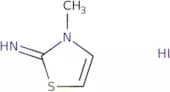
CAS:<p>Versatile small molecule scaffold</p>Formula:C6H10O3Purity:Min. 95%Molecular weight:130.14 g/mol3-Methyl-2,3-dihydro-1,3-thiazol-2-imine hydroiodide
CAS:Versatile small molecule scaffoldFormula:C4H7IN2SPurity:Min. 95%Molecular weight:242.08 g/mol(2R)-2-Amino-3-{[(methylsulfanyl)methyl]sulfanyl}propanoic acid
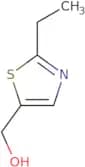
CAS:Versatile small molecule scaffoldFormula:C5H11NO2S2Purity:Min. 95%Molecular weight:181.3 g/mol(2-Ethyl-1,3-thiazol-5-yl)methanol
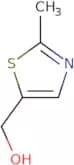
CAS:<p>Versatile small molecule scaffold</p>Formula:C6H9NOSPurity:Min. 95%Molecular weight:143.21 g/mol(2-Methylthiazol-5-yl)methanol
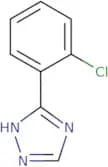
CAS:Versatile small molecule scaffoldFormula:C5H7NOSPurity:Min. 95%Molecular weight:129.18 g/mol5-(2-Chlorophenyl)-1H-1,2,4-triazole
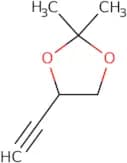
CAS:<p>Versatile small molecule scaffold</p>Formula:C8H6ClN3Purity:Min. 95%Molecular weight:179.6 g/mol(4S)-4-Ethynyl-2,2-dimethyl-1,3-dioxolane
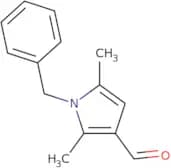
CAS:Versatile small molecule scaffoldFormula:C7H10O2Purity:Min. 95%Molecular weight:126.15 g/mol1-Benzyl-2,5-dimethyl-1H-pyrrole-3-carbaldehyde
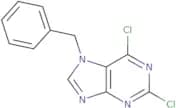
CAS:Versatile small molecule scaffoldFormula:C14H15NOPurity:Min. 95%Molecular weight:213.28 g/mol7-Benzyl-2,6-dichloro-7H-purine
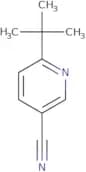
CAS:<p>7-Benzyl-2,6-dichloro-7H-purine is a reagent that is used in the synthesis of adenine and other purines. It can be synthesized by coupling 3-methylxanthine with aminoacids and organometallic reagents. This chemical can also be used to selectively synthesize 6-benzyladenine, which is an important precursor to pharmaceuticals. The 7-benzyl group on this chemical has been shown to act as a positional group in the catalytic hydrogenation of amines. This selective hydrogenation process has been found to be regioselective for cycloalkyl amines.</p>Formula:C12H8Cl2N4Purity:Min. 95%Molecular weight:279.1 g/mol6-Tert-butylnicotinonitrile
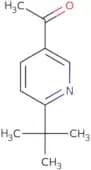
CAS:<p>Versatile small molecule scaffold</p>Formula:C10H12N2Purity:Min. 95%Molecular weight:160.22 g/mol1-(6-tert-Butylpyridin-3-yl)ethan-1-one
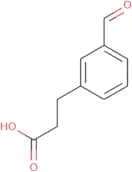
CAS:<p>Versatile small molecule scaffold</p>Formula:C11H15NOPurity:Min. 95%Molecular weight:177.24 g/mol3-(3-Formylphenyl)propanoic acid
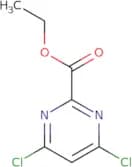
CAS:<p>Versatile small molecule scaffold</p>Formula:C10H10O3Purity:Min. 95%Molecular weight:178.18 g/molEthyl 4,6-dichloro-2-pyrimidinecarboxylate
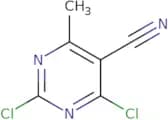
CAS:Versatile small molecule scaffoldFormula:C7H6Cl2N2O2Purity:Min. 95%Molecular weight:221.04 g/mol2,4-Dichloro-6-methylpyrimidine-5-carbonitrile
CAS:2,4-Dichloro-6-methylpyrimidine-5-carbonitrile is an efficient and inexpensive reagent for the synthesis of 2,6-dichloro-4-(trifluoromethyl)pyrimidine. It is a chlorinating agent that can be used in place of chlorine gas, which is expensive. The methylation reaction proceeds efficiently with n-butyl alcohol as the methylating agent, giving a high yield of product. The synthesis method has been shown to be effective for the preparation of this chemical.Formula:C6H3Cl2N3Purity:Min. 95%Molecular weight:188.01 g/mol
![Methyl 3-[2-oxo-5-(trifluoromethyl)-1,2-dihydropyridin-1-yl]propanoate](/_next/image/?url=https%3A%2Fstatic.cymitquimica.com%2Fproducts%2F3D%2Fthumb-webp%2FGBC93666.webp&w=3840&q=75)

![(2R)-2-Amino-3-{[(methylsulfanyl)methyl]sulfanyl}propanoic acid](/_next/image/?url=https%3A%2Fstatic.cymitquimica.com%2Fproducts%2F3D%2Fthumb-webp%2FGCA01093.webp&w=3840&q=75)