Building Blocks
Subcategories of "Building Blocks"
- Boronic Acids & Boronic Acid Derivatives(5,805 products)
- Chiral Building Blocks(1,248 products)
- Hydrocarbon Building Blocks(6,122 products)
- Organic Building Blocks(61,462 products)
Found 208441 products of "Building Blocks"
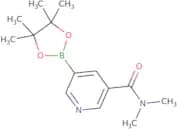
5-(Dimethylcarbamoyl)pyridine-3-boronic acid pinacol ester
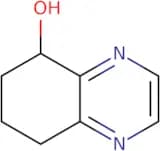
CAS:Versatile small molecule scaffoldFormula:C14H21BN2O3Purity:Min. 95%Molecular weight:276.14 g/mol5,6,7,8-Tetrahydroquinoxalin-5-ol
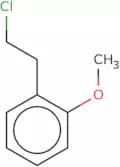
CAS:5,6,7,8-Tetrahydroquinoxalin-5-ol is a chiral compound that can be used to synthesize carboxylic acid derivatives. It is prepared by the catalytic hydrogenation of 5-(hydroxymethyl)tetrahydroquinoxaline-2,3(1H)-dione (1). The enantiomeric purity of this compound can be determined by its reaction with sulfuryl chloride in hydrochloric acid (HCl) to yield the corresponding sulfonyl chloride. This reaction forms an asymmetric sulfonamide that can then be separated by crystallization.Formula:C8H10N2OPurity:Min. 95%Molecular weight:150.18 g/mol1-(2-Chloroethyl)-2-methoxybenzene
CAS:Versatile small molecule scaffold
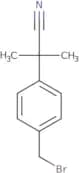
Formula:C9H11ClOPurity:Min. 95%Molecular weight:170.6 g/mol2-(4-(Bromomethyl)phenyl)-2-methylpropanenitrile
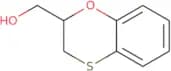
CAS:Versatile small molecule scaffoldFormula:C11H12BrNPurity:Min. 95%Molecular weight:238.12 g/mol2,3-Dihydro-1,4-benzoxathiin-2-ylmethanol
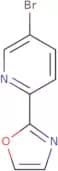
CAS:Versatile small molecule scaffoldFormula:C9H10O2SPurity:Min. 95%Molecular weight:182.24 g/mol5-Bromo-2-(1,3-oxazol-2-yl)pyridine
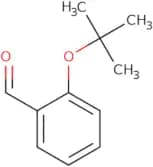
CAS:Versatile small molecule scaffoldFormula:C8H5BrN2OPurity:Min. 95%Molecular weight:225.04 g/mol2-(tert-Butoxy)benzaldehyde
CAS:Versatile small molecule scaffold
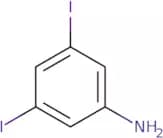
Formula:C11H14O2Purity:Min. 95%Molecular weight:178.23 g/mol3,5-Diiodoanaline
CAS:3,5-Diiodoanaline is a crystalline solid. It is synthesized by the reaction of phenylhydrazine and hydrogen peroxide in acetonitrile. The product is purified by gel permeation chromatography and characterized using X-ray crystallography. 3,5-Diiodoanaline has two optical isomers and a melting point of 133-135 °C. 3,5-Diiodoanaline has been used to produce amides that are unsymmetrical with respect to the carboxylic acid and amine groups. This chemical can also be used as a peroxide or functional group for synthetic reactions.Formula:C6H5I2NPurity:Min. 95%Molecular weight:344.92 g/mol{7,7-Dimethylbicyclo[2.2.1]heptan-1-yl}methanol
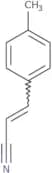
CAS:Versatile small molecule scaffoldFormula:C10H18OPurity:Min. 95%Molecular weight:154.25 g/mol3-(4-Methylphenyl)prop-2-enenitrile
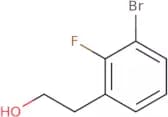
CAS:Versatile small molecule scaffoldFormula:C10H9NPurity:Min. 95%Molecular weight:143.18 g/mol2-(3-Bromo-2-fluorophenyl)ethan-1-ol
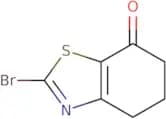
CAS:Versatile small molecule scaffoldFormula:C8H8BrFOPurity:Min. 95%Molecular weight:219.05 g/mol2-bromo-5,6-dihydro-4h-benzothiazol-7-one
CAS:Versatile small molecule scaffoldFormula:C7H6BrNOSPurity:Min. 95%Molecular weight:232.1 g/mol5-Tosyl-5H-pyrrolo[2,3-b]pyrazine-2-carboxylic acid
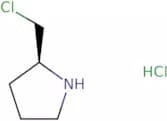
CAS:5-Tosyl-5H-pyrrolo[2,3-b]pyrazine-2-carboxylic acid is a compound that can be custom synthesized for glycosylation purposes. The compound has been fluorinated and methylated and has an acetate group at the COOH group. It is also a complex carbohydrate with a molecular weight of 252.45 g/mol.Formula:C14H11N3O4SPurity:Min. 95%Molecular weight:317.32 g/mol(S)-2-Chloromethyl-pyrrolidine hydrochloride
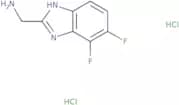
CAS:2-Chloromethyl-pyrrolidine hydrochloride is an organic compound with the chemical formula CHClNCHCOH. It is a white solid that can be used as a reagent in organic synthesis. 2-Chloromethyl-pyrrolidine hydrochloride is prepared by the reaction of chloroform and pyrrolidine. The product is purified by recrystallization from ethanol and dithionite, followed by alkaline hydrolysis.Formula:C5H11Cl2NPurity:Min. 95%Molecular weight:156.05 g/mol(4,5-Difluoro-1H-1,3-benzodiazol-2-yl)methanamine dihydrochloride
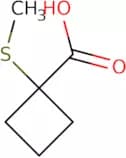
CAS:Versatile small molecule scaffoldFormula:C8H9Cl2F2N3Purity:Min. 95%Molecular weight:256.08 g/mol1-(Methylsulfanyl)cyclobutane-1-carboxylic acid
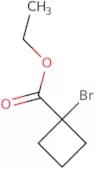
CAS:Versatile small molecule scaffoldFormula:C6H10O2SPurity:Min. 95%Molecular weight:146.21 g/molEthyl 1-bromocyclobutanecarboxylate
CAS:Ethyl 1-bromocyclobutanecarboxylate is a reactive compound that is used in the synthesis of various organic compounds. It can be prepared by the reaction of an alkyl bromide with a ketone, followed by hydrolysis of the ester group. This product is also used in biomolecular chemistry as a reactant for synthesizing oxindoles and anilines. It is oxidized to yield aldehydes and ketones. The oxidation reaction mechanism begins with the formation of an unstable ethyl radical which abstracts hydrogen atoms from neighboring molecules to form a secondary radical. This secondary radical then reacts with molecular oxygen to produce H2O2, which then reacts with another molecule of ethyl 1-bromocyclobutanecarboxylate to produce peroxy radicals (RO•) and alcohols.
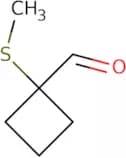
Formula:C7H11BrO2Purity:Min. 95%Molecular weight:207.07 g/mol1-(Methylsulfanyl)cyclobutane-1-carbaldehyde
CAS:Versatile small molecule scaffold
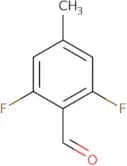
Formula:C6H10OSPurity:Min. 95%Molecular weight:130.21 g/mol2,6-Difluoro-4-methylbenzaldehyde
CAS:Versatile small molecule scaffold
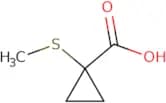
Formula:C8H6F2OPurity:Min. 95%Molecular weight:156.13 g/mol1-(Methylsulfanyl)cyclopropane-1-carboxylic acid
CAS:Versatile small molecule scaffoldFormula:C5H8O2SPurity:Min. 95%Molecular weight:132.18 g/mol

![{7,7-Dimethylbicyclo[2.2.1]heptan-1-yl}methanol](/_next/image/?url=https%3A%2Fstatic.cymitquimica.com%2Fproducts%2F3D%2Fthumb-webp%2FKBA12223.webp&w=3840&q=75)
![5-Tosyl-5H-pyrrolo[2,3-b]pyrazine-2-carboxylic acid](/_next/image/?url=https%3A%2Fstatic.cymitquimica.com%2Fproducts%2F3D%2Fthumb-webp%2FBYB63075.webp&w=3840&q=75)