Building Blocks
This section contains fundamental products for the synthesis of organic and biological compounds. Building blocks are the essential starting materials used to construct complex molecules through various chemical reactions. They play a critical role in drug discovery, material science, and chemical research. At CymitQuimica, we offer a diverse range of high-quality building blocks to support your innovative research and industrial projects, ensuring you have the essential components for successful synthesis.
Subcategories of "Building Blocks"
- Boronic Acids & Boronic Acid Derivatives(5,784 products)
- Chiral Building Blocks(1,243 products)
- Hydrocarbon Building Blocks(6,105 products)
- Organic Building Blocks(61,066 products)
Found 205426 products of "Building Blocks"
Sort by
Purity (%)
0
100
|
0
|
50
|
90
|
95
|
100
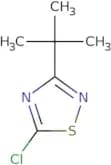
3-tert-Butyl-5-chloro-1,2,4-thiadiazole
CAS:Versatile small molecule scaffoldFormula:C6H9ClN2SPurity:Min. 95%Molecular weight:176.67 g/molN-[1-(2-Phenyl-1,3-thiazol-4-yl)ethylidene]hydroxylamine
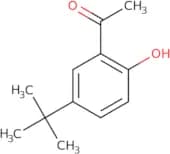
CAS:Versatile small molecule scaffoldFormula:C11H10N2OSPurity:Min. 95%Molecular weight:218.28 g/mol1-(5-tert-Butyl-2-hydroxyphenyl)ethan-1-one
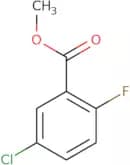
CAS:1-(5-tert-Butyl-2-hydroxyphenyl)ethan-1-one is a compound that can be produced by the reaction of acetates with phenols. This reaction produces an aryloxy group, which reacts with another molecule of acetate to form the acetophenones. The reaction has been shown to occur in the presence of light and heat.Formula:C12H16O2Purity:Min. 95%Molecular weight:192.25 g/molMethyl 5-chloro-2-fluorobenzoate
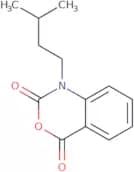
CAS:Versatile small molecule scaffoldFormula:C8H6ClFO2Purity:Min. 95%Molecular weight:188.58 g/mol1-(3-Methylbutyl)-2,4-dihydro-1H-3,1-benzoxazine-2,4-dione
CAS:Versatile small molecule scaffoldFormula:C13H15NO3Purity:Min. 95%Molecular weight:233.26 g/mol1-(2-Oxopropyl)-2,4-dihydro-1H-3,1-benzoxazine-2,4-dione
CAS:Versatile small molecule scaffoldFormula:C11H9NO4Purity:Min. 95%Molecular weight:219.19 g/molEthyl 5-(diethoxymethyl)-1-phenyl-1H-pyrazole-4-carboxylate
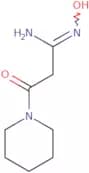
CAS:Versatile small molecule scaffoldFormula:C17H22N2O4Purity:Min. 95%Molecular weight:318.4 g/mol(Z)-N'-Hydroxy-3-oxo-3-(piperidin-1-yl)propimidamide
CAS:Versatile small molecule scaffold
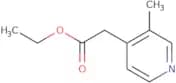
Formula:C8H15N3O2Purity:Min. 95%Molecular weight:185.22 g/molEthyl 2-(3-methylpyridin-4-yl)acetate
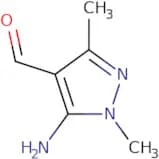
CAS:Versatile small molecule scaffoldFormula:C10H13NO2Purity:Min. 95%Molecular weight:179.22 g/mol5-Amino-1,3-dimethyl-1H-pyrazole-4-carbaldehyde
CAS:Versatile small molecule scaffold
Formula:C6H9N3OPurity:Min. 95%Molecular weight:139.16 g/molEthyl 1,3,6-trimethyl-1H-pyrazolo[3,4-b]pyridine-5-carboxylate
CAS:Versatile small molecule scaffoldFormula:C12H15N3O2Purity:Min. 95%Molecular weight:233.27 g/mol1,3,6-Trimethyl-1H-pyrazolo[3,4-b]pyridine-5-carboxylic acid
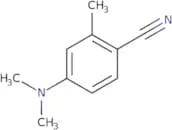
CAS:Versatile small molecule scaffoldFormula:C10H11N3O2Purity:Min. 95%Molecular weight:205.21 g/mol4-(Dimethylamino)-2-methylbenzonitrile
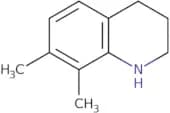
CAS:4-(Dimethylamino)-2-methylbenzonitrile is a picosecond laser dye that is used for analysing the kinetics of chemical reactions. It is used in organic chemistry to study reaction rates and mechanisms, as well as to determine the orientation and isomerisation of molecules in a reaction. 4-(Dimethylamino)-2-methylbenzonitrile can be mixed with acetonitrile to produce a fluorescent substance that can be detected by high pressure fluorescence spectroscopy.Formula:C10H12N2Purity:Min. 95%Molecular weight:160.22 g/mol7,8-Dimethyl-1,2,3,4-tetrahydroquinoline
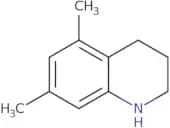
CAS:Versatile small molecule scaffoldFormula:C11H15NPurity:Min. 95%Molecular weight:161.24 g/mol5,7-Dimethyl-1,2,3,4-tetrahydroquinoline
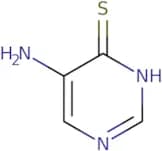
CAS:Versatile small molecule scaffoldFormula:C11H15NPurity:Min. 95%Molecular weight:161.24 g/mol5-Amino-3,4-dihydropyrimidine-4-thione
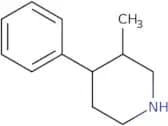
CAS:5-Amino-3,4-dihydropyrimidine-4-thione is a crystalline compound that belongs to the class of organic compounds. It is a white or almost colorless solid with a melting point of 147°C. 5-Amino-3,4-dihydropyrimidine-4-thione has been used as a catalyst in organic synthesis and as a reagent in organic chemistry. This substance can be found in both crystalline and amorphous forms. 5-Amino-3,4-dihydropyrimidine-4-thione is soluble in ethanol and acrylonitrile, but insoluble in water.Formula:C4H5N3SPurity:Min. 95%Molecular weight:127.17 g/mol3-Methyl-4-phenylpiperidine
CAS:3-Methyl-4-phenylpiperidine is a ligand that binds to the κ opioid receptor. It has high affinity binding and can be used as a radioligand for the κ opioid receptor. 3-Methyl-4-phenylpiperidine has been shown to have a conformation that is similar to morphine, but with less affinity for the μ and δ receptors. Structural modifications have been made to this compound in order to find compounds with improved properties. These modifications include adding an isopropyl group on the piperidine ring and replacing the phenyl ring with a methyl group.
Formula:C12H17NPurity:Min. 95%Molecular weight:175.27 g/molBenzyl Dimethylphosphonoacetate
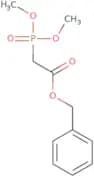
CAS:Benzyl dimethylphosphonoacetate (BDP) is a chiral compound that has been used as a fluorophore, and has shown to be an enhancer for fluorescence. It has also been used in the synthesis of carboxylic acids and hydroxyl groups. BDP is unsymmetrical, containing both a c1-c6 alkoxy group and a halogeno group. The hydroxyl group makes it useful for lipid synthesis, while the halogeno group gives it the ability to bind to cholesterol. BDP also has neuropathic effects and can inhibit macrolide resistance. The c1-c6 alkoxy group allows it to act as a hydroxamic acid, which inhibits cholesterol synthesis by inhibiting HMG-CoA reductase. Finally, its fluorophore properties allow it to be used in heterocycle synthesis.Formula:C11H15O5PPurity:Min. 95%Molecular weight:258.21 g/mol6-Nitro-1,2,3,4-tetrahydroquinolin-4-one
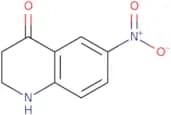
CAS:6-Nitro-1,2,3,4-tetrahydroquinolin-4-one is a quinolinone that can be prepared by the reaction of potassium hydroxide with acrylic acid in the presence of anhydrous acetic acid. It has been shown to have a molecular weight of 197.24 and a melting point of 159.5°C. The compound has been used as a starting material for the synthesis of other compounds such as 4-nitrocatechol and 3,6-dinitrocatechol. 6-Nitro-1,2,3,4-tetrahydroquinolin-4-one is used as a reagent in various organic reactions and it is also used as an intermediate for the synthesis of catechols.Formula:C9H8N2O3Purity:Min. 95%Molecular weight:192.17 g/mol2-(3-Phenyl-1,2,4-oxadiazol-5-yl)acetonitrile
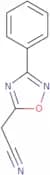
CAS:Versatile small molecule scaffoldFormula:C10H7N3OPurity:Min. 95%Molecular weight:185.18 g/mol

![N-[1-(2-Phenyl-1,3-thiazol-4-yl)ethylidene]hydroxylamine](/_next/image/?url=https%3A%2Fstatic.cymitquimica.com%2Fproducts%2F3D%2Fthumb-webp%2FHCA37214.webp&w=3840&q=75)


![Ethyl 1,3,6-trimethyl-1H-pyrazolo[3,4-b]pyridine-5-carboxylate](/_next/image/?url=https%3A%2Fstatic.cymitquimica.com%2Fproducts%2F3D%2Fthumb-webp%2FHCA41172.webp&w=3840&q=75)
![1,3,6-Trimethyl-1H-pyrazolo[3,4-b]pyridine-5-carboxylic acid](/_next/image/?url=https%3A%2Fstatic.cymitquimica.com%2Fproducts%2F3D%2Fthumb-webp%2FHCA41173.webp&w=3840&q=75)