Building Blocks
This section contains fundamental products for the synthesis of organic and biological compounds. Building blocks are the essential starting materials used to construct complex molecules through various chemical reactions. They play a critical role in drug discovery, material science, and chemical research. At CymitQuimica, we offer a diverse range of high-quality building blocks to support your innovative research and industrial projects, ensuring you have the essential components for successful synthesis.
Subcategories of "Building Blocks"
- Boronic Acids & Boronic Acid Derivatives(5,784 products)
- Chiral Building Blocks(1,244 products)
- Hydrocarbon Building Blocks(6,105 products)
- Organic Building Blocks(61,070 products)
Found 205437 products of "Building Blocks"
Sort by
Purity (%)
0
100
|
0
|
50
|
90
|
95
|
100
bc-1382
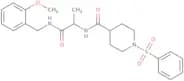
CAS:The compound bc-1382 is a small molecule that can modulate the cytosolic signal transducer NF-κB. It has been shown to inhibit the interaction of protein inhibitor with the cytosol, which leads to necrosis factor production and activation of NF-κB. Furthermore, bc-1382 can be used for the treatment of gram-negative bacterial infections by activating signaling pathways in bacteria. These pathways are vital for bacterial growth and replication. Inhibiting these pathways leads to cell death due to necrosis. The structure of bc-1382 is similar to that of other protein inhibitors, such as IKKβ or IκBα.Formula:C23H29N3O5SPurity:Min. 95%Molecular weight:459.56 g/mol1-{5-Methyl-1-[5-(trifluoromethyl)pyridin-2-yl]-1H-pyrazol-4-yl}ethan-1-one
CAS:Versatile small molecule scaffoldFormula:C12H10F3N3OPurity:Min. 95%Molecular weight:269.22 g/moltert-Butyl N-[6-(methylamino)hexyl]carbamate
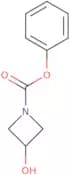
CAS:Versatile small molecule scaffoldFormula:C12H26N2O2Purity:Min. 95%Molecular weight:230.35 g/molPhenyl 3-hydroxyazetidine-1-carboxylate
CAS:Versatile small molecule scaffoldFormula:C10H11NO3Purity:Min. 95%Molecular weight:193.2 g/mol3,5-Bis(2,2,2-trifluoroethoxy)aniline
CAS:Versatile small molecule scaffoldFormula:C10H9F6NO2Purity:Min. 95%Molecular weight:289.17 g/mol3-[(2,4-Dichlorophenoxy)methyl]-4-methoxybenzaldehyde
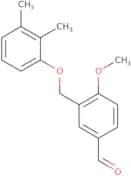
CAS:Versatile small molecule scaffoldFormula:C15H12Cl2O3Purity:Min. 95%Molecular weight:311.2 g/mol3-((2,3-Dimethylphenoxy)methyl)-4-methoxybenzaldehyde
CAS:Versatile small molecule scaffoldFormula:C17H18O3Purity:Min. 95%Molecular weight:270.32 g/mol3-[(4-Ethylphenoxy)methyl]benzoic acid
CAS:Versatile small molecule scaffold
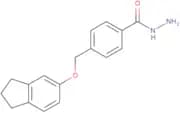
Formula:C16H16O3Purity:Min. 95%Molecular weight:256.3 g/mol4-(Indan-5-yloxymethyl)-benzoic acid hydrazide
CAS:Versatile small molecule scaffoldFormula:C17H18N2O2Purity:Min. 95%Molecular weight:282.34 g/mol3-Methoxy-4-[(phenylsulfanyl)methyl]benzaldehyde
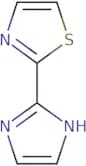
CAS:Versatile small molecule scaffoldFormula:C15H14O2SPurity:Min. 95%Molecular weight:258.3 g/mol2-(1H-Imidazol-2-yl)-thiazole
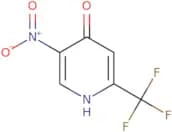
CAS:2-(1H-Imidazol-2-yl)-thiazole is a heterocyclic compound that is an imidazole derivative. It has been shown to be active against the population of hetero cells in the skin and hair follicles in mice. This drug also has a divalent effect, which means it can bind to two sites on the cell's DNA. 2-(1H-Imidazol-2-yl)-thiazole has been shown to cause alopecia in rats and humans. 2-(1H-Imidazol-2-yl)-thiazole also inhibits the production of pluripotent cells, such as stem cells and neural progenitor cells, from bone marrow. In addition, this drug may have a role in preventing blood vessel growth by inhibiting transfer of angiogenic factors between endothelial cells. The final metabolite of 2-(1H-imidazol-2-yl)-Formula:C6H5N3SPurity:Min. 95%Molecular weight:151.19 g/mol5-Nitro-2-(trifluoromethyl)pyridin-4-ol
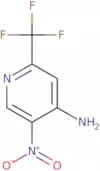
CAS:Versatile small molecule scaffoldFormula:C6H3F3N2O3Purity:Min. 95%Molecular weight:208.09 g/mol5-nitro-2-(trifluoromethyl)pyridin-4-amine
CAS:Versatile small molecule scaffold
Formula:C6H4N3O2F3Purity:Min. 95%Molecular weight:207.11 g/mol2-Bromo-4,5,6,7-tetrahydrobenzo[d]thiazole
CAS:Versatile small molecule scaffoldFormula:C7H8BrNSPurity:Min. 95%Molecular weight:218.11 g/mol{1H-Pyrrolo[3,2-c]pyridin-2-yl}methanamine
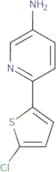
CAS:Versatile small molecule scaffoldFormula:C8H9N3Purity:Min. 95%Molecular weight:147.18 g/mol6-(5-Chlorothiophen-2-yl)pyridin-3-amine
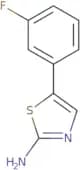
CAS:Versatile small molecule scaffoldFormula:C9H7ClN2SPurity:Min. 95%Molecular weight:210.68 g/mol5-(3-Fluorophenyl)-1,3-thiazol-2-amine
CAS:Versatile small molecule scaffoldFormula:C9H7FN2SPurity:Min. 95%Molecular weight:194.23 g/mol3-[(Pentafluorophenyl)carbamoyl]propanoic acid
CAS:Versatile small molecule scaffoldFormula:C10H6F5NO3Purity:Min. 95%Molecular weight:283.15 g/mol(2-Chloro-3-pyridinyl)(2-methyl-1-piperidinyl)-methanone
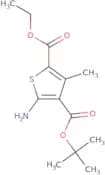
CAS:Versatile small molecule scaffoldFormula:C12H15ClN2OPurity:Min. 95%Molecular weight:238.71 g/mol4-tert-Butyl 2-ethyl 5-amino-3-methylthiophene-2,4-dicarboxylate
CAS:Controlled Product4-tert-Butyl 2-ethyl 5-amino-3-methylthiophene-2,4-dicarboxylate is a pharmacology research tool that has been used in scientific research as an inhibitor of ion channels. It binds to the ligand binding site of the receptor and blocks the passage of ions. This leads to a decrease in membrane conductance, which can be seen by monitoring changes in membrane potential using electrophysiological techniques. The antibody against this compound has been shown to have cross reactivity with other compounds such as [5-(4'-Bromoacetamido)-3'-nitrobenzoic acid].Formula:C13H19NO4SPurity:Min. 95%Molecular weight:285.36 g/mol

![1-{5-Methyl-1-[5-(trifluoromethyl)pyridin-2-yl]-1H-pyrazol-4-yl}ethan-1-one](/_next/image/?url=https%3A%2Fstatic.cymitquimica.com%2Fproducts%2F3D%2Fthumb-webp%2FNQB85191.webp&w=3840&q=75)
![tert-Butyl N-[6-(methylamino)hexyl]carbamate](/_next/image/?url=https%3A%2Fstatic.cymitquimica.com%2Fproducts%2F3D%2Fthumb-webp%2FNQB91506.webp&w=3840&q=75)

![3-[(2,4-Dichlorophenoxy)methyl]-4-methoxybenzaldehyde](/_next/image/?url=https%3A%2Fstatic.cymitquimica.com%2Fproducts%2F3D%2Fthumb-webp%2FNSA53077.webp&w=3840&q=75)
![3-[(4-Ethylphenoxy)methyl]benzoic acid](/_next/image/?url=https%3A%2Fstatic.cymitquimica.com%2Fproducts%2F3D%2Fthumb-webp%2FNSA53128.webp&w=3840&q=75)
![3-Methoxy-4-[(phenylsulfanyl)methyl]benzaldehyde](/_next/image/?url=https%3A%2Fstatic.cymitquimica.com%2Fproducts%2F3D%2Fthumb-webp%2FNSA53251.webp&w=3840&q=75)
![2-Bromo-4,5,6,7-tetrahydrobenzo[d]thiazole](/_next/image/?url=https%3A%2Fstatic.cymitquimica.com%2Fproducts%2F3D%2Fthumb-webp%2FNSA56889.webp&w=3840&q=75)
![{1H-Pyrrolo[3,2-c]pyridin-2-yl}methanamine](/_next/image/?url=https%3A%2Fstatic.cymitquimica.com%2Fproducts%2F3D%2Fthumb-webp%2FNSA57118.webp&w=3840&q=75)
![3-[(Pentafluorophenyl)carbamoyl]propanoic acid](/_next/image/?url=https%3A%2Fstatic.cymitquimica.com%2Fproducts%2F3D%2Fthumb-webp%2FNSA61241.webp&w=3840&q=75)