Building Blocks
Subcategories of "Building Blocks"
- Boronic Acids & Boronic Acid Derivatives(5,784 products)
- Chiral Building Blocks(1,244 products)
- Hydrocarbon Building Blocks(6,105 products)
- Organic Building Blocks(61,076 products)
Found 205454 products of "Building Blocks"
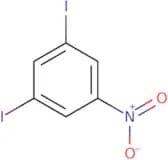
1,3-Diiodo-5-nitrobenzene
CAS:1,3-Diiodo-5-nitrobenzene is a congener of 1,2-diaminobenzene. The addition of one iodine atom and one nitro group at the 1 position on the benzene ring enhances the electron density at this site. This leads to an increased rate of electrophilic aromatic substitution reactions by electron deficient reagents such as peroxides. The presence of additives, such as acidic agents or hydrogen peroxide catalysts, also increases the rate of reaction. 1,3-Diiodo-5-nitrobenzene has been shown to react with phenols in a stepwise fashion and can be used in the synthesis of other compounds via reductive amination or nucleophilic addition reactions.
Formula:C6H3I2NO2Purity:Min. 95%Molecular weight:374.9 g/mol2-[(Trifluoromethyl)sulfanyl]pyridine
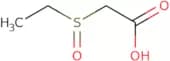
CAS:Versatile small molecule scaffoldFormula:C6H4F3NSPurity:Min. 95%Molecular weight:179.17 g/mol2-(Ethanesulfinyl)acetic acid
CAS:Versatile small molecule scaffold
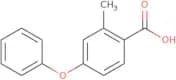
Formula:C4H8O3SPurity:Min. 95%Molecular weight:136.17 g/mol2-Methyl-4-phenoxybenzoic acid
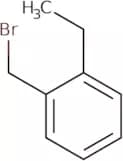
CAS:Versatile small molecule scaffoldFormula:C14H12O3Purity:Min. 95%Molecular weight:228.24 g/mol1-(Bromomethyl)-2-ethylbenzene
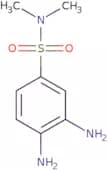
CAS:1-(Bromomethyl)-2-ethylbenzene is a synthetic progestational compound. It has been shown to be a potent progesterone receptor modulator, with selectivity for the progesterone receptor over the estrogen receptor. This compound has been found to have anti-inflammatory and antimicrobial activities, as well as anticancer effects. The chemical structure of 1-(bromomethyl)-2-ethylbenzene is similar to that of natural hormones such as progesterone and 17β-estradiol, which are both steroid hormones.Formula:C9H11BrPurity:Min. 95%Molecular weight:199.09 g/mol3,4-Diamino-N,N-dimethylbenzene-1-sulfonamide
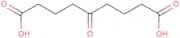
CAS:Versatile small molecule scaffoldFormula:C8H13N3O2SPurity:Min. 95%Molecular weight:215.28 g/mol5-Oxoazelaic acid
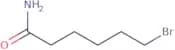
CAS:5-Oxoazelaic acid is a stable organic compound that belongs to the class of organic acids. It is a symmetrical molecule with two carbon atoms and four oxygen atoms. The chemical stability of 5-Oxoazelaic acid is due to the carbonyl group in its structure, which can react with electrophilic compounds such as water, alcohols and amines. 5-Oxoazelaic acid has been shown to be more reactive than a fatty acid because it can lose a hydrogen atom from the carbonyl group when reacting with an electrophile, while fatty acids cannot. 5-Oxoazelaic acid is produced by the oxidation of undecane, which is an anthropogenic product.Formula:C9H14O5Purity:Min. 95%Molecular weight:202.2 g/mol6-Bromohexanamide
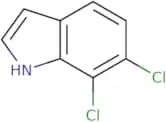
CAS:6-Bromohexanamide is a hydrophobic molecule that has been shown to inhibit the activity of acylases, which are enzymes that catalyze reactions in which an acyl group is transferred from a donor to an acceptor. This compound also inhibits β-lactamase, an enzyme that degrades penicillin and other β-lactam antibiotics. 6-Bromohexanamide binds to serum proteins, but not to nucleophiles such as DNA or RNA. It is also specific for serine residues. 6-Bromohexanamide has been shown to be effective against bacteria such as Staphylococcus aureus and Salmonella enterica.Formula:C6H12BrNOPurity:Min. 95%Molecular weight:194.07 g/mol6,7-Dichloro-1H-indole
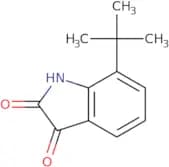
CAS:6,7-Dichloro-1H-indole is a non-steroidal compound that has shown to have pharmacological activity in vivo. It is an acidic compound with a pKa of 4.5 and can be found in venoms such as those of the snake genus Echis and other snakes. 6,7-Dichloro-1H-indole has been shown to inhibit the enzymatic activity of hyaluronidases and acid moieties, which are found in Streptococcus pyogenes and other streptococci. This compound also inhibits the production of toxins from these bacteria and has been shown to damage extracellular matrix proteins in vivo.Formula:C8H5NCl2Purity:Min. 95%Molecular weight:186.03 g/mol7-tert-Butyl-2,3-dihydro-1H-indole-2,3-dione
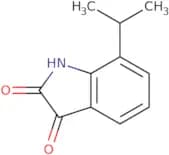
CAS:Versatile small molecule scaffoldFormula:C12H13NO2Purity:Min. 95%Molecular weight:203.24 g/mol7-(Propan-2-yl)-2,3-dihydro-1H-indole-2,3-dione
CAS:Versatile small molecule scaffold
Formula:C11H11NO2Purity:Min. 95%Molecular weight:189.21 g/mol[4-(Dimethylamino)-2-methylphenyl]phosphinic acid
CAS:D-4-Amino-2-methylphenylphosphinic acid is a drug which is used for implanting. It is an active substance that has been shown to have a diameter of 2.5 mm and can be used in animals. D-4-Amino-2-methylphenylphosphinic acid binds to vitamin B12 and may be effective in humans, but its effect on the pancreas needs to be studied. This active compound has also been shown to stabilize pharmaceutical preparations, such as fatty acids.Formula:C9H13NO2PPurity:Min. 95%Molecular weight:198.18 g/mol6-Methyl-2H,8H-[1,3]dioxolo[4,5-G]chromen-8-one
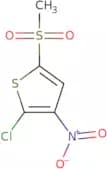
CAS:Versatile small molecule scaffoldFormula:C11H8O4Purity:Min. 95%Molecular weight:204.18 g/mol2-Chloro-5-methanesulfonyl-3-nitrothiophene
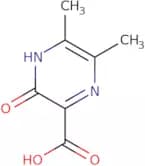
CAS:Versatile small molecule scaffoldFormula:C5H4ClNO4S2Purity:Min. 95%Molecular weight:241.7 g/mol5,6-Dimethyl-3-oxo-3,4-dihydropyrazine-2-carboxylic Acid
CAS:Versatile small molecule scaffoldFormula:C7H8N2O3Purity:Min. 95%Molecular weight:168.15 g/molN-[(5-Chlorofuran-2-yl)methylidene]hydroxylamine
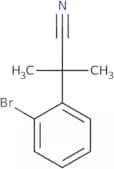
CAS:Versatile small molecule scaffoldFormula:C5H4ClNO2Purity:Min. 95%Molecular weight:145.54 g/mol2-(2-Bromophenyl)-2-methylpropanenitrile
CAS:Versatile small molecule scaffoldFormula:C10H10BrNPurity:Min. 95%Molecular weight:224.1 g/mol5-(Methylsulfanyl)pentan-1-ol
CAS:Versatile small molecule scaffold
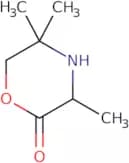
Formula:C6H14OSPurity:Min. 95%Molecular weight:134.24 g/mol3,5,5-Trimethylmorpholin-2-one
CAS:Versatile small molecule scaffold
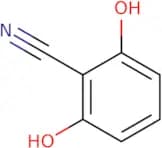
Formula:C7H13NO2Purity:Min. 95%Molecular weight:143.18 g/mol2,6-Dihydroxybenzonitrile
CAS:Versatile small molecule scaffoldFormula:C7H5NO2Purity:Min. 95%Molecular weight:135.12 g/mol

![2-[(Trifluoromethyl)sulfanyl]pyridine](/_next/image/?url=https%3A%2Fstatic.cymitquimica.com%2Fproducts%2F3D%2Fthumb-webp%2FHCA83049.webp&w=3840&q=75)
![[4-(Dimethylamino)-2-methylphenyl]phosphinic acid](/_next/image/?url=https%3A%2Fstatic.cymitquimica.com%2Fproducts%2F3D%2Fthumb-webp%2FHCA80864.webp&w=3840&q=75)
![6-Methyl-2H,8H-[1,3]dioxolo[4,5-G]chromen-8-one](/_next/image/?url=https%3A%2Fstatic.cymitquimica.com%2Fproducts%2F3D%2Fthumb-webp%2FHCA80314.webp&w=3840&q=75)
![N-[(5-Chlorofuran-2-yl)methylidene]hydroxylamine](/_next/image/?url=https%3A%2Fstatic.cymitquimica.com%2Fproducts%2F3D%2Fthumb-webp%2FHCA78459.webp&w=3840&q=75)