Building Blocks
This section contains fundamental products for the synthesis of organic and biological compounds. Building blocks are the essential starting materials used to construct complex molecules through various chemical reactions. They play a critical role in drug discovery, material science, and chemical research. At CymitQuimica, we offer a diverse range of high-quality building blocks to support your innovative research and industrial projects, ensuring you have the essential components for successful synthesis.
Subcategories of "Building Blocks"
- Boronic Acids & Boronic Acid Derivatives(5,780 products)
- Chiral Building Blocks(1,241 products)
- Hydrocarbon Building Blocks(6,100 products)
- Organic Building Blocks(61,029 products)
Found 205306 products of "Building Blocks"
Sort by
Purity (%)
0
100
|
0
|
50
|
90
|
95
|
100
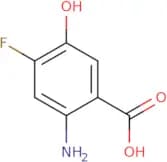
2-Amino-4-fluoro-5-hydroxybenzoic acid
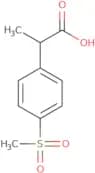
CAS:Versatile small molecule scaffoldFormula:C7H6FNO3Purity:Min. 95%Molecular weight:171.13 g/mol2-(4-Methanesulfonylphenyl)propanoic acid
CAS:Versatile small molecule scaffold
Formula:C10H12O4SPurity:Min. 95%Molecular weight:228.27 g/mol[4-Methyl-2-(2-methylpropoxy)phenyl]methanamine
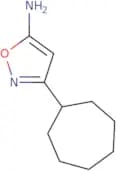
CAS:Versatile small molecule scaffoldFormula:C12H19NOPurity:Min. 95%Molecular weight:193.28 g/mol3-Cycloheptyl-1,2-oxazol-5-amine
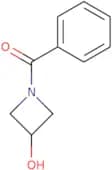
CAS:Versatile small molecule scaffoldFormula:C10H16N2OPurity:Min. 95%Molecular weight:180.2 g/mol1-Benzoylazetidin-3-ol
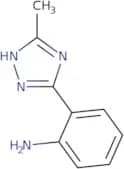
CAS:Versatile small molecule scaffoldFormula:C10H11NO2Purity:Min. 95%Molecular weight:177.2 g/mol2-(3-Methyl-1H-1,2,4-triazol-5-yl)aniline
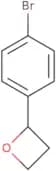
CAS:Versatile small molecule scaffoldFormula:C9H10N4Purity:Min. 95%Molecular weight:174.2 g/mol2-(4-Bromophenyl)oxetane
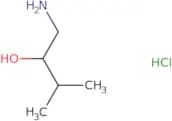
CAS:Versatile small molecule scaffoldFormula:C9H9BrOPurity:Min. 95%Molecular weight:213.07 g/mol1-Amino-3-methylbutan-2-ol hydrochloride
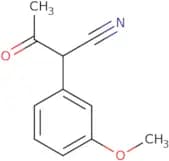
CAS:Versatile small molecule scaffoldFormula:C5H14ClNOPurity:Min. 95%Molecular weight:139.62 g/mol2-(3-Methoxyphenyl)-3-oxobutanenitrile
CAS:Versatile small molecule scaffoldFormula:C11H11NO2Purity:Min. 95%Molecular weight:189.21 g/molBis[(6-methylpyridin-2-yl)methyl]amine
CAS:Bis[(6-methylpyridin-2-yl)methyl]amine is a monoxide that is used as an electrocatalyst for the reduction of nitrite to nitric oxide. Bis[(6-methylpyridin-2-yl)methyl]amine is able to catalyze the conversion of an electron from a proton donor to a sulfide substrate, which generates a geometrical change in the molecule. The bis[(6-methylpyridin-2-yl)methyl]amine molecule has acidic properties and can be used in coordination chemistry as it can coordinate with gold electrodes. This compound also has been shown to have nitrite reductase activity, which may be due to its ability to reduce molecular oxygen.
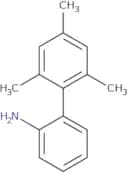
Formula:C14H17N3Purity:Min. 95%Molecular weight:227.3 g/mol2-(2,4,6-Trimethylphenyl)aniline
CAS:Versatile small molecule scaffoldFormula:C15H17NPurity:Min. 95%Molecular weight:211.3 g/molPyrazolo[1,5-a]pyridine-3-carbonitrile
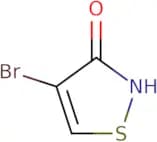
CAS:Pyrazolo[1,5-a]pyridine-3-carbonitrile is a crystalline solid in the form of an amorphous or polymorph. It has been shown to inhibit the kinase activity of protein tyrosine phosphatases and may be useful for the treatment of gastrointestinal disorders. The compound has also been shown to have antioxidant properties, which may be related to its ability to inhibit oxidative phosphorylation by inhibiting the mitochondrial membrane potential. Pyrazolo[1,5-a]pyridine-3-carbonitrile has also been shown to suppress proliferation and induce apoptosis in some types of cancer cells. This compound can serve as a nitrogen source for microbial growth and can inhibit bacterial growth by acting as an inhibitor of indolizine synthesis or nitrogen fixation.Formula:C8H5N3Purity:Min. 95%Molecular weight:143.15 g/mol4-Bromo-1,2-thiazol-3-ol
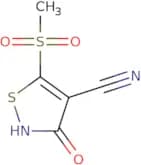
CAS:4-Bromo-1,2-thiazol-3-ol is a palladium acetate catalyst that is used in the palladium-catalyzed synthesis of isothiazoles. It reacts with olefins to form (4-bromo)isothiazoles. 4-Bromo-1,2-thiazol-3-ol has been found to be effective for the synthesis of different types of isothiazoles.Formula:C3H2BrNOSPurity:Min. 95%Molecular weight:180.03 g/mol3-Hydroxy-5-methanesulfonyl-1,2-thiazole-4-carbonitrile
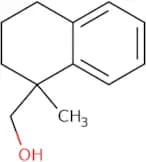
CAS:Versatile small molecule scaffoldFormula:C5H4N2O3S2Purity:Min. 95%Molecular weight:204.2 g/mol(1-Methyl-1,2,3,4-tetrahydronaphthalen-1-yl)methanol
CAS:Versatile small molecule scaffold
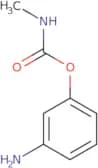
Formula:C12H16OPurity:Min. 95%Molecular weight:176.25 g/mol3-Aminophenyl N-methylcarbamate
CAS:Versatile small molecule scaffold
Formula:C8H10N2O2Purity:Min. 95%Molecular weight:166.18 g/mol1-Benzyl-1 H -[1,2,4]triazol-3-ylamine
CAS:Versatile small molecule scaffold
Formula:C9H10N4Purity:Min. 95%Molecular weight:174.2 g/mol2-[(3-Chlorophenyl)methyl]oxirane
CAS:Versatile small molecule scaffoldFormula:C9H9ClOPurity:Min. 95%Molecular weight:168.62 g/mol4-{[(Diaminomethylidene)amino]methyl}benzoic acid hydrochloride
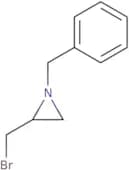
CAS:Versatile small molecule scaffoldFormula:C9H12ClN3O2Purity:Min. 95%Molecular weight:229.66 g/mol1-Benzyl-2-(bromomethyl)aziridine
CAS:1-Benzyl-2-(bromomethyl)aziridine is a nucleophile that can be used as an intermediate in the synthesis of epoxides. It is used as a reactant in the formation of chiral epoxides, which are important for pharmaceuticals and agrochemicals. The addition of aziridines to activated esters provides the corresponding carboxylic acid. The reaction proceeds stereoselectively with 1-benzyl-2-(bromomethyl)aziridine, but not with other diamino compounds such as 1-benzyl-2-(chloromethyl)aziridine or 2-(bromomethyl)azetidine. Bromine is used to activate the carboxylic acid, which leads to a more reactive intermediate than other nonactivated forms.Formula:C10H12BrNPurity:Min. 95%Molecular weight:226.11 g/mol

![[4-Methyl-2-(2-methylpropoxy)phenyl]methanamine](/_next/image/?url=https%3A%2Fstatic.cymitquimica.com%2Fproducts%2F3D%2Fthumb-webp%2FAAC93467.webp&w=3840&q=75)
![Bis[(6-methylpyridin-2-yl)methyl]amine](/_next/image/?url=https%3A%2Fstatic.cymitquimica.com%2Fproducts%2F3D%2Fthumb-webp%2FABA59907.webp&w=3840&q=75)
![Pyrazolo[1,5-a]pyridine-3-carbonitrile](/_next/image/?url=https%3A%2Fstatic.cymitquimica.com%2Fproducts%2F3D%2Fthumb-webp%2FABA62789.webp&w=3840&q=75)
![1-Benzyl-1 H -[1,2,4]triazol-3-ylamine](/_next/image/?url=https%3A%2Fstatic.cymitquimica.com%2Fproducts%2F3D%2Fthumb-webp%2FABA63743.webp&w=3840&q=75)
![2-[(3-Chlorophenyl)methyl]oxirane](/_next/image/?url=https%3A%2Fstatic.cymitquimica.com%2Fproducts%2F3D%2Fthumb-webp%2FABA64208.webp&w=3840&q=75)
![4-{[(Diaminomethylidene)amino]methyl}benzoic acid hydrochloride](/_next/image/?url=https%3A%2Fstatic.cymitquimica.com%2Fproducts%2F3D%2Fthumb-webp%2FABA64725.webp&w=3840&q=75)