Building Blocks
This section contains fundamental products for the synthesis of organic and biological compounds. Building blocks are the essential starting materials used to construct complex molecules through various chemical reactions. They play a critical role in drug discovery, material science, and chemical research. At CymitQuimica, we offer a diverse range of high-quality building blocks to support your innovative research and industrial projects, ensuring you have the essential components for successful synthesis.
Subcategories of "Building Blocks"
- Boronic Acids & Boronic Acid Derivatives(5,781 products)
- Chiral Building Blocks(1,242 products)
- Hydrocarbon Building Blocks(6,101 products)
- Organic Building Blocks(61,033 products)
Found 205320 products of "Building Blocks"
Sort by
Purity (%)
0
100
|
0
|
50
|
90
|
95
|
100
5-[(4-Methylphenyl)amino]-1,3,4-thiadiazole-2-thiol
CAS:Versatile small molecule scaffoldFormula:C9H9N3S2Purity:Min. 95%Molecular weight:223.3 g/mol5-(Benzylamino)-1,3,4-thiadiazole-2-thiol
CAS:Versatile small molecule scaffoldFormula:C9H9N3S2Purity:Min. 95%Molecular weight:223.32 g/mol1-(But-3-yn-1-yl)pyrrolidine
CAS:Versatile small molecule scaffoldFormula:C8H14ClNPurity:Min. 95%Molecular weight:159.65 g/mol2-[2-(Methoxycarbonyl)phenyl]acetic acid
CAS:Versatile small molecule scaffold
Formula:C10H10O4Purity:Min. 95%Molecular weight:194.19 g/mol2-(2-methoxy-2-oxoethyl)benzoic acid
CAS:2-(2-Methoxy-2-oxoethyl)benzoic acid is an organic compound that can be synthesized by the reaction of 2-methoxyacetophenone with lithium borohydride. It is also obtained as a byproduct in the synthesis of other organic compounds, such as esters and anhydrides. The chloride group of 2-(2-methoxy-2-oxoethyl)benzoic acid can be replaced with other groups to produce homophthalic, acetyl, or anhydride derivatives. 2-(2-Methoxy-2-oxoethyl)benzoic acid is often used as a starting material for the synthesis of cyclic esters and alcohols. It has been used in the synthesis of drugs such as dipyridamole and dapsone.Formula:C10H10O4Purity:Min. 95%Molecular weight:194.2 g/mol2-Amino-5-phenyl-3-furonitrile
CAS:2-Amino-5-phenyl-3-furonitrile is a heterocyclic compound that belongs to the group of pyrimidine derivatives. It can be prepared by the reaction of 2,4,6-trichloropyrimidine with phenylacetonitrile and sodium hydroxide in water. This synthesis gives high yields of 2-amino-5-phenyl-3-furonitrile. The compound reacts with isothiocyanates to form heterocyclic compounds. The process of catalyzed heterocyclization has been shown to be effective for the synthesis of pyrimidine derivatives.Formula:C11H8N2OPurity:Min. 95%Molecular weight:184.19 g/mol2,2,6,6-Tetramethyl-2H-pyran-3,5(4H,6H)-dione
CAS:Versatile small molecule scaffoldFormula:C9H14O3Purity:Min. 95%Molecular weight:170.21 g/mol4-Chloro-1-N,1-N-dimethylbenzene-1,3-disulfonamide
CAS:Versatile small molecule scaffoldFormula:C8H11ClN2O4S2Purity:Min. 95%Molecular weight:298.8 g/molMethyl 2-oxo-2,3-dihydro-1H-indole-3-carboxylate
CAS:Versatile small molecule scaffoldFormula:C10H9NO3Purity:Min. 95%Molecular weight:191.18 g/mol7-Nitroquinolin-1-ium-1-olate
CAS:Versatile small molecule scaffoldFormula:C9H6N2O3Purity:Min. 95%Molecular weight:190.16 g/mol3,4-dihydro-1,6-naphthyridin-2(1h)-one
CAS:Versatile small molecule scaffold
Formula:C8H8N2OPurity:Min. 95%Molecular weight:148.17 g/mol2-Formylfuran-3-carboxylic acid
CAS:2-Formylfuran-3-carboxylic acid is a furan derivative with an oxidation product that has been shown to be useful as a peroxide scavenger. It is synthesized by the reaction of 2-formylphenol and formaldehyde in the presence of copper salts. The molecular modelling studies revealed that this compound consists of a five membered ring with an oxygen atom at its centre, which is flanked by two carbon atoms at each side. The carboxylic acid group (-COOH) is on one end and the hydroxymethyl group (-CHOH) on the other end. The molecule also has a carbonyl group (-C=O) and a methylene bridge (-CH2-) between the two carbon atoms. This compound has been found to have efficient antioxidant properties when it reacts with reactive oxygen species (ROS). It was also found to have antioxidative activities when it reacts with ROS produced by galacturonic acid and furFormula:C6H4O4Purity:Min. 95%Molecular weight:140.09 g/mol7-Chlorofuro[2,3-d]pyridazine
CAS:Versatile small molecule scaffoldFormula:C6H3ClN2OPurity:Min. 95%Molecular weight:154.55 g/molEthyl 6-(bromomethyl)-4-methyl-2-oxo-1,2,3,4-tetrahydropyrimidine-5-carboxylate
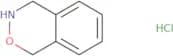
CAS:Versatile small molecule scaffoldFormula:C9H13BrN2O3Purity:Min. 95%Molecular weight:277.11 g/mol3,4-Dihydro-1H-2,3-benzoxazine hydrochloride
CAS:Versatile small molecule scaffoldFormula:C8H10ClNOPurity:Min. 95%Molecular weight:171.62 g/mol1-Piperidino-2-[4]piperidyl-ethane
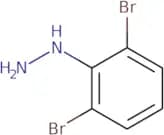
CAS:Versatile small molecule scaffoldFormula:C12H24N2Purity:Min. 95%Molecular weight:196.33 g/mol(2,6-Dibromophenyl)hydrazine
CAS:Versatile small molecule scaffold
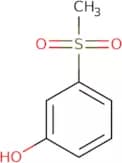
Formula:C6H6Br2N2Purity:Min. 95%Molecular weight:265.93 g/mol3-Methanesulfonylphenol
CAS:3-Methanesulfonylphenol is a reactive and computationally descriptors, damages, neutralizing, piperidine, vector, oxygen species, molecular descriptors, antioxidant, phenolic lead compound that was synthesized for the purpose of identifying new potential antioxidants. 3-Methanesulfonylphenol has been shown to inhibit the oxidation of lipids and proteins in cells. It also has a strong antioxidant activity against peroxyl radicals and hydroxyl radicals. 3-Methanesulfonylphenol also inhibits the production of hydrogen peroxide by reacting with peroxides in vivo. This results in reduced levels of lipid hydroperoxides and protein carbonyls.
Formula:C7H8O3SPurity:Min. 95%Molecular weight:172.2 g/mol2-Benzoyl-4-methoxyphenol
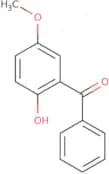
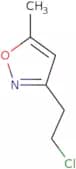
CAS:2-Benzoyl-4-methoxyphenol is a surfactant that is sustainable and biodegradable. It is used in the production of micelles to form detergents, which are important for the environment. The binding constants of this chemical with 2-hydroxybenzophenone and benzyl have been determined at different temperatures. 2-Benzoyl-4-methoxyphenol has been shown to be an effective transient probe for mechanistic investigations in organic chemistry. This compound can be prepared by reacting benzaldehyde with methoxyacetophenone in acetonitrile. Irradiation can break down the benzene ring, producing phenoxy (2,6-dioxo)cyclohexane or 2-(2,6-dioxo)cyclohexanone. 2-Benzoyl-4-methoxyphenol also has hydrophobic properties and can be used as a surfFormula:C14H12O3Purity:Min. 95%Molecular weight:228.24 g/mol3-(2-Chloroethyl)-5-methyl-1,2-oxazole
CAS:Versatile small molecule scaffoldFormula:C6H8ClNOPurity:Min. 95%Molecular weight:145.59 g/mol
![5-[(4-Methylphenyl)amino]-1,3,4-thiadiazole-2-thiol](/_next/image/?url=https%3A%2Fstatic.cymitquimica.com%2Fproducts%2F3D%2Fthumb-webp%2FPAA73125.webp&w=3840&q=75)


![2-[2-(Methoxycarbonyl)phenyl]acetic acid](/_next/image/?url=https%3A%2Fstatic.cymitquimica.com%2Fproducts%2F3D%2Fthumb-webp%2FPAA73649.webp&w=3840&q=75)


![7-Chlorofuro[2,3-d]pyridazine](/_next/image/?url=https%3A%2Fstatic.cymitquimica.com%2Fproducts%2F3D%2Fthumb-webp%2FPAA75789.webp&w=3840&q=75)

![1-Piperidino-2-[4]piperidyl-ethane](/_next/image/?url=https%3A%2Fstatic.cymitquimica.com%2Fproducts%2F3D%2Fthumb-webp%2FPAA75909.webp&w=3840&q=75)