Building Blocks
This section contains fundamental products for the synthesis of organic and biological compounds. Building blocks are the essential starting materials used to construct complex molecules through various chemical reactions. They play a critical role in drug discovery, material science, and chemical research. At CymitQuimica, we offer a diverse range of high-quality building blocks to support your innovative research and industrial projects, ensuring you have the essential components for successful synthesis.
Subcategories of "Building Blocks"
- Boronic Acids & Boronic Acid Derivatives(5,778 products)
- Chiral Building Blocks(1,242 products)
- Hydrocarbon Building Blocks(6,098 products)
- Organic Building Blocks(61,059 products)
Found 199580 products of "Building Blocks"
Sort by
Purity (%)
0
100
|
0
|
50
|
90
|
95
|
100
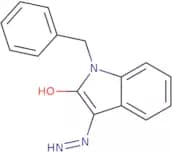
1-Benzyl-3-hydrazinylidene-2,3-dihydro-1H-indol-2-one
CAS:<p>Versatile small molecule scaffold</p>Formula:C15H13N3OPurity:Min. 95%Molecular weight:251.28 g/mol2-(2-Hydroxy-5-methoxyphenyl)-2-oxoacetic acid
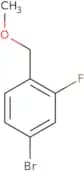
CAS:Versatile small molecule scaffoldFormula:C9H8O5Purity:Min. 95%Molecular weight:196.2 g/mol4-Bromo-2-fluoro-1-(methoxymethyl)benzene
CAS:<p>Versatile small molecule scaffold</p>Formula:C8H8BrFOPurity:Min. 95%Molecular weight:219.05 g/mol4-[(Methylsulfanyl)methyl]benzaldehyde
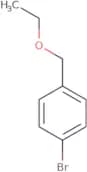
CAS:<p>Versatile small molecule scaffold</p>Formula:C9H10OSPurity:Min. 95%Molecular weight:166.24 g/mol1-bromo-4-(ethoxymethyl)benzene
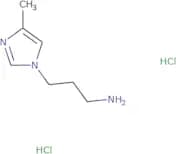
CAS:1-Bromo-4-(ethoxymethyl)benzene is a cation that is stable in the hydrosilane environment. It has been shown to be a possible precursor for dinuclear organometallic compounds with reductive coupling and redox properties. The electronic effects of this compound have been studied in the environment, where it can react with aldehydes to form dimetallic complexes.Formula:C9H11BrOPurity:Min. 95%Molecular weight:215.09 g/mol3-(4-Methyl-1H-imidazol-1-yl)propan-1-amine dihydrochloride
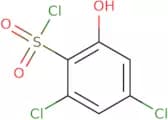
CAS:Versatile small molecule scaffoldFormula:C7H15Cl2N3Purity:Min. 95%Molecular weight:212.12 g/mol2,4-Dichloro-6-hydroxybenzene-1-sulfonyl chloride
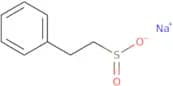
CAS:Versatile small molecule scaffoldFormula:C6H3Cl3O3SPurity:Min. 95%Molecular weight:261.5 g/molSodium 2-phenylethane-1-sulfinate
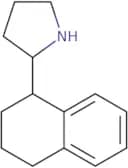
CAS:<p>Versatile small molecule scaffold</p>Formula:C8H9NaO2SPurity:Min. 95%Molecular weight:192.21 g/mol2-(1,2,3,4-Tetrahydronaphthalen-1-yl)pyrrolidine
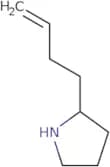
CAS:Versatile small molecule scaffoldFormula:C14H19NPurity:Min. 95%Molecular weight:201.31 g/mol2-(But-3-en-1-yl)pyrrolidine
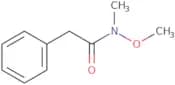
CAS:<p>Versatile small molecule scaffold</p>Formula:C8H15NPurity:Min. 95%Molecular weight:125.21 g/molN-Methoxy-N-methyl-2-phenylacetamide
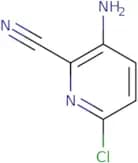
CAS:<p>N-Methoxy-N-methyl-2-phenylacetamide is a synthetic, nucleophilic alkylating agent that is used in the treatment of cancer. It inhibits the growth of cells by attacking the nucleophiles such as thiols and amino groups in proteins, DNA, RNA, and other cellular molecules. N-Methoxy-N-methyl-2-phenylacetamide has been shown to be effective against chlorido and prenylated compounds. The drug has also been shown to have anticancer activity against several types of cancer cells including leukemia cells. This drug binds to DNA at the five membered ring positions where it forms a stable covalent bond with the phosphate group on the sugar moiety of DNA, preventing replication and transcription.</p>Formula:C10H13NO2Purity:Min. 95%Molecular weight:179.22 g/mol3-Amino-6-chloropicolinonitrile
CAS:<p>3-Amino-6-chloropicolinonitrile is a growth factor receptor inhibitor. It reduces the expression of vascular endothelial growth factor receptor-2 (VEGFR-2) in endothelial cells and has inhibitory effects on the growth of these cells. 3-Amino-6-chloropicolinonitrile also inhibits the activity of kinases, which are enzymes that regulate the activity of proteins. The compound has been shown to have a growth inhibitory effect on human endothelial cells.</p>Formula:C6H4ClN3Purity:Min. 95%Molecular weight:153.57 g/mol2-Chloro-3-cyanoquinoline
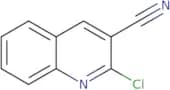
CAS:<p>2-Chloro-3-cyanoquinoline is a potent antitumor agent that has been shown to have an inhibitory effect on cancer cell growth. In the process of chemical reactions, 2-chloro-3-cyanoquinoline can be synthesized by reacting an aryl halide with amines. The compound is also a quinoline derivative, which has been used as an anticancer drug. 2-Chloro-3-cyanoquinoline inhibits cancer cell proliferation and induces apoptosis in cells without affecting normal cells. It binds to the mitochondrial membrane potential and inhibits the intracellular production of reactive oxygen species, leading to inhibition of mitosis. Furthermore, it can be used as a probe for studying nucleophilic attack on amines.</p>Formula:C10H5ClN2Purity:Min. 95%Molecular weight:188.61 g/molEthyl 5-hydroxymethyl-3-methylisoxazole-4-carboxylate
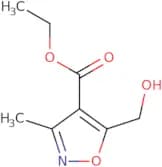
CAS:<p>Ethyl 5-hydroxymethyl-3-methylisoxazole-4-carboxylate is an acetoacetate derivative that is used as a biomimetic of acetoacetate. It can be used to synthesize esters, hydroxylamine, sulfide, and isoxazoles. The convergent synthesis of ethyl 5-hydroxymethyl-3-methylisoxazole-4-carboxylate from ethyl acetoacetate and tetrahydrothiophene by chloroacetyl chloride allows for the efficient construction of chiral molecules.</p>Formula:C8H11NO4Purity:Min. 95%Molecular weight:185.18 g/mol1-(5-Methyl-1,2-oxazol-3-yl)ethan-1-ol
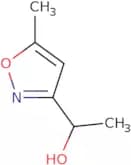
CAS:Versatile small molecule scaffoldFormula:C6H9NO2Purity:Min. 95%Molecular weight:127.14 g/molEthyl 3-(hydroxymethyl)-5-methyl-1,2-oxazole-4-carboxylate
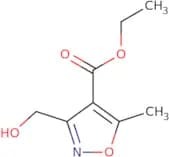
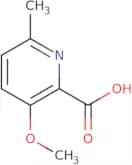
CAS:<p>Versatile small molecule scaffold</p>Formula:C8H11NO4Purity:Min. 95%Molecular weight:185.18 g/mol3-Methoxy-6-methylpyridine-2-carboxylic acid
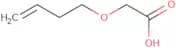
CAS:<p>Versatile small molecule scaffold</p>Formula:C8H9NO3Purity:Min. 95%Molecular weight:167.16 g/mol2-(But-3-en-1-yloxy)acetic acid
CAS:Versatile small molecule scaffoldFormula:C6H10O3Purity:Min. 95%Molecular weight:130.14 g/molDimethyl propargylmalonate
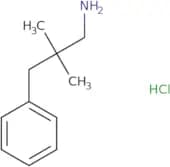
CAS:<p>Dimethyl propargylmalonate is a malonic acid ester that is used in organic synthesis as a functional group. It reacts with terminal alkynes to form cyclopenta and cyclopentyl isomeric mixtures. Dimethyl propargylmalonate has been shown to be an effective antifungal agent against Candida albicans, Candida glabrata, and Aspergillus fumigatus. Dimethyl propargylmalonate also has anti-tumor activity. This molecule binds to lysine residues on the tumor cell surface, which leads to inhibition of protein synthesis in the cells. This process can be catalysed by silicon or other metal compounds.</p>Formula:C8H10O4Purity:Min. 95%Molecular weight:170.16 g/mol2,2-Dimethyl-3-phenylpropan-1-amine hydrochloride
CAS:<p>Versatile small molecule scaffold</p>Formula:C11H18ClNPurity:Min. 95%Molecular weight:199.72 g/mol

![4-[(Methylsulfanyl)methyl]benzaldehyde](/_next/image/?url=https%3A%2Fstatic.cymitquimica.com%2Fproducts%2F3D%2Fthumb-webp%2FVDA06817.webp&w=3840&q=75)