Building Blocks
This section contains fundamental products for the synthesis of organic and biological compounds. Building blocks are the essential starting materials used to construct complex molecules through various chemical reactions. They play a critical role in drug discovery, material science, and chemical research. At CymitQuimica, we offer a diverse range of high-quality building blocks to support your innovative research and industrial projects, ensuring you have the essential components for successful synthesis.
Subcategories of "Building Blocks"
- Boronic Acids & Boronic Acid Derivatives(5,778 products)
- Chiral Building Blocks(1,242 products)
- Hydrocarbon Building Blocks(6,098 products)
- Organic Building Blocks(61,084 products)
Found 198714 products of "Building Blocks"
Sort by
Purity (%)
0
100
|
0
|
50
|
90
|
95
|
100
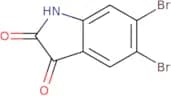
5,6-Dibromoindoline-2,3-dione
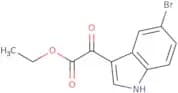
CAS:<p>5,6-Dibromoindoline-2,3-dione is a chemical compound that can be used as an anti-cancer drug. It has been shown to inhibit the activity of histone deacetylase enzymes in vitro and in vivo. 5,6-Dibromoindoline-2,3-dione has also been shown to have potential for use in cancer therapy by inhibiting tyrosine kinases and serotonin receptors. This compound is synthesized from indole and bromine. The chemical reactions involved are hydrogen bonding and substitution reactions.</p>Formula:C8H3Br2NO2Purity:Min. 95%Molecular weight:304.93 g/molEthyl 2-(5-bromo-1H-indol-3-yl)-2-oxoacetate
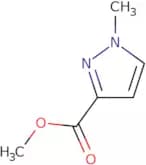
CAS:<p>Versatile small molecule scaffold</p>Formula:C12H10BrNO3Purity:Min. 95%Molecular weight:296.12 g/molMethyl 1-methyl-1H-pyrazole-3-carboxylate
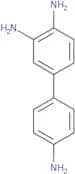
CAS:Versatile small molecule scaffoldFormula:C6H8N2O2Purity:Min. 95%Molecular weight:140.14 g/mol4-(4-Aminophenyl)benzene-1,2-diamine
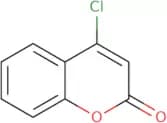
CAS:<p>4-(4-Aminophenyl)benzene-1,2-diamine (4-APB) is a neuroprotective agent that has been shown to protect neurons in vitro against oxidative stress and glutamate toxicity. 4-APB also inhibits the uptake of 4-(4-aminophenyl)benzene-1,2-diamine into cells by inhibiting the enzyme responsible for its synthesis. This inhibition leads to a decrease in cellular levels of 4-(4-aminophenyl)benzene-1,2-diamine and an increase in its concentration outside the cell. It has been shown to be effective against human ovarian carcinoma cells and ascitic cancer cells, but not against cisplatin resistant cancer cells. The mechanism of action of this drug is still unknown.</p>Formula:C12H13N3Purity:Min. 95%Molecular weight:199.25 g/mol4-Chloro-2H-chromen-2-one
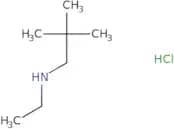
CAS:<p>4-Chloro-2H-chromen-2-one is an organic compound that is used as a building block in the synthesis of coumarin derivatives. It undergoes nucleophilic substitution reactions with amines, forming 4-hydroxycoumarin. This reaction is catalyzed by organometallic compounds such as PdCl2 and Cu(OAc)2. Cross-coupling reactions have been shown to be effective for the synthesis of coumarin derivatives. The mechanism of this reaction involves oxidative addition of an organometallic reagent to the carbon atom, followed by elimination of water to form an intermediate epoxide. Deuteration is required for this reaction because hydrogen reacts too rapidly with the organometallic reagents to be useful in the coupling process. 4-Chloro-2H-chromen-2-one has been shown to react with other nucleophiles such as thiols, phenols, and alcohols at</p>Formula:C9H5ClO2Purity:Min. 95%Molecular weight:180.59 g/molN-Ethyl-2,2-dimethyl-1-propanamine hydrochloride
CAS:<p>Versatile small molecule scaffold</p>Formula:C7H18ClNPurity:Min. 95%Molecular weight:151.68 g/mol2-(Prop-2-en-1-ylsulfanyl)benzoic acid
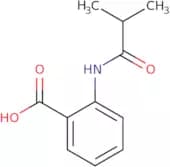
CAS:<p>2-(Prop-2-en-1-ylsulfanyl)benzoic acid is a phenyl group that has the ability to form a desorption molecule. It is light resistant and photopolymerizable, which means it can be used in the production of polymers. The alkylthio group on this molecule allows for transfer and gel permeation chromatography. 2-(Prop-2-en-1-ylsulfanyl)benzoic acid also has a vinylic group, which makes it hydrosilylation crosslinkable. This makes it an excellent candidate for copolymerization and hydrosilylation.</p>Formula:C10H10O2SPurity:Min. 95%Molecular weight:194.25 g/mol2-(Isobutyrylamino)benzoic acid
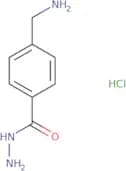
CAS:Versatile small molecule scaffoldFormula:C11H13NO3Purity:Min. 95%Molecular weight:207.23 g/mol4-(Aminomethyl)benzohydrazide hydrochloride
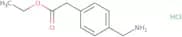
CAS:<p>Versatile small molecule scaffold</p>Formula:C8H12ClN3OPurity:Min. 95%Molecular weight:201.65 g/molEthyl 4-(aminomethyl)phenylacetate hydrochloride
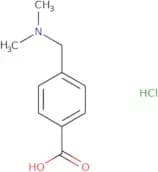
CAS:<p>Versatile small molecule scaffold</p>Formula:C11H16ClNO2Purity:Min. 95%Molecular weight:229.7 g/mol4-Dimethylaminomethyl-benzoic acid hydrochloride
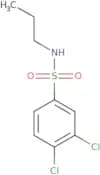
CAS:<p>4-Dimethylaminomethyl-benzoic acid hydrochloride (4DMABAH) is an antiviral agent that inhibits the replication of human immunodeficiency virus type 1 (HIV-1) by blocking the synthesis of viral DNA. 4DMABAH is a prodrug, which is metabolized to its active form, lamivudine, by esterases in the liver and other tissues. 4DMABAH has been shown to be effective against hepatitis B and C viruses in cell culture studies.</p>Formula:C10H14ClNO2Purity:Min. 95%Molecular weight:215.68 g/mol3,4-Dichloro-N-propylbenzene-1-sulfonamide
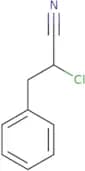
CAS:<p>Versatile small molecule scaffold</p>Formula:C9H11Cl2NO2SPurity:Min. 95%Molecular weight:268.16 g/mol2-Chloro-3-phenylpropanenitrile
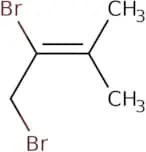
CAS:<p>Versatile small molecule scaffold</p>Formula:C9H8ClNPurity:Min. 95%Molecular weight:165.62 g/mol1,2-Dibromo-3-methylbut-2-ene
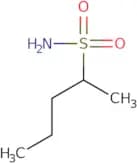
CAS:<p>Versatile small molecule scaffold</p>Formula:C5H8Br2Purity:Min. 95%Molecular weight:227.92 g/molPentane-2-sulfonamide
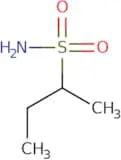
CAS:<p>Versatile small molecule scaffold</p>Formula:C5H13NO2SPurity:Min. 95%Molecular weight:151.23 g/molButane-2-sulfonamide
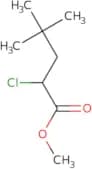
CAS:<p>Versatile small molecule scaffold</p>Formula:C4H11NO2SPurity:Min. 95%Molecular weight:137.2 g/molMethyl 2-chloro-4,4-dimethylpentanoate
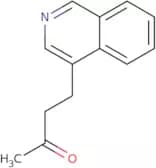
CAS:<p>Versatile small molecule scaffold</p>Formula:C8H15ClO2Purity:Min. 95%Molecular weight:178.65 g/mol4-(Isoquinolin-4-yl)butan-2-one
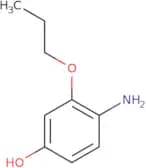
CAS:<p>Versatile small molecule scaffold</p>Formula:C13H13NOPurity:Min. 95%Molecular weight:199.25 g/mol4-Amino-3-propoxyphenol
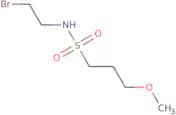
CAS:<p>Versatile small molecule scaffold</p>Formula:C9H13NO2Purity:Min. 95%Molecular weight:167.2 g/molN-(2-Bromoethyl)-3-methoxypropane-1-sulfonamide
CAS:<p>Versatile small molecule scaffold</p>Formula:C6H14BrNO3SPurity:Min. 95%Molecular weight:260.15 g/mol