Building Blocks
This section contains fundamental products for the synthesis of organic and biological compounds. Building blocks are the essential starting materials used to construct complex molecules through various chemical reactions. They play a critical role in drug discovery, material science, and chemical research. At CymitQuimica, we offer a diverse range of high-quality building blocks to support your innovative research and industrial projects, ensuring you have the essential components for successful synthesis.
Subcategories of "Building Blocks"
- Boronic Acids & Boronic Acid Derivatives(5,778 products)
- Chiral Building Blocks(1,242 products)
- Hydrocarbon Building Blocks(6,098 products)
- Organic Building Blocks(61,098 products)
Found 199594 products of "Building Blocks"
Sort by
Purity (%)
0
100
|
0
|
50
|
90
|
95
|
100
Ethyl 2-[3-(4-methylpiperazin-1-yl)propanamido]-4-phenylthiophene-3-carboxylate
CAS:Versatile small molecule scaffoldFormula:C21H27N3O3SPurity:Min. 95%Molecular weight:401.5 g/mol4-(Pyridin-3-yl)oxane-2,6-dione
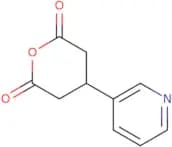
CAS:<p>Versatile small molecule scaffold</p>Formula:C10H9NO3Purity:Min. 95%Molecular weight:191.18 g/mol(2,2-Dimethylcyclohexyl)methanamine
CAS:<p>Versatile small molecule scaffold</p>Formula:C9H19NPurity:Min. 95%Molecular weight:141.25 g/mol2-Amino-2-cyclopropylacetonitrile hydrochloride
CAS:<p>Versatile small molecule scaffold</p>Formula:C5H9ClN2Purity:Min. 95%Molecular weight:132.59 g/mol3-Fluoro-4-methylbenzylamine hydrochloride
CAS:<p>Versatile small molecule scaffold</p>Formula:C8H11ClFNPurity:Min. 95%Molecular weight:175.63 g/mol[(4-Fluorophenyl)(pyridin-3-yl)methyl](methyl)amine
CAS:<p>Versatile small molecule scaffold</p>Formula:C13H13FN2Purity:Min. 95%Molecular weight:216.25 g/mol[(4-Chloro-3-fluorophenyl)methyl](methyl)amine
CAS:<p>Versatile small molecule scaffold</p>Formula:C8H9ClFNPurity:Min. 95%Molecular weight:173.61 g/mol[(4-Methoxy-3-methylphenyl)methyl](methyl)amine
CAS:<p>Versatile small molecule scaffold</p>Formula:C10H15NOPurity:Min. 95%Molecular weight:165.23 g/mol[(3-Chloro-4-fluorophenyl)methyl](methyl)amine
CAS:Versatile small molecule scaffoldFormula:C8H9ClFNPurity:Min. 95%Molecular weight:173.61 g/mol2,5-Dichloro-4-methoxybenzaldehyde
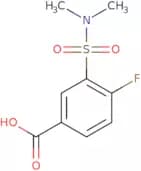
CAS:<p>Versatile small molecule scaffold</p>Formula:C8H6Cl2O2Purity:Min. 95%Molecular weight:205.03 g/mol3-(Dimethylsulfamoyl)-4-fluorobenzoic acid
CAS:<p>Versatile small molecule scaffold</p>Formula:C9H10FNO4SPurity:Min. 95%Molecular weight:247.25 g/mol(2E)-3-[3-(3-Nitrophenyl)-1-phenyl-1H-pyrazol-4-yl]prop-2-enoic acid
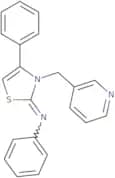
CAS:<p>Versatile small molecule scaffold</p>Formula:C18H13N3O4Purity:Min. 95%Molecular weight:335.3 g/molN,4-Diphenyl-3-(pyridin-3-ylmethyl)-2,3-dihydro-1,3-thiazol-2-imine
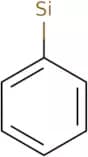
CAS:<p>Versatile small molecule scaffold</p>Formula:C21H17N3SPurity:Min. 95%Molecular weight:343.4 g/molPhenylsilane
CAS:<p>Phenylsilane is a model system for the study of the reaction mechanism of nucleophilic substitution. It is used to investigate the steric interactions between a substrate molecule and an electrophile that are important in determining the rate of reactivity. Phenylsilane has been shown to have antioxidative properties, which may be due to its ability to scavenge reactive oxygen species (ROS), such as hydroxyl radicals, superoxide ions, and hydrogen peroxide. Phenylsilane also has low kinetic energy and can form hydrogen bonds with carbonyl groups and amines. This chemical substance can react with quinoline derivatives, including benzoquinone, which is a toxic by-product of the metabolism of many drugs.</p>Formula:C6H8SiPurity:Min. 95%Color and Shape:Clear LiquidMolecular weight:108.21 g/molPerfluoroheptanoyl chloride
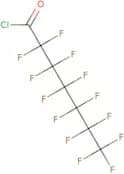
CAS:<p>Perfluoroheptanoyl chloride is a fluorinated hydrocarbon that is used as a surfactant in detergent compositions. It has been shown to be biostable, which means it does not react with other molecules in the environment. This compound also has low environmental toxicity because of its resistance to peroxidation and its ability to form stable complexes with metals. Perfluoroheptanoyl chloride has been shown to cause allergic reactions in some people and may cause adverse effects on animal health. Research on the effects of perfluoroheptanoyl chloride on Xenopus oocytes has demonstrated that this compound can affect gene expression and result in cell death.</p>Formula:C7CIF13OPurity:Min. 95%Color and Shape:Colourless LiquidMolecular weight:382.51 g/molrac-(1R,4S,5S)-4-Phenyl-2-oxabicyclo[2.1.1]hexane-5-carboxylic acid
CAS:<p>Please enquire for more information about rac-(1R,4S,5S)-4-Phenyl-2-oxabicyclo[2.1.1]hexane-5-carboxylic acid including the price, delivery time and more detailed product information at the technical inquiry form on this page</p>Formula:C12H12O3Purity:Min. 95%Molecular weight:204.22 g/molPentamethyl-cyclotrisiloxanol
CAS:<p>Please enquire for more information about Pentamethyl-cyclotrisiloxanol including the price, delivery time and more detailed product information at the technical inquiry form on this page</p>Formula:C5H16O4Si3Purity:Min. 97 Area-%Color and Shape:Clear LiquidMolecular weight:224.43 g/molPyridinoline
CAS:<p>Please enquire for more information about Pyridinoline including the price, delivery time and more detailed product information at the technical inquiry form on this page</p>Formula:C18H28N4O8Purity:Min. 95%Color and Shape:PowderMolecular weight:428.44 g/molParaffin oil
CAS:<p>Paraffin oil is a mixture of hydrocarbons that is liquid at room temperature and pressure. It has been shown to inhibit the growth of human osteosarcoma cells in vitro, with a potency corresponding to that of delphinidin, a natural compound found in plants. Paraffin oil also has an inhibitory effect on the mitochondrial membrane potential and on the release of pro-inflammatory cytokines such as TNF-α and IL-6 by HL-60 cells. This inhibition may be due to the ability of paraffin oil to bind to Toll-like receptors (TLRs). The molecular mechanism underlying this inhibition remains unknown. Paraffin oil can be used as a model system for epigenetic modulators because it induces histone acetylation, which alters gene expression.</p>Purity:Min. 95%Pyrrolidone hydrotribromide
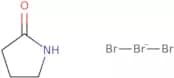
CAS:<p>Pyrrolidone hydrotribromide is a compound that has been used as a solvent in the production of trifluoroacetic acid. It is also used to synthesize β-unsaturated ketones and methyl ketones, which are often found in perfumes. Pyrrolidone hydrotribromide has been shown to inhibit melanocortin-1 receptor (MC1R), which is involved in the development of cancer. This inhibition may be due to its ability to interact with the c1-6 alkyl group on MC1R and disrupt hydrogen bonding between this group and the benzyl group on the melanocortin molecule.</p>Formula:C12H22Br3N3O3Purity:Min. 95%Molecular weight:496.03 g/mol
![Ethyl 2-[3-(4-methylpiperazin-1-yl)propanamido]-4-phenylthiophene-3-carboxylate](/_next/image/?url=https%3A%2Fstatic.cymitquimica.com%2Fproducts%2F3D%2Fthumb-webp%2FGQA68759.webp&w=3840&q=75)

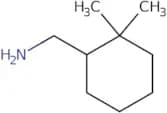
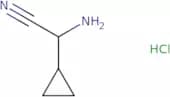
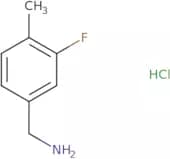
amine](/_next/image/?url=https%3A%2Fstatic.cymitquimica.com%2Fproducts%2F3D%2Fthumb-webp%2FGQA23690.webp&w=3840&q=75)
amine](/_next/image/?url=https%3A%2Fstatic.cymitquimica.com%2Fproducts%2F3D%2Fthumb-webp%2FGQA23667.webp&w=3840&q=75)
amine](/_next/image/?url=https%3A%2Fstatic.cymitquimica.com%2Fproducts%2F3D%2Fthumb-webp%2FGQA23664.webp&w=3840&q=75)
amine](/_next/image/?url=https%3A%2Fstatic.cymitquimica.com%2Fproducts%2F3D%2Fthumb-webp%2FGQA23643.webp&w=3840&q=75)
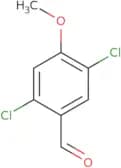
![(2E)-3-[3-(3-Nitrophenyl)-1-phenyl-1H-pyrazol-4-yl]prop-2-enoic acid](/_next/image/?url=https%3A%2Fstatic.cymitquimica.com%2Fproducts%2F3D%2Fthumb-webp%2FGQA21435.webp&w=3840&q=75)
![rac-(1R,4S,5S)-4-Phenyl-2-oxabicyclo[2.1.1]hexane-5-carboxylic acid](/_next/image/?url=https%3A%2Fstatic.cymitquimica.com%2Fproducts%2F3D%2Fthumb-webp%2FFP184005.webp&w=3840&q=75)