Building Blocks
This section contains fundamental products for the synthesis of organic and biological compounds. Building blocks are the essential starting materials used to construct complex molecules through various chemical reactions. They play a critical role in drug discovery, material science, and chemical research. At CymitQuimica, we offer a diverse range of high-quality building blocks to support your innovative research and industrial projects, ensuring you have the essential components for successful synthesis.
Subcategories of "Building Blocks"
- Boronic Acids & Boronic Acid Derivatives(5,778 products)
- Chiral Building Blocks(1,242 products)
- Hydrocarbon Building Blocks(6,098 products)
- Organic Building Blocks(61,034 products)
Found 199601 products of "Building Blocks"
Sort by
Purity (%)
0
100
|
0
|
50
|
90
|
95
|
100
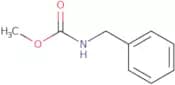
Methyl benzylcarbamate
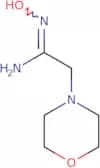
CAS:<p>Methyl benzylcarbamate (MBQ) is a synthetic compound that has the general chemical formula of CH2CH(NH2)COOH. It is a sulfamic acid which has been used as an organic solvent, in polymerization reactions, and in amide formation. MBQ can be synthesized by reacting methyl benzyl chloride with sodium sulfamate. The reaction mechanism for this chemical change is similar to the one that occurs in esterification reactions, except that the hydroxyl group on the methyl benzyl chloride reacts with the carboxylic acid group on sulfamic acid. The chemical reaction also produces water as a by-product. Density lipoproteins are proteins that are involved in lipid transport and metabolism. They are primarily synthesized by liver cells but can also be made by other cell types like macrophages or adipocytes. They have an important role in transporting lipids from peripheral tissues to the liver for metabolism and excretion and are regulated by</p>Formula:C9H11NO2Purity:Min. 95%Molecular weight:165.19 g/mol(1Z)-N'-Hydroxy-2-(4-morpholinyl)ethanimidamide
CAS:<p>Versatile small molecule scaffold</p>Formula:C6H13N3O2Purity:Min. 95%Molecular weight:159.19 g/mol6-(Pyrrolidin-1-yl)hexanoic acid
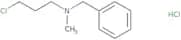
CAS:<p>Versatile small molecule scaffold</p>Formula:C10H19NO2Purity:Min. 95%Molecular weight:185.3 g/molBenzyl(3-chloropropyl)methylamine hydrochloride
CAS:<p>Versatile small molecule scaffold</p>Formula:C11H17Cl2NPurity:Min. 95%Molecular weight:234.16 g/mol3-(Benzylmethylamino)-1-propanol
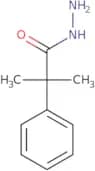
CAS:<p>Versatile small molecule scaffold</p>Formula:C11H17NOPurity:Min. 95%Molecular weight:179.26 g/mol2-Methyl-2-phenylpropanehydrazide
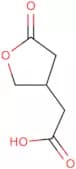
CAS:<p>Versatile small molecule scaffold</p>Formula:C10H14N2OPurity:Min. 95%Molecular weight:178.23 g/mol2-(5-Oxooxolan-3-yl)acetic acid
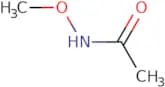
CAS:<p>Versatile small molecule scaffold</p>Formula:C6H8O4Purity:Min. 95%Molecular weight:144.12 g/molN-Methoxyacetamide
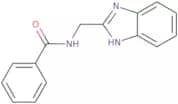
CAS:<p>Versatile small molecule scaffold</p>Formula:C3H7NO2Purity:Min. 95%Molecular weight:89.09 g/molN-(1H-1,3-Benzodiazol-2-ylmethyl)benzamide
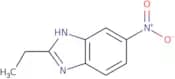
CAS:<p>Versatile small molecule scaffold</p>Formula:C15H13N3OPurity:Min. 95%Molecular weight:251.28 g/mol2-Ethyl-6-nitro-1H-1,3-benzodiazole
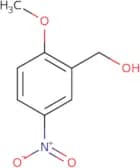
CAS:<p>Versatile small molecule scaffold</p>Formula:C9H9N3O2Purity:Min. 95%Molecular weight:191.19 g/mol(2-Methoxy-5-nitrophenyl)methanol
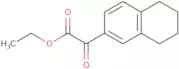
CAS:<p>Versatile small molecule scaffold</p>Formula:C8H9NO4Purity:Min. 95%Molecular weight:183.16 g/molEthyl 2-oxo-2-(5,6,7,8-tetrahydronaphthalen-2-yl)acetate
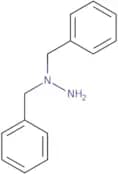
CAS:<p>Versatile small molecule scaffold</p>Formula:C14H16O3Purity:Min. 95%Molecular weight:232.27 g/molN,N-Dibenzylhydrazine
CAS:<p>N,N-Dibenzylhydrazine is a chemical compound that is used as an inhibitor in the synthesis of organic molecules. It has been shown to inhibit the activity of enzymes such as azide, halides and hydrazones. This agent also shows sensitivity to yield variations in mass spectrometric analysis. N,N-Dibenzylhydrazine inhibits the growth of bacteria by being mutagenic and lowering protein synthesis.</p>Formula:C14H16N2Purity:Min. 95%Molecular weight:212.3 g/molMethanedisulfonyl Dichloride
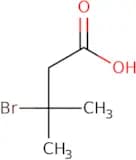
CAS:<p>Methanedisulfonyl Dichloride is a proton-containing nucleophilic reagent that can be used as an acid catalyst in organic synthesis. It is primarily used as a source of sulfonyl chloride, which is a functional group that can react with other molecules to form ester compounds. Methanedisulfonyl Dichloride also reacts with hydrogen fluoride (HF) to produce methanesulfonic acid, which dissociates in water to form H+ and SO3-. This chemical has been shown to be effective for the synthesis of carbon nanotubes by reacting with amine groups on the surface of carbon nanotubes.</p>Formula:CH2Cl2O4S2Purity:Min. 95%Molecular weight:213.04 g/mol3-Bromo-3-methylbutanoic acid
CAS:<p>Hippuric acid is a naturally occurring compound that is found in the urine of humans and other mammals. 3-Bromo-3-methylbutanoic acid inhibits the activity of enzymes that catalyze reactions involving an organic acid, such as anthranilic or citric acids. It has been shown to be biodegradable and not toxic to humans. The inhibitory effect of 3-bromo-3-methylbutanoic acid on enzymes is reversible, with the exception of methyl esterification, where it remains inhibited even after removal. This compound may be used as a preservative in food products or cosmetics.</p>Formula:C5H9BrO2Purity:Min. 95%Molecular weight:181.03 g/mol3-Bromobutan-2-ol
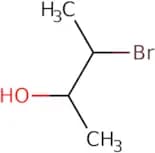
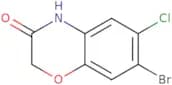
CAS:<p>3-Bromobutan-2-ol is an alcohol that is used as a chemical intermediate in the preparation of bromohydrins, which are intermediates in the production of other organic compounds. 3-Bromobutan-2-ol can be prepared by catalytic asymmetric synthesis from 2-bromoethanol and dimethylamine. The stereoisomers of 3-bromobutan-2-ol are optically active and can be separated by column chromatography or recrystallization. The synthetic route for this compound involves esterification with formic acid followed by hydrolysis to give 3-bromobutanone, which then undergoes a dehydration reaction with boron tribromide to produce 3-bromobutan-2-ol. This product has been shown to have antifungal properties against Candida albicans, Coccidioides immitis, and Aspergillus fumigatus</p>Formula:C4H9BrOPurity:Min. 95%Molecular weight:153.02 g/mol7-Bromo-6-chloro-3,4-dihydro-2H-1,4-benzoxazin-3-one
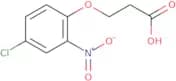
CAS:<p>Versatile small molecule scaffold</p>Formula:C8H5BrClNO2Purity:Min. 95%Molecular weight:262.49 g/mol3-(4-Chloro-2-nitrophenoxy)propanoic acid
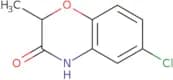
CAS:<p>Versatile small molecule scaffold</p>Formula:C9H8ClNO5Purity:Min. 95%Molecular weight:245.61 g/mol6-Chloro-2-methyl-2H-1,4-benzoxazin-3(4H)-one
CAS:<p>Versatile small molecule scaffold</p>Formula:C9H8ClNO2Purity:Min. 95%Molecular weight:197.62 g/mol2-(4-Methoxyphenyl)indole
CAS:2-(4-Methoxyphenyl)indole is an antitubercular drug that has shown potent activity against Mycobacterium tuberculosis. It inhibits the growth of mycobacteria by binding to topoisomerase and cross-resistance with other antitubercular drugs. 2-(4-Methoxyphenyl)indole has also been shown to induce apoptosis in cancer cells, which may be due to its ability to inhibit the production of caspases, linker proteins, and aldehydes. This drug has also been shown to have anti-inflammatory properties.Formula:C15H13NOPurity:Min. 95%Molecular weight:223.28 g/mol