Building Blocks
This section contains fundamental products for the synthesis of organic and biological compounds. Building blocks are the essential starting materials used to construct complex molecules through various chemical reactions. They play a critical role in drug discovery, material science, and chemical research. At CymitQuimica, we offer a diverse range of high-quality building blocks to support your innovative research and industrial projects, ensuring you have the essential components for successful synthesis.
Subcategories of "Building Blocks"
- Boronic Acids & Boronic Acid Derivatives(5,778 products)
- Chiral Building Blocks(1,242 products)
- Hydrocarbon Building Blocks(6,098 products)
- Organic Building Blocks(61,034 products)
Found 199601 products of "Building Blocks"
Sort by
Purity (%)
0
100
|
0
|
50
|
90
|
95
|
100
Ethyl 2-{imidazo[2,1-b][1,3]thiazol-6-yl}acetate
CAS:Versatile small molecule scaffoldFormula:C9H10N2O2SPurity:Min. 95%Molecular weight:210.26 g/mol2-(Imidazo[2,1-b]thiazol-6-yl)acetic acid
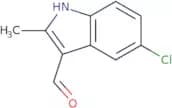
CAS:<p>Versatile small molecule scaffold</p>Formula:C7H6N2O2SPurity:Min. 95%Molecular weight:182.2 g/mol5-Chloro-2-methyl-1H-indole-3-carbaldehyde
CAS:<p>Versatile small molecule scaffold</p>Formula:C10H8ClNOPurity:Min. 95%Molecular weight:193.63 g/mol[4-(Trimethylsilyl)phenyl]methanethiol
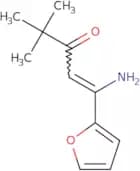
CAS:<p>Versatile small molecule scaffold</p>Formula:C10H16SSiPurity:Min. 95%Molecular weight:196.39 g/mol1-Amino-1-(furan-2-yl)-4,4-dimethylpent-1-en-3-one
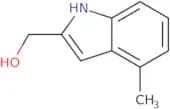
CAS:<p>Versatile small molecule scaffold</p>Formula:C11H15NO2Purity:Min. 95%Molecular weight:193.24 g/mol(4-Methyl-1H-indol-2-yl)methanol
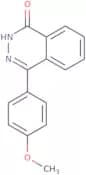
CAS:<p>Versatile small molecule scaffold</p>Formula:C10H11NOPurity:Min. 95%Molecular weight:161.2 g/mol4-(4-Methoxyphenyl)-1-(2H)-phthalazinone
CAS:<p>4-(4-Methoxyphenyl)-1-(2H)-phthalazinone is a hydrazine derivative that is used in the synthesis of other compounds. It is a colorless liquid with a pungent smell. It reacts with sodium ethoxide to form 4-methoxy-1,2-phenylenediamine, which condenses with ammonia and hydrochloric acid to form 4-amino-3-hydroxyphenylacetic acid hydrochloride. Hydrazines are reactive because they contain both a nitrogen and an oxygen atom in their formula. They are also nucleophiles because they can react with electron donating groups such as amines or alcohols. Hydrazides are less reactive than hydrazines because they lack the oxygen atom. The elemental analysis of this compound shows it contains carbon (C), hydrogen (H), and nitrogen (N).</p>Formula:C15H12N2O2Purity:Min. 95%Molecular weight:252.27 g/mol3,5,6-Trimethylpyrazin-2(1H)-one
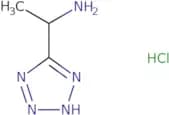
CAS:<p>3,5,6-Trimethylpyrazin-2(1H)-one is a reactive compound that can be obtained by reacting 2-aminoethanol with 3,5,6-trimethylpyrazine. This product has been shown to form a reactive intermediate in the formation of an asparagine residue during the synthesis of d-glucose. It has also been found to react with amines and carboxylic acids to form stable products. The product has been used as a model system for studying the mechanism of reaction between dialyzed monosaccharides and dialysis.<br>The chemical structure of this product is basically similar to that of 3,5,6-trimethylpyrazine. The difference is that it contains an additional methyl group on the benzene ring at position 6.</p>Formula:C7H10N2OPurity:Min. 95%Molecular weight:138.16 g/mol1-(2H-1,2,3,4-Tetrazol-5-yl)ethan-1-amine hydrochloride
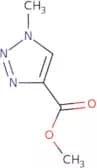
CAS:<p>Versatile small molecule scaffold</p>Formula:C3H8ClN5Purity:Min. 95%Molecular weight:149.58 g/molMethyl 1-methyl-1H-1,2,3-triazole-4-carboxylate
CAS:<p>Methyl 1-methyl-1H-1,2,3-triazole-4-carboxylate is a chemical compound that contains two methyl groups and one carbonyl group. It is used in the production of polymers such as cellulose acetate and other commercial products. Methyl 1-methyl-1H-1,2,3-triazole-4-carboxylate has been shown to regulate the transport of molecules across cell membranes by changing their physicochemical properties. This process can be done through a number of mechanisms, including:</p>Formula:C5H7N3O2Purity:Min. 95%Molecular weight:141.13 g/mol5,5-Dimethyl-1-cyclohexene-1-carboxylic acid
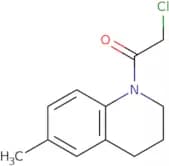
CAS:<p>Versatile small molecule scaffold</p>Formula:C9H14O2Purity:Min. 95%Molecular weight:154.21 g/mol2-Chloro-1-(6-methyl-1,2,3,4-tetrahydroquinolin-1-yl)ethan-1-one
CAS:<p>Versatile small molecule scaffold</p>Formula:C12H14ClNOPurity:Min. 95%Molecular weight:223.7 g/mol6-Bromo-1-azatricyclo[6.3.1.0,4,12]dodeca-4(12),5,7-trien-2-one
CAS:<p>Versatile small molecule scaffold</p>Formula:C11H10BrNOPurity:Min. 95%Molecular weight:252.11 g/mol7-Bromo-1-azatricyclo[7.3.1.0,5,13]trideca-5,7,9(13)-trien-2-one
CAS:<p>Versatile small molecule scaffold</p>Formula:C12H12BrNOPurity:Min. 95%Molecular weight:266.13 g/molPyroquilon
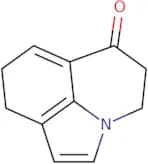
CAS:<p>Pyroquilon is a fungicide that is used to control diseases of plants and animals. It is a synergistic compound that has been found to be effective against wild-type strains of fungi, including Trichoderma, Fusarium, Alternaria, and Phoma. Pyroquilon has shown site-specific activity in the inhibition of protein synthesis by inhibiting aminoacyl tRNA synthetase. This inhibition leads to a decrease in cellular growth. Pyroquilon also shows an antagonistic effect on the production of reactive oxygen species (ROS). The fungicidal properties are due to the hydroxyl group on the pyroquilon molecule that reacts with electron acceptors at the site of infection.</p>Formula:C11H11NOPurity:Min. 95%Molecular weight:173.21 g/mol2-Hydrazinyl-4,8-dimethylquinoline
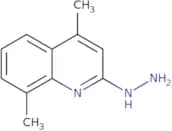
CAS:<p>Versatile small molecule scaffold</p>Formula:C11H13N3Purity:Min. 95%Molecular weight:187.24 g/mol3-tert-Butyl-5-chloro-1,2,4-thiadiazole
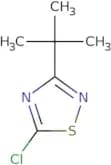
CAS:<p>Versatile small molecule scaffold</p>Formula:C6H9ClN2SPurity:Min. 95%Molecular weight:176.67 g/molN-[1-(2-Phenyl-1,3-thiazol-4-yl)ethylidene]hydroxylamine
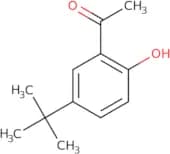
CAS:<p>Versatile small molecule scaffold</p>Formula:C11H10N2OSPurity:Min. 95%Molecular weight:218.28 g/mol1-(5-tert-Butyl-2-hydroxyphenyl)ethan-1-one
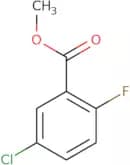
CAS:<p>1-(5-tert-Butyl-2-hydroxyphenyl)ethan-1-one is a compound that can be produced by the reaction of acetates with phenols. This reaction produces an aryloxy group, which reacts with another molecule of acetate to form the acetophenones. The reaction has been shown to occur in the presence of light and heat.</p>Formula:C12H16O2Purity:Min. 95%Molecular weight:192.25 g/molMethyl 5-chloro-2-fluorobenzoate
CAS:<p>Versatile small molecule scaffold</p>Formula:C8H6ClFO2Purity:Min. 95%Molecular weight:188.58 g/mol
![Ethyl 2-{imidazo[2,1-b][1,3]thiazol-6-yl}acetate](/_next/image/?url=https%3A%2Fstatic.cymitquimica.com%2Fproducts%2F3D%2Fthumb-webp%2FHCA33273.webp&w=3840&q=75)

![2-(Imidazo[2,1-b]thiazol-6-yl)acetic acid](/_next/image/?url=https%3A%2Fstatic.cymitquimica.com%2Fproducts%2F3D%2Fthumb-webp%2FHCA33275.webp&w=3840&q=75)
![[4-(Trimethylsilyl)phenyl]methanethiol](/_next/image/?url=https%3A%2Fstatic.cymitquimica.com%2Fproducts%2F3D%2Fthumb-webp%2FHCA33785.webp&w=3840&q=75)


![6-Bromo-1-azatricyclo[6.3.1.0,4,12]dodeca-4(12),5,7-trien-2-one](/_next/image/?url=https%3A%2Fstatic.cymitquimica.com%2Fproducts%2F3D%2Fthumb-webp%2FHCA36892.webp&w=3840&q=75)
![7-Bromo-1-azatricyclo[7.3.1.0,5,13]trideca-5,7,9(13)-trien-2-one](/_next/image/?url=https%3A%2Fstatic.cymitquimica.com%2Fproducts%2F3D%2Fthumb-webp%2FHCA36919.webp&w=3840&q=75)
![N-[1-(2-Phenyl-1,3-thiazol-4-yl)ethylidene]hydroxylamine](/_next/image/?url=https%3A%2Fstatic.cymitquimica.com%2Fproducts%2F3D%2Fthumb-webp%2FHCA37214.webp&w=3840&q=75)