Building Blocks
Subcategories of "Building Blocks"
- Boronic Acids & Boronic Acid Derivatives(5,805 products)
- Chiral Building Blocks(1,248 products)
- Hydrocarbon Building Blocks(6,118 products)
- Organic Building Blocks(61,447 products)
Found 208423 products of "Building Blocks"
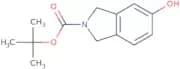
tert-Butyl 5-hydroxyisoindoline-2-carboxylate
CAS:Versatile small molecule scaffoldFormula:C13H17NO3Purity:Min. 95%Molecular weight:235.28 g/mol5-[(Furan-2-ylmethyl)amino]-1,3,4-thiadiazole-2-thiol
CAS:Versatile small molecule scaffold
Formula:C7H7N3OS2Purity:Min. 95%Molecular weight:213.3 g/molBenzo[b]thiophene-5-carboxylic acid 1,1-dioxide
CAS:Versatile small molecule scaffoldFormula:C9H6O4SPurity:Min. 95%Molecular weight:210.21 g/mol2,3-Dihydro-benzo[b]thiophene-5-carboxylic acid 1,1-dioxide
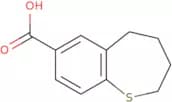
CAS:Versatile small molecule scaffoldFormula:C9H8O4SPurity:Min. 95%Molecular weight:212.22 g/mol2,3,4,5-Tetrahydro-1-benzothiepine-7-carboxylic acid
CAS:Versatile small molecule scaffold
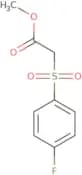
Formula:C11H12O2SPurity:Min. 95%Molecular weight:208.28 g/molMethyl 2-(4-fluorobenzenesulfonyl)acetate
CAS:Versatile small molecule scaffoldFormula:C9H9FO4SPurity:Min. 95%Molecular weight:232.23 g/molMethyl 2-(4-aminobenzenesulfonyl)acetate
CAS:Versatile small molecule scaffoldFormula:C9H11NO4SPurity:Min. 95%Molecular weight:229.3 g/molMethyl 3-chloro-1H-pyrrole-2-carboxylate
CAS:Methyl 3-chloro-1H-pyrrole-2-carboxylate (MCPC) is a novel lead compound that selectively activates GPR40, a receptor for free fatty acids. MCPC is being studied for its potential use in the treatment of type 2 diabetes. Activation of GPR40 by MCPC leads to the production of insulin and other hormones that regulate blood sugar levels. MCPC has been shown to be a selective agonist for GPR40, with no significant activation of other receptors.
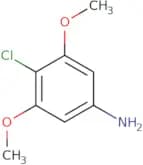
Formula:C6H6ClNO2Purity:Min. 95%Molecular weight:159.57 g/mol4-Chloro-3,5-dimethoxyaniline
CAS:Versatile small molecule scaffoldFormula:C8H10ClNO2Purity:Min. 95%Molecular weight:187.62 g/mol[4-(But-3-en-1-yl)phenyl]boronic acid
CAS:Versatile small molecule scaffold
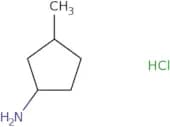
Formula:C10H13BO2Purity:Min. 95%Molecular weight:176.02 g/mol3-Methylcyclopentan-1-amine hydrochloride
CAS:Versatile small molecule scaffold
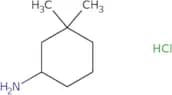
Formula:C6H14ClNPurity:Min. 95%Molecular weight:135.63 g/mol3,3-Dimethylcyclohexan-1-amine hydrochloride
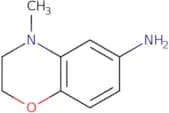
CAS:Versatile small molecule scaffoldFormula:C8H18ClNPurity:Min. 95%Molecular weight:163.69 g/mol4-Methyl-3,4-dihydro-2H-1,4-benzoxazin-6-amine
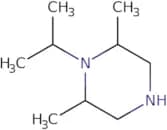
CAS:Versatile small molecule scaffoldFormula:C9H12N2OPurity:Min. 95%Molecular weight:164.2 g/mol(2R,6S)-2,6-Dimethyl-1-(propan-2-yl)piperazine
CAS:Versatile small molecule scaffoldFormula:C9H20N2Purity:Min. 95%Molecular weight:156.27 g/mol2-Azabicyclo[3.3.1]nonane hydrochloride
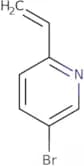
CAS:Versatile small molecule scaffoldFormula:C8H16ClNPurity:Min. 95%Molecular weight:161.67 g/mol5-Bromo-2-ethenylpyridine
CAS:5-Bromo-2-ethenylpyridine is an organic compound with the molecular formula CHBrN. It is a crystalline solid that is soluble in organic solvents and has a melting point of 203 °C. 5-Bromo-2-ethenylpyridine can be used to make polymers, plastics, and coatings, as well as for the production of pharmaceuticals, herbicides, dyes, and pesticides. 5-Bromo-2-ethenylpyridine interacts with other compounds through covalent bonds or hydrogen bonds. This chemical's protonation state can change depending on pH levels.
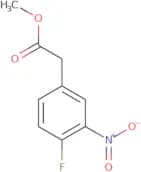
5-Bromo-2-ethenylpyridine is a highly reactive compound that can polymerize easily under the right conditions and react with other chemicals to form chains or polymers.Formula:C7H6BrNPurity:Min. 95%Molecular weight:184.03 g/molMethyl 2-(4-fluoro-3-nitrophenyl)acetate
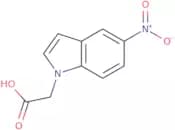
CAS:Versatile small molecule scaffoldFormula:C9H8FNO4Purity:Min. 95%Molecular weight:213.16 g/mol2-(5-Nitro-1H-indol-1-yl)acetic acid
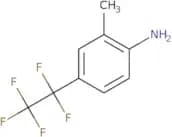
CAS:Versatile small molecule scaffoldFormula:C10H8N2O4Purity:Min. 95%Molecular weight:220.18 g/mol2-Methyl-4-(pentafluoroethyl)aniline
CAS:Versatile small molecule scaffoldFormula:C9H8F5NPurity:Min. 95%Molecular weight:225.16 g/mol2,2,2-Trifluoroethyl N-(5-phenyl-1,3,4-thiadiazol-2-yl)carbamate
CAS:Versatile small molecule scaffoldFormula:C11H8F3N3O2SPurity:Min. 95%Molecular weight:303.26 g/mol

![5-[(Furan-2-ylmethyl)amino]-1,3,4-thiadiazole-2-thiol](/_next/image/?url=https%3A%2Fstatic.cymitquimica.com%2Fproducts%2F3D%2Fthumb-webp%2FBJA21134.webp&w=3840&q=75)
![Benzo[b]thiophene-5-carboxylic acid 1,1-dioxide](/_next/image/?url=https%3A%2Fstatic.cymitquimica.com%2Fproducts%2F3D%2Fthumb-webp%2FBJA25947.webp&w=3840&q=75)
![2,3-Dihydro-benzo[b]thiophene-5-carboxylic acid 1,1-dioxide](/_next/image/?url=https%3A%2Fstatic.cymitquimica.com%2Fproducts%2F3D%2Fthumb-webp%2FBJA25948.webp&w=3840&q=75)

![[4-(But-3-en-1-yl)phenyl]boronic acid](/_next/image/?url=https%3A%2Fstatic.cymitquimica.com%2Fproducts%2F3D%2Fthumb-webp%2FBJA42289.webp&w=3840&q=75)
![2-Azabicyclo[3.3.1]nonane hydrochloride](/_next/image/?url=https%3A%2Fstatic.cymitquimica.com%2Fproducts%2F3D%2Fthumb-webp%2FBJA88308.webp&w=3840&q=75)