Building Blocks
This section contains fundamental products for the synthesis of organic and biological compounds. Building blocks are the essential starting materials used to construct complex molecules through various chemical reactions. They play a critical role in drug discovery, material science, and chemical research. At CymitQuimica, we offer a diverse range of high-quality building blocks to support your innovative research and industrial projects, ensuring you have the essential components for successful synthesis.
Subcategories of "Building Blocks"
- Boronic Acids & Boronic Acid Derivatives(5,778 products)
- Chiral Building Blocks(1,243 products)
- Hydrocarbon Building Blocks(6,097 products)
- Organic Building Blocks(61,052 products)
Found 201390 products of "Building Blocks"
Sort by
Purity (%)
0
100
|
0
|
50
|
90
|
95
|
100
[3,3'-Bipyridine]-5-carboxylic acid
CAS:<p>Versatile small molecule scaffold</p>Formula:C11H8N2O2Purity:Min. 95%Molecular weight:200.19 g/mol3-Hydroxy-2-(hydroxymethyl)-4H-pyran-4-one
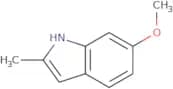
CAS:3-Hydroxy-2-(hydroxymethyl)-4H-pyran-4-one is a manganate compound that is used in the synthesis of carboxylic acid derivatives. The reaction is performed in a solvent mixture of methanol, acetone and triethylamine (1:1:1 v/v). The reaction proceeds through an intermediate formation of a tetrahedral ether, which is then hydrolyzed to yield the desired product. This process can be carried out in batch or continuous mode.Formula:C6H6O4Purity:Min. 95%Molecular weight:142.11 g/mol6-Methoxy-2-methyl-1H-indole
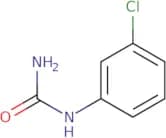
CAS:<p>Versatile small molecule scaffold</p>Formula:C10H11NOPurity:Min. 95%Molecular weight:161.2 g/mol3-Chlorophenylurea
CAS:<p>3-Chlorophenylurea is a quinazolinone that inhibits the growth of candida glabrata. This compound has been shown to inhibit efflux pumps, which are proteins that pump out drugs from the cell. 3-Chlorophenylurea has been shown to inhibit the efflux of fluconazole, a drug used to treat fungal infections, and thiourea, a compound that is known for its cytotoxicity. The inhibition of these two compounds suggests that 3-chlorophenylurea could be an efflux pump inhibitor.</p>Formula:C7H7ClN2OPurity:Min. 95%Molecular weight:170.6 g/molrac-(1R,2R,5R)-Bicyclo[3.2.1]octan-2-ol, exo
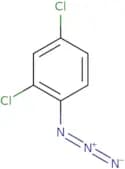
CAS:<p>Versatile small molecule scaffold</p>Formula:C8H14OPurity:Min. 95%Molecular weight:126.2 g/mol1-Azido-2,4-dichlorobenzene
CAS:<p>Versatile small molecule scaffold</p>Formula:C6H3Cl2N3Purity:Min. 95%Molecular weight:188.01 g/mol3,5-Dimethyl benzo[b]thiophene
CAS:<p>3,5-Dimethyl benzo[b]thiophene is a linear molecule containing an unsaturated thiophene ring. This compound is reactive and can undergo bond cleavage reactions with oxygen. It is used in analytical methods such as chromatographic analysis and linear regression analysis. 3,5-Dimethyl benzo[b]thiophene can also be used for the desulfurization of petroleum products and hydrogenated to produce polymers. The molecular descriptors for this compound are C=0, H=1, N=1, O=0, S=0.</p>Formula:C10H10SPurity:Min. 95%Molecular weight:162.26 g/mol1,4-dibutyl benzene-1,4-dicarboxylate
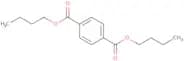
CAS:<p>1,4-Dibutylbenzene-1,4-dicarboxylate (DBDC) is a cationic surfactant that reacts with an acid to form a light emitting compound. It has been shown to have optimum concentrations of 0.5% and 1% in the presence of pueraria lobata extract. DBDC has also been used as sealant, hydroxyl group, glycol ester, and fatty acid. DBDC has been found to be a solid catalyst for dehydrocostus lactone with particle size below 10 microns.</p>Formula:C16H22O4Purity:Min. 95%Color and Shape:PowderMolecular weight:278.35 g/mol1-(2-Fluorophenyl)-2-methylpropan-2-ol
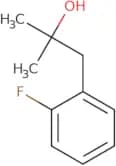
CAS:<p>Versatile small molecule scaffold</p>Formula:C10H13FOPurity:Min. 95%Molecular weight:168.21 g/mol2-Methyl-4-nitrobenzotrifluoride
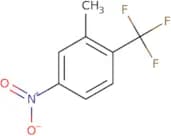
CAS:<p>Versatile small molecule scaffold</p>Formula:C8H6F3NO2Purity:Min. 95%Molecular weight:205.14 g/mol2-Amino-3-(pyridin-4-yl)propanoic acid
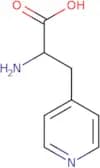
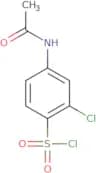
CAS:<p>Versatile small molecule scaffold</p>Formula:C8H10N2O2Purity:Min. 95%Molecular weight:166.18 g/mol4-Acetamido-2-chlorobenzenesulfonyl chloride
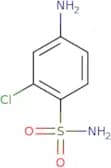
CAS:Versatile small molecule scaffoldFormula:C8H7Cl2NO3SPurity:Min. 95%Molecular weight:268.12 g/mol4-Amino-2-chlorobenzene-1-sulfonamide
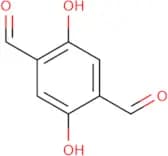
CAS:<p>4-Amino-2-chlorobenzene-1-sulfonamide is an isoform of the amino acid primary amine. It inhibits carbonic anhydrase and is used in treatment of eye diseases caused by uveitis and glaucoma. The IC50 value for 4-amino-2-chlorobenzene 1-sulfonamide is 2 nM, which falls within the nanomolar range. This drug has been shown to inhibit the activity of mammalian and human carbonic anhydrase. Carbonic anhydrase inhibitors are used as antihypertensive agents, diuretics, and antiepileptics. This drug also inhibits human cytosolic anhydrase II (hCA II).</p>Formula:C6H7ClN2O2SPurity:Min. 95%Molecular weight:206.65 g/mol2,5-Dihydroxyterephthalaldehyde
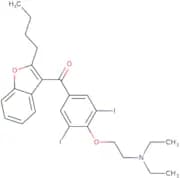
CAS:<p>2,5-Dihydroxyterephthalaldehyde (2,5-DTPA) is a sugar alcohol that is used in the production of polyester. It can be synthesized by electrochemical methods and is produced as an intermediate in the synthesis of 2,5-dihydroxypentane-1,5-diyldimethanol. The optical properties and chemical stability of 2,5-DTPA are determined by its protonation state. The protonation state depends on the pH of the solution or solvent. 2,5-DTPA has two isomers: one with an intramolecular hydrogen bond and one without. 2,5-DTPA also exists as an enol form at high pH values and as a keto form at low pH values. This compound has been shown to have liver protective effects against cell death induced by oxidative stress in animal models.</p>Formula:C8H6O4Purity:Min. 95%Molecular weight:166.13 g/molAmiodarone
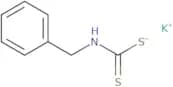
CAS:Controlled Product<p>Amiodarone is a drug that is used to treat and prevent certain types of irregular heartbeats. It belongs to the group of drugs called class III anti-arrhythmics. Amiodarone is a long-acting medication that can take up to three weeks for full effect. Amiodarone has been shown to reduce the number of atrial and ventricular arrhythmias in patients with structural heart disease. This drug also has significant cytotoxicity, which means it may affect normal cells as well as cancer cells, and increases the risk of serious side effects such as fibrillation and glucose intolerance. Amiodarone should not be taken with other medications that can cause fibrillation or make it hard for your body to control blood pressure, such as nonsteroidal anti-inflammatory drugs (NSAIDs) like ibuprofen or naproxen.</p>Formula:C25H29I2NO3Purity:Min. 95%Molecular weight:645.31 g/molPotassium (benzylcarbamothioyl)sulfanide
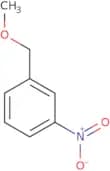
CAS:Versatile small molecule scaffoldFormula:C8H8KNS2Purity:Min. 95%Molecular weight:221.4 g/mol1-(Methoxymethyl)-3-nitrobenzene
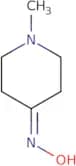
CAS:<p>Versatile small molecule scaffold</p>Formula:C8H9NO3Purity:Min. 95%Molecular weight:167.16 g/mol1-Methylpiperidin-4-one oxime
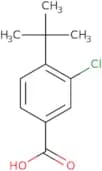
CAS:<p>Versatile small molecule scaffold</p>Formula:C6H12N2OPurity:Min. 95%Molecular weight:128.17 g/mol4-tert-Butyl-3-chlorobenzoic acid
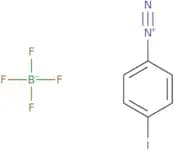
CAS:<p>Versatile small molecule scaffold</p>Formula:C11H13ClO2Purity:Min. 95%Molecular weight:212.67 g/mol4-Iodobenzene-1-diazonium tetrafluoroboranuide
CAS:Versatile small molecule scaffoldFormula:C6H4IN2•BF4Purity:Min. 95%Color and Shape:PowderMolecular weight:317.82 g/mol
![[3,3'-Bipyridine]-5-carboxylic acid](/_next/image/?url=https%3A%2Fstatic.cymitquimica.com%2Fproducts%2F3D%2Fthumb-webp%2FBAA97081.webp&w=3840&q=75)


![rac-(1R,2R,5R)-Bicyclo[3.2.1]octan-2-ol, exo](/_next/image/?url=https%3A%2Fstatic.cymitquimica.com%2Fproducts%2F3D%2Fthumb-webp%2FBAA96538.webp&w=3840&q=75)
![3,5-Dimethyl benzo[b]thiophene](/_next/image/?url=https%3A%2Fstatic.cymitquimica.com%2Fproducts%2F3D%2Fthumb-webp%2FBAA96445.webp&w=3840&q=75)