Building Blocks
Subcategories of "Building Blocks"
- Boronic Acids & Boronic Acid Derivatives(5,778 products)
- Chiral Building Blocks(1,243 products)
- Hydrocarbon Building Blocks(6,099 products)
- Organic Building Blocks(61,038 products)
Found 205375 products of "Building Blocks"
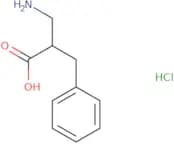
2-aminomethyl-3-phenylpropionic acid hcl
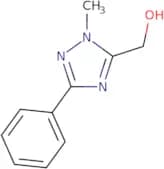
CAS:Versatile small molecule scaffoldFormula:C10H14ClNO2Purity:Min. 95%Molecular weight:215.68 g/mol(1-Methyl-3-phenyl-1H-1,2,4-triazol-5-yl)methanol
CAS:Versatile small molecule scaffold
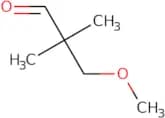
Formula:C10H11N3OPurity:Min. 95%Molecular weight:189.21 g/mol3-Methoxy-2,2-dimethylpropanal
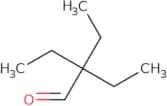
CAS:Versatile small molecule scaffoldFormula:C6H12O2Purity:Min. 95%Molecular weight:116.16 g/mol2,2-Diethylbutanal
CAS:2,2-Diethylbutanal is a chemical that is used as an antineoplastic drug. It has been shown to have affinity for the mineral sulfide and oxidizers. 2,2-Diethylbutanal has also been shown to be a long-term maternal toxicant in animals, with effects on the fetus and newborns. It has also been shown to cause problems for infants by reducing their serum levels of thyroxine and triiodothyronine (thyroid hormones). This chemical causes genetic mutations in isolates of organisms such as E coli and S cerevisiae. 2,2-Diethylbutanal may have adverse effects on the conformation of proteins or interfere with protein synthesis.
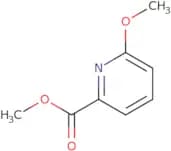
Formula:C8H16OPurity:85%MinColor and Shape:Clear LiquidMolecular weight:128.21 g/molMethyl 6-methoxypyridine-2-carboxylate
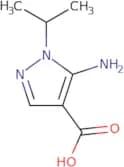
CAS:Methyl 6-methoxypyridine-2-carboxylate is an additive that can be used in the alkaline hydrolysis of esters. The pyridine nitrogen atom has a substituent effect on the methyl group, as it is electron donating and inductive. Substituent effects are seen when there are different atoms or groups attached to the same carbon atom. Methyl 6-methoxypyridine-2-carboxylate reacts with nucleophiles such as water, alcohols, amines, thiols, and acids to form esters and amides. These reactions are promoted by an acidic environment. The analogous reaction of methyl 6-methoxypyridine-2-carboxylate is its reaction with ammonia to form an amide.Formula:C8H9NO3Purity:Min. 95%Molecular weight:167.16 g/mol5-amino-1-(propan-2-yl)-1H-pyrazole-4-carboxylic acid
CAS:Versatile small molecule scaffoldFormula:C7H11N3O2Purity:Min. 95%Molecular weight:169.18 g/mol3,4-Dihydro-2H-pyrano[2,3-b]pyridine
CAS:Versatile small molecule scaffold
Formula:C8H9NOPurity:Min. 95%Molecular weight:135.17 g/mol4H-Thieno[3,2-c]chromene-2-carboxylic acid
CAS:Versatile small molecule scaffoldFormula:C12H8O3SPurity:Min. 95%Molecular weight:232.26 g/mol2,2-Bis(chloromethyl)-1,3-dioxolane
CAS:2,2-Bis(chloromethyl)-1,3-dioxolane is a chemical intermediate that can be used in the production of polyester resins. It is a colorless liquid with an unpleasant odor. 2,2-Bis(chloromethyl)-1,3-dioxolane reacts with ethylene and glycol to produce polyester resins. This reaction occurs at high temperatures and produces a mixture of products such as diols and triols. When heated in acidic conditions, the compound hydrolyzes to form dihydroxyacetone and p-toluenesulfonic acid. The compound is also used as an industrial solvent for acidic materials. Recrystallizing the product from ethylene glycol results in a white crystalline powder that can be used in the manufacture of other chemicals such as sulfate salts.
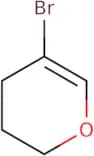
Formula:C5H8Cl2O2Purity:Min. 95%Molecular weight:171.02 g/mol5-Bromo-3,4-dihydro-2H-pyran
CAS:5-Bromo-3,4-dihydro-2H-pyran is the adduct of furan and potassium tert-butoxide. It has been shown to undergo stereoselective cycloaddition reactions with 1,5-diene compounds. The resulting adducts are useful for the synthesis of polyketides. Scifinder provides access to this compound through their database of chemicals and molecules.Formula:C5H7BrOPurity:Min. 95%Molecular weight:163.01 g/mol(2-Iodoethoxy)trimethylsilane
CAS:Ai Product Descriptions 50 Creative
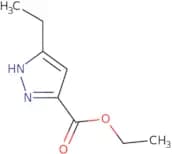
Formula:C5H13IOSiPurity:Min. 95%Molecular weight:244.15 g/molEthyl 5-ethyl-1H-pyrazole-3-carboxylate
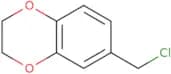
CAS:Versatile small molecule scaffoldFormula:C8H12N2O2Purity:Min. 95%Molecular weight:168.19 g/mol6-(Chloromethyl)-2,3-dihydro-1,4-benzodioxin
CAS:Versatile small molecule scaffold
Formula:C9H9ClO2Purity:Min. 95%Molecular weight:184.62 g/mol4,5-Dimethyl 2-[bis(methoxycarbonyl)-2H-1,3-dithiol-2-ylidene]-2H-1,3-dithiole-4,5-dicarboxylate
CAS:Versatile small molecule scaffold
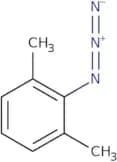
Formula:C14H12O8S4Purity:Min. 95%Molecular weight:436.5 g/mol2-Azido-1,3-dimethylbenzene
CAS:2-Azido-1,3-dimethylbenzene is a compound with the molecular formula of C6H5N3O. It is a colorless liquid that has a melting point of -8°C, boiling point of 165°C, and density of 1.1 g/mL. The compound belongs to the group of phenyl compounds and has a depolarization value of 0.037 cm1M in an ortho position. This compound has shown to have vibrational and vibrational spectra that are very similar to those found in the deuterated molecule (C6D6)2N3O.
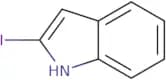
Formula:C8H9N3Purity:Min. 95%Molecular weight:147.18 g/mol2-Iodoindole
CAS:2-Iodoindole is a chemical compound that is a member of the amide family. The 2-iodoindole skeleton is found in many biologically active compounds, including anti-viral agents, such as acyclovir and ribavirin. The acylation reaction of 2-iodoindole with an acid chloride yields a racemic mixture of enantiomers, which can be separated by recrystallization from water. 2-Iodoindole also reacts with sodium to form the salt sodium 2-iodoindolate, which has been shown to inhibit plant root formation.
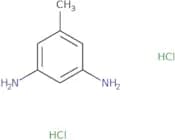
2-Iodoindoles are not known to be efficient for the synthesis of other chemical compounds due to their low reaction yield and high reactivity with water.Formula:C8H6INPurity:Min. 95%Molecular weight:243.04 g/mol5-Methylbenzene-1,3-diamine dihydrochloride
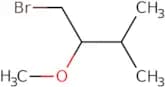
CAS:Versatile small molecule scaffoldFormula:C7H12Cl2N2Purity:Min. 95%Molecular weight:195.09 g/mol1-Bromo-2-methoxy-3-methylbutane
CAS:Versatile small molecule scaffold
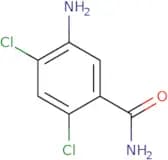
Formula:C6H13BrOPurity:Min. 95%Molecular weight:181.07 g/mol5-Amino-2,4-dichlorobenzamide
CAS:Versatile small molecule scaffold
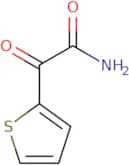
Formula:C7H6Cl2N2OPurity:Min. 95%Molecular weight:205.04 g/mol2-Oxo-2-(thiophen-2-yl)acetamide
CAS:Versatile small molecule scaffold
Formula:C6H5NO2SPurity:Min. 95%Molecular weight:155.18 g/mol

![3,4-Dihydro-2H-pyrano[2,3-b]pyridine](/_next/image/?url=https%3A%2Fstatic.cymitquimica.com%2Fproducts%2F3D%2Fthumb-webp%2FBBA26789.webp&w=3840&q=75)
![4H-Thieno[3,2-c]chromene-2-carboxylic acid](/_next/image/?url=https%3A%2Fstatic.cymitquimica.com%2Fproducts%2F3D%2Fthumb-webp%2FBBA26804.webp&w=3840&q=75)


![4,5-Dimethyl 2-[bis(methoxycarbonyl)-2H-1,3-dithiol-2-ylidene]-2H-1,3-dithiole-4,5-dicarboxylate](/_next/image/?url=https%3A%2Fstatic.cymitquimica.com%2Fproducts%2F3D%2Fthumb-webp%2FBBA31439.webp&w=3840&q=75)