Building Blocks
Subcategories of "Building Blocks"
- Boronic Acids & Boronic Acid Derivatives(5,774 products)
- Chiral Building Blocks(1,237 products)
- Hydrocarbon Building Blocks(6,098 products)
- Organic Building Blocks(60,970 products)
Found 205135 products of "Building Blocks"
3-{[(tert-Butoxy)carbonyl]amino}-2-(hydroxymethyl)propanoic acid
CAS:Versatile small molecule scaffold
Formula:C9H17NO5Purity:Min. 95%Molecular weight:219.23 g/mol4-Bromo-3-(2-methylpropoxy)aniline
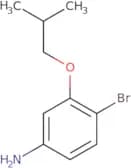
CAS:Versatile small molecule scaffold
Formula:C10H14BrNOPurity:Min. 95%Molecular weight:244.13 g/mol2-Chloro-5H,6H,7H-pyrimido[4,5-b][1,4]thiazin-6-one
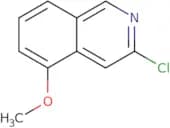
CAS:Versatile small molecule scaffoldFormula:C6H4ClN3OSPurity:Min. 95%Molecular weight:201.63 g/mol3-Chloro-5-methoxyisoquinoline
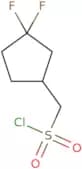
CAS:Versatile small molecule scaffoldFormula:C10H8ClNOPurity:Min. 95%Molecular weight:193.63 g/mol(3,3-Difluorocyclopentyl)methanesulfonyl chloride
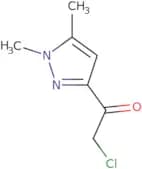
CAS:Versatile small molecule scaffoldFormula:C6H9ClF2O2SPurity:Min. 95%Molecular weight:218.65 g/mol2-Chloro-1-(1,5-dimethyl-1H-pyrazol-3-yl)ethan-1-one
CAS:Versatile small molecule scaffold
Formula:C7H9ClN2OPurity:Min. 95%Molecular weight:172.61 g/mol3,3-Dimethyl-1-[(thiolan-3-yl)methyl]urea
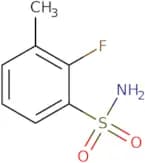
CAS:Versatile small molecule scaffoldFormula:C8H16N2OSPurity:Min. 95%Molecular weight:188.3 g/mol2-Fluoro-3-methylbenzene-1-sulfonamide
CAS:Versatile small molecule scaffoldFormula:C7H8FNO2SPurity:Min. 95%Molecular weight:189.21 g/mol[2-Bromo-4-(ethylsulfanyl)phenyl]methanol
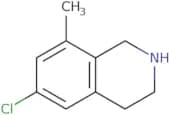
CAS:Versatile small molecule scaffoldFormula:C9H11BrOSPurity:Min. 95%Molecular weight:247.15 g/mol6-Chloro-8-methyl-1,2,3,4-tetrahydroisoquinoline
CAS:Versatile small molecule scaffoldFormula:C10H12ClNPurity:Min. 95%Molecular weight:181.66 g/mol8-Bromo-3,4-dihydro-2H-1-benzopyran-3-carboxylic acid
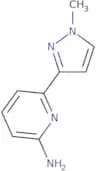
CAS:Versatile small molecule scaffoldFormula:C10H9BrO3Purity:Min. 95%Molecular weight:257.08 g/mol6-(1-Methyl-1H-pyrazol-3-yl)pyridin-2-amine
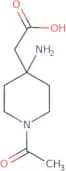
CAS:Versatile small molecule scaffoldFormula:C9H10N4Purity:Min. 95%Molecular weight:174.2 g/mol2-(1-Acetyl-4-aminopiperidin-4-yl)acetic acid
CAS:Versatile small molecule scaffoldFormula:C9H16N2O3Purity:Min. 95%Molecular weight:200.23 g/mol5,5-dimethyl-2-phenylmorpholine
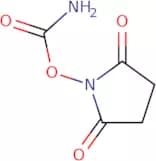
CAS:Controlled ProductVersatile small molecule scaffoldFormula:C12H17NOPurity:Min. 95%Molecular weight:191.26 g/mol2,5-Dioxopyrrolidin-1-yl carbamate
CAS:2,5-Dioxopyrrolidin-1-yl carbamate is a reactive, nucleophilic compound that is used to prepare amines. The pharmacokinetic properties of 2,5-dioxopyrrolidin-1-yl carbamate have been studied with the use of analytical methods such as basic proteins and activated carbon. This compound can be used as an inhibitor of enzymes in biological systems. It reacts with amino acids and other compounds containing nitrogen to form Schiff bases and imine derivatives. These reactions are reversible, so 2,5-dioxopyrrolidin-1-yl carbamate can be used to remove these groups from proteins. It has been shown that exposure to light will cause the decomposition of this compound.Formula:C5H6N2O4Purity:Min. 95%Molecular weight:158.11 g/mol2-(4-Acetylphenoxy)-1-(pyrrolidin-1-yl)ethan-1-one
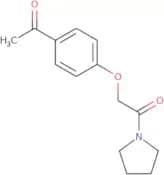
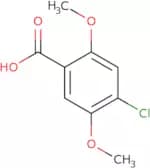
CAS:Versatile small molecule scaffoldFormula:C14H17NO3Purity:Min. 95%Molecular weight:247.29 g/mol4-Chloro-2,5-dimethoxy-benzoic acid
CAS:Versatile small molecule scaffoldFormula:C9H9ClO4Purity:Min. 95%Molecular weight:216.62 g/mol3-Azatricyclo[7.3.1.0,5,13]trideca-5,7,9(13)-triene hydrochloride
CAS:Versatile small molecule scaffold
Formula:C12H16ClNPurity:Min. 95%Molecular weight:209.71 g/mol2-Azatricyclo[7.3.1.0,5,13]trideca-1(12),9(13),10-triene hydrochloride
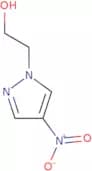
CAS:Versatile small molecule scaffoldFormula:C12H16ClNPurity:Min. 95%Molecular weight:209.71 g/mol2-(4-Nitro-pyrazol-1-yl)-ethanol
CAS:2-(4-Nitro-pyrazol-1-yl)-ethanol is a cyclic anion that has been shown to be damaging to DNA. It has been studied by the kinetic methods of anion exchange chromatography and solvent extraction. 2-(4-Nitro-pyrazol-1-yl)-ethanol was found to be a weak base, with a pKb value of 10.2. The compound reacts with glutathione to form 2-(4-nitro-pyrazol-1-yl)-ethanesulfonic acid, which is in equilibrium with the corresponding alcohol. This reaction can be measured by monitoring the changes in absorbance at 260 nm and 280 nm. The nitro group on 2-(4-nitro-pyrazol-1-yl)-ethanol shifts the potentials of methylene blue and methyl green toward more positive values, making them more sensitive to this type of damage.
Formula:C5H7N3O3Purity:Min. 95%Molecular weight:157.13 g/mol
![3-{[(tert-Butoxy)carbonyl]amino}-2-(hydroxymethyl)propanoic acid](/_next/image/?url=https%3A%2Fstatic.cymitquimica.com%2Fproducts%2F3D%2Fthumb-webp%2FRSC24332.webp&w=3840&q=75)

![2-Chloro-5H,6H,7H-pyrimido[4,5-b][1,4]thiazin-6-one](/_next/image/?url=https%3A%2Fstatic.cymitquimica.com%2Fproducts%2F3D%2Fthumb-webp%2FRSC67342.webp&w=3840&q=75)
![3,3-Dimethyl-1-[(thiolan-3-yl)methyl]urea](/_next/image/?url=https%3A%2Fstatic.cymitquimica.com%2Fproducts%2F3D%2Fthumb-webp%2FRSC74951.webp&w=3840&q=75)
![[2-Bromo-4-(ethylsulfanyl)phenyl]methanol](/_next/image/?url=https%3A%2Fstatic.cymitquimica.com%2Fproducts%2F3D%2Fthumb-webp%2FRSC75622.webp&w=3840&q=75)

![3-Azatricyclo[7.3.1.0,5,13]trideca-5,7,9(13)-triene hydrochloride](/_next/image/?url=https%3A%2Fstatic.cymitquimica.com%2Fproducts%2F3D%2Fthumb-webp%2FSBA02542.webp&w=3840&q=75)
![2-Azatricyclo[7.3.1.0,5,13]trideca-1(12),9(13),10-triene hydrochloride](/_next/image/?url=https%3A%2Fstatic.cymitquimica.com%2Fproducts%2F3D%2Fthumb-webp%2FSBA02545.webp&w=3840&q=75)