Building Blocks
Subcategories of "Building Blocks"
- Boronic Acids & Boronic Acid Derivatives(5,780 products)
- Chiral Building Blocks(1,241 products)
- Hydrocarbon Building Blocks(6,100 products)
- Organic Building Blocks(61,010 products)
Found 205258 products of "Building Blocks"
rac-(1R,5S,6R)-6-Bromo-3-oxabicyclo[3.1.0]hexane
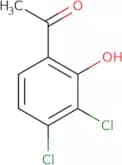
CAS:Versatile small molecule scaffoldFormula:C5H7BrOPurity:Min. 95%Molecular weight:163.01 g/mol1-(3,4-Dichloro-2-hydroxyphenyl)ethan-1-one
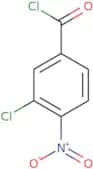
CAS:Versatile small molecule scaffoldFormula:C8H6Cl2O2Purity:Min. 95%Molecular weight:205.03 g/mol3-Chloro-4-nitrobenzoyl chloride
CAS:Versatile small molecule scaffold
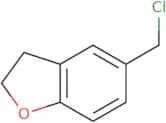
Formula:C7H3Cl2NO3Purity:Min. 95%Molecular weight:220.01 g/mol5-(Chloromethyl)-2,3-dihydro-1-benzofuran
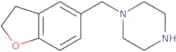
CAS:Versatile small molecule scaffoldFormula:C9H9ClOPurity:Min. 95%Molecular weight:168.62 g/mol1-(2,3-Dihydro-1-benzofuran-5-ylmethyl)piperazine
CAS:Versatile small molecule scaffoldFormula:C13H18N2OPurity:Min. 95%Molecular weight:218.29 g/mol2,3-Dihydrobenzo[b]furan-5-ylmethylamine hydrochloride
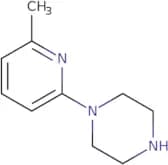
CAS:Versatile small molecule scaffoldFormula:C9H11NO·ClHPurity:Min. 95%Molecular weight:185.65 g/mol1-(6-Methylpyridin-2-yl)piperazine
CAS:Versatile small molecule scaffold
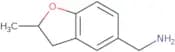
Formula:C10H15N3Purity:Min. 95%Molecular weight:177.25 g/molC-(2-Methyl-2,3-dihydro-benzofuran-5-yl)-methylamine
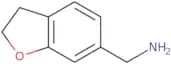
CAS:Versatile small molecule scaffoldFormula:C10H13NOPurity:Min. 95%Molecular weight:163.22 g/mol(2,3-Dihydro-1-benzofuran-6-yl)methanamine
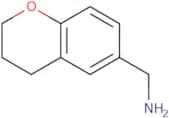
CAS:Versatile small molecule scaffoldFormula:C9H11NOPurity:Min. 95%Molecular weight:149.19 g/molChroman-6-ylmethylamine
CAS:Versatile small molecule scaffold
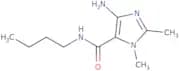
Formula:C10H13NOPurity:Min. 95%Molecular weight:163.22 g/mol4-Amino-N-butyl-1,2-dimethyl-1H-imidazole-5-carboxamide
CAS:Versatile small molecule scaffoldFormula:C10H18N4OPurity:Min. 95%Molecular weight:210.28 g/mol1,4-Dichloro-2-butyne
CAS:1,4-Dichloro-2-butyne is a colorless liquid with a sweet odor. It is used as an intermediate in organic synthesis. 1,4-Dichloro-2-butyne can be prepared by the reaction of ethylene diamine and benzyl chloride in the presence of xylenes to form the corresponding ethyl diazoacetate. The ethyl diazoacetate is then reacted with chlorosulfonic acid to produce 1,4-dichlorobutane. This compound can be converted into other compounds such as amides, ethers, and esters using ethyl diazoacetate.Formula:C4H4Cl2Purity:Min. 95%Color and Shape:Colorless Clear LiquidMolecular weight:122.98 g/mol2,3-Diaminobenzoic acid
CAS:2,3-Diaminobenzoic acid is a benzimidazole derivative that is used in the treatment of microbial infections. It has been shown to inhibit the growth of bacteria by binding to their ribosomes and inhibiting protein synthesis. The reaction solution of 2,3-diaminobenzoic acid has fluorescence properties that can be used to detect contaminating substances. The conjugates formed with p-hydroxyphenylacetic acid are more soluble than those formed with hydroxybenzoic acid. 2,3-Diaminobenzoic acid is not very toxic and does not cause any detectable changes in enzyme activities or other biochemical parameters in short term exposure. It can be easily decomposed by sodium chloride into chlorine gas and hydrochloric acid, which are both highly reactive with water.
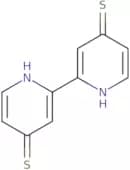
Formula:C7H8N2O2Purity:Min. 95%Color and Shape:PowderMolecular weight:152.15 g/mol4,4'-Dithio-2,2'-bipyridine
CAS:Please enquire for more information about 4,4'-Dithio-2,2'-bipyridine including the price, delivery time and more detailed product information at the technical inquiry form on this pageFormula:C10H8N2S2Purity:Min. 95%Color and Shape:PowderMolecular weight:220.32 g/mol3,6-Dichloropyridazine
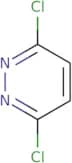
CAS:3,6-Dichloropyridazine is a chemical compound that belongs to the group of heterocycles. It is used as an intermediate for the production of other chemicals such as pharmaceuticals and pesticides. 3,6-Dichloropyridazine can be used in the treatment of inflammatory diseases by inhibiting cyclic nucleotide phosphodiesterase and preventing the accumulation of cyclic nucleotides. 3,6-Dichloropyridazine has been shown to inhibit cancer cells by binding to α7 nicotinic acetylcholine receptors in the cell membrane. The chlorine atom at position 3 on the pyridine ring is responsible for this effect. In addition, 3,6-dichloropyridazine has been shown to react with both nucleophilic and electrophilic groups. This chemical also displays a wide range of chemical diversity due to its three chlorine atoms.Formula:C4H2Cl2N2Purity:Min. 95%Color and Shape:Red PowderMolecular weight:148.98 g/molDiethyl malonate
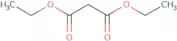
CAS:Diethyl malonate is a bioactive phytochemical that is one of the glycol ethers. It is an organic compound with a reactive nature, which can undergo reactions with other compounds to form new compounds. Diethyl malonate has been shown to be effective for reducing metabolic disorders in rats, such as diabetes mellitus and hypercholesterolemia. This compound is also used for the treatment of conditions related to coumarin derivatives and glycoside derivatives. Diethyl malonate may react with other molecules by using an oxidation process called a Michael addition. The x-ray diffraction data indicated that the diethylmalonic acid molecule had two rings: one ring was six-membered and the other was five-membered.Formula:C7H12O4Purity:Min. 95%Color and Shape:Colourless Clear LiquidMolecular weight:160.17 g/mol1-Docosanol
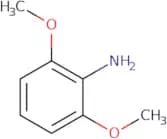
CAS:Docosanol is a drug that is used for the treatment of various skin disorders, including psoriasis, eczema, and ichthyosis. It is also used as an adjuvant in the treatment of chronic obstructive pulmonary disease. Docosanol is a lipid molecule that has been shown to have antiviral, antibacterial, antifungal, and antiprotozoal properties. It can be used as a carrier for topical medications and has been shown to have anti-inflammatory effects. The mechanism of action for docosanol is not well understood but may involve its ability to bind to Toll-like receptors on macrophages and neutrophils in the skin. This binding inhibits the synthesis of inflammatory mediators such as prostaglandins and leukotrienes. Docosanol also has physiological effects on water balance by acting as a surfactant in the lungs and preventing water vapor from escaping through respiratory membranes in the nose or mouth. DocosanolFormula:C22H46OPurity:Min. 95%Color and Shape:PowderMolecular weight:326.6 g/mol2,6-Dimethoxyaniline
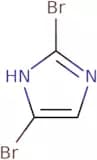
CAS:2,6-Dimethoxyaniline is a synthetic compound that has been used in the past as an antibacterial agent. It has been shown to be effective against Staphylococcus aureus and Escherichia coli, but not against Pseudomonas aeruginosa. 2,6-Dimethoxyaniline forms nanowires with an average diameter of 100 nm and lengths up to 1 micron when exposed to radiation (e.g., gamma rays). The reaction rate is dependent on the architecture and morphology of the azobenzene moiety. The chloride anion coordinates with the nitrogen atom in the molecule, which leads to a phase transition temperature of about 230 K.Formula:C8H11NO2Purity:Min. 95%Color and Shape:White PowderMolecular weight:153.18 g/mol2,4-Dibromo-1H-imidazole
CAS:2,4-Dibromo-1H-imidazole is a boronate. It is used in the synthesis of heterocyclic compounds. In this process, 2,4-dibromo-1H-imidazole reacts with an alkyl or aryl halide to form a boronic acid that can be coupled with other molecules to form new products. The boronic acids made from 2,4-dibromo-1H-imidazole are versatile intermediates for organic synthesis and can be used as starting materials for the preparation of pharmaceuticals and other useful substances. 2,4-Dibromo-1H-imidazole is also used in Suzuki reactions to form carbon–carbon bonds. This reaction uses palladium as a catalyst to generate new carbon–carbon bonds between two different organic molecules.Formula:C3H2Br2N2Purity:Min. 95%Molecular weight:225.87 g/molDocosane
CAS:Please enquire for more information about Docosane including the price, delivery time and more detailed product information at the technical inquiry form on this page
Formula:C22H46Purity:Min. 95%Molecular weight:310.6 g/mol
![rac-(1R,5S,6R)-6-Bromo-3-oxabicyclo[3.1.0]hexane](/_next/image/?url=https%3A%2Fstatic.cymitquimica.com%2Fproducts%2F3D%2Fthumb-webp%2FFCA72231.webp&w=3840&q=75)

![2,3-Dihydrobenzo[b]furan-5-ylmethylamine hydrochloride](/_next/image/?url=https%3A%2Fstatic.cymitquimica.com%2Fproducts%2F3D%2Fthumb-webp%2FFCA74574.webp&w=3840&q=75)