Building Blocks
Subcategories of "Building Blocks"
- Boronic Acids & Boronic Acid Derivatives(5,780 products)
- Chiral Building Blocks(1,241 products)
- Hydrocarbon Building Blocks(6,100 products)
- Organic Building Blocks(61,024 products)
Found 205297 products of "Building Blocks"
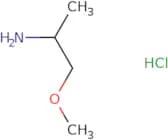
1-Methoxypropan-2-amine hydrochloride
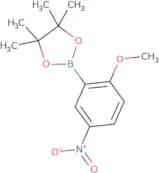
CAS:Versatile small molecule scaffoldFormula:C4H12ClNOPurity:Min. 95%Molecular weight:125.6 g/mol2-(2-Methoxy-5-nitrophenyl)-4,4,5,5-tetramethyl-1,3,2-dioxaborolane
CAS:Versatile small molecule scaffoldFormula:C13H18BNO5Purity:Min. 95%Molecular weight:279.1 g/mol(2-Methoxy-5-nitrophenyl)boronic acid
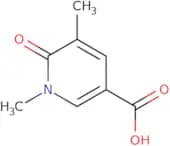
CAS:Versatile small molecule scaffoldFormula:C7H8BNO5Purity:Min. 95%Molecular weight:196.95 g/mol1,5-dimethyl-6-oxo-1,6-dihydropyridine-3-carboxylic acid
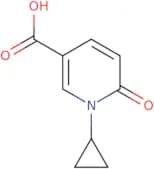
CAS:Versatile small molecule scaffoldFormula:C8H9NO3Purity:Min. 95%Molecular weight:167.16 g/mol1-Cyclopropyl-6-oxo-1,6-dihydropyridine-3-carboxylic acid
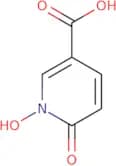
CAS:Versatile small molecule scaffoldFormula:C9H9NO3Purity:Min. 95%Molecular weight:179.17 g/mol1-Hydroxy-6-oxo-1,6-dihydropyridine-3-carboxylic acid
CAS:1-Hydroxy-6-oxo-1,6-dihydropyridine-3-carboxylic acid is a biofuel that can be produced from the enzymatic conversion of malic acid. It has been shown to be a good carbon source for microbial synthesis of 1,5-dioxopentanoic acid and 1,2,5,6 tetrahydroquinoline (THQ). The enzyme complexes responsible for this conversion are light sensitive and require a cavity in which to work. This product is also an analog of 6-hydroxypyridine-2,4(1H,3H)-dione. It can be used as a solubilizing agent with an organic acid or as a waveform to measure x-ray absorption.
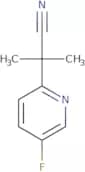
Formula:C6H5NO4Purity:Min. 95%Molecular weight:155.11 g/mol1-(5-Fluoropyridin-2-yl)cyclopropane-1-carbonitrile
CAS:Versatile small molecule scaffold
Formula:C9H9FN2Purity:Min. 95%Molecular weight:164.18 g/molEthyl 7,7-dimethyl-2,5-dioxo-5,6,7,8-tetrahydro-2H-chromene-3-carboxylate
CAS:Versatile small molecule scaffold
Formula:C14H16O5Purity:Min. 95%Molecular weight:264.27 g/mol2-(4-Oxoazetidin-2-yl)acetic acid
CAS:Versatile small molecule scaffold
Formula:C5H7NO3Purity:Min. 95%Molecular weight:129.11 g/mol2,2,2-Trifluoro-N-(3-phenylpropyl)acetamide
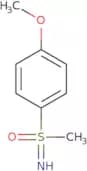
CAS:Versatile small molecule scaffoldFormula:C11H12F3NOPurity:Min. 95%Molecular weight:231.21 g/molS-(4-Methoxyphenyl)-S-methyl-sulfoximine
CAS:Versatile small molecule scaffoldFormula:C8H11NO2SPurity:Min. 95%Molecular weight:185.25 g/mol3-Hydrazinyl-5-methyl-8-thia-4,6-diazatricyclo[7.4.0.0,2,7]trideca-1(9),2,4,6-tetraene
CAS:Versatile small molecule scaffold
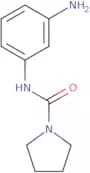
Formula:C11H14N4SPurity:Min. 95%Molecular weight:234.32 g/molN-(3-Aminophenyl)pyrrolidine-1-carboxamide
CAS:Versatile small molecule scaffoldFormula:C11H15N3OPurity:Min. 95%Molecular weight:205.26 g/mol1,4-Dibromo-2,5-difluoro-3-nitrobenzene
CAS:Versatile small molecule scaffoldFormula:C6HBr2F2NO2Purity:Min. 95%Molecular weight:316.88 g/mol5-(2-Bromophenyl)-4-[3-(trifluoromethyl)phenyl]-4H-1,2,4-triazole-3-thiol
CAS:Versatile small molecule scaffold
Formula:C15H9BrF3N3SPurity:Min. 95%Molecular weight:400.2 g/molG10
CAS:G10 is a broad-spectrum antimicrobial agent that can be used to treat a variety of infections. G10 is a water-soluble enzyme that has been shown to have antioxidant properties and can also act as an oxidation catalyst. G10 has been shown to bind to human serum, which may be due to its high affinity for the blood group A antigen. G10 may also have therapeutic effects on melanoma cells by binding with the melanoma antigen and inhibiting the proliferation of these cells. The acute toxicity of G10 depends on the concentration and duration of exposure; it is more toxic in higher concentrations and when exposed for longer periods of time.Formula:C21H16ClFN2O3SPurity:Min. 95%Molecular weight:430.88 g/mol1-(Piperidine-1-sulfonyl)piperidine-4-carboxylic acid
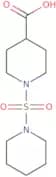
CAS:Versatile small molecule scaffold
Formula:C11H20N2O4SPurity:Min. 95%Molecular weight:276.35 g/mol(2S,4R)-4-azido-1-{[(9H-fluoren-9-yl)methoxy]carbonyl}pyrrolidine-2-carboxylic acid
CAS:Versatile small molecule scaffoldFormula:C20H18N4O4Purity:Min. 95%Molecular weight:378.4 g/mol1-(Propane-1-sulfonyl)piperidine-3-carboxylic acid
CAS:Versatile small molecule scaffold
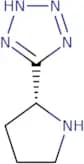
Formula:C9H17NO4SPurity:Min. 95%Molecular weight:235.3 g/mol(R)-5-(Pyrrolidin-2-yl)-1H-tetrazole
CAS:(R)-5-(Pyrrolidin-2-yl)-1H-tetrazole is a synthetic reagent used as an intermediate in the synthesis of other compounds. It is soluble in acetonitrile and tetrahydrofuran, but insoluble in water or chloroform. It is prepared by the reaction of azide with 2-chloropyridine under acidic conditions, followed by hydrolysis with triethylamine. The compound can be used to convert chloride to the corresponding bromide or iodide, which can then be used in organic synthesis. It has been shown to react with natural products such as lignins and alkaloids.
Formula:C5H9N5Purity:Min. 95%Molecular weight:139.16 g/mol




![3-Hydrazinyl-5-methyl-8-thia-4,6-diazatricyclo[7.4.0.0,2,7]trideca-1(9),2,4,6-tetraene](/_next/image/?url=https%3A%2Fstatic.cymitquimica.com%2Fproducts%2F3D%2Fthumb-webp%2FCDA99554.webp&w=3840&q=75)

![5-(2-Bromophenyl)-4-[3-(trifluoromethyl)phenyl]-4H-1,2,4-triazole-3-thiol](/_next/image/?url=https%3A%2Fstatic.cymitquimica.com%2Fproducts%2F3D%2Fthumb-webp%2FCDB64609.webp&w=3840&q=75)

![(2S,4R)-4-azido-1-{[(9H-fluoren-9-yl)methoxy]carbonyl}pyrrolidine-2-carboxylic acid](/_next/image/?url=https%3A%2Fstatic.cymitquimica.com%2Fproducts%2F3D%2Fthumb-webp%2FCDB67955.webp&w=3840&q=75)