


Building Blocks
This section contains fundamental products for the synthesis of organic and biological compounds. Building blocks are the essential starting materials used to construct complex molecules through various chemical reactions. They play a critical role in drug discovery, material science, and chemical research. At CymitQuimica, we offer a diverse range of high-quality building blocks to support your innovative research and industrial projects, ensuring you have the essential components for successful synthesis.
Subcategories of "Building Blocks"
- Boronic Acids & Boronic Acid Derivatives(5,784 products)
- Chiral Building Blocks(1,242 products)
- Hydrocarbon Building Blocks(6,105 products)
- Organic Building Blocks(61,061 products)
Found 205399 products of "Building Blocks"
Sort by
Purity (%)
0
100
|
0
|
50
|
90
|
95
|
100
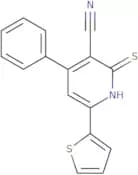
4-Phenyl-2-sulfanyl-6-(thiophen-2-yl)pyridine-3-carbonitrile
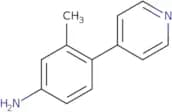
CAS:Versatile small molecule scaffoldFormula:C16H10N2S2Purity:Min. 95%Molecular weight:294.4 g/mol3-Methyl-4-(pyridin-4-yl)aniline
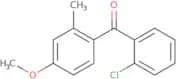
CAS:Versatile small molecule scaffoldFormula:C12H12N2Purity:Min. 95%Molecular weight:184.24 g/mol(2-Chlorophenyl)(4-methoxy-2-methylphenyl)methanone
CAS:Versatile small molecule scaffold
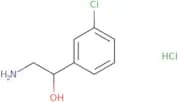
Formula:C15H13ClO2Purity:Min. 95%Molecular weight:260.71 g/mol2-Amino-1-(3-chlorophenyl)ethan-1-ol hydrochloride
CAS:Versatile small molecule scaffoldFormula:C8H11Cl2NOPurity:Min. 95%Molecular weight:208.08 g/mol2-Amino-5-bromo-4-t-butylthiazole
CAS:2-Amino-5-bromo-4-t-butylthiazole is a heterocyclic amine that is used as a precursor to other compounds. 2-Amino-5-bromo-4-t-butylthiazole can be synthesized by the reaction of 1,2,3,4,5,6,7,8,9,10 erythrobenzothiadiazole with aniline and sulfuric acid. The kinetic isotope effect has been studied using the reactant trichloroacetamide. The mechanistic study has shown that the rate of this reaction is increased in the presence of light due to the formation of a reactive intermediate. This intermediate reacts with trichloroacetamide to form 2 amino 5 bromo 4 t butyl thiazole and cyanuric acid.Formula:C7H11BrN2SPurity:Min. 95%Molecular weight:235.15 g/mol6-(Morpholin-4-yl)pyridin-3-amine dihydrochloride
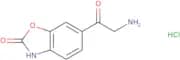
CAS:Versatile small molecule scaffoldFormula:C9H15Cl2N3OPurity:Min. 95%Molecular weight:252.14 g/mol6-(2-Aminoacetyl)-2,3-dihydro-1,3-benzoxazol-2-one hydrochloride
CAS:Versatile small molecule scaffoldFormula:C9H9ClN2O3Purity:Min. 95%Molecular weight:228.63 g/molOct-7-en-1-amine
CAS:Oct-7-en-1-amine is a chemical compound that can be synthesized by reductive amination of oct-7-en-1-ol. It has been used as a hydrogenation catalyst in the synthesis of polymers, including poly(ethylene terephthalate) and polyurethanes. Oct-7-en-1-amine has also been used to reduce aromatic anions and nitro groups to their corresponding alcohols. This compound is also able to reduce imines to amines with hydrogen gas as a reducing agent, which makes it useful for the production of pharmaceuticals.
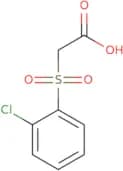
Formula:C8H17NPurity:Min. 95%Molecular weight:127.23 g/mol2-(2-Chlorobenzenesulfonyl)acetic acid
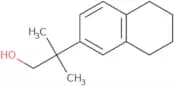
CAS:Versatile small molecule scaffoldFormula:C8H7ClO4SPurity:Min. 95%Molecular weight:234.66 g/mol2-Methyl-2-(5,6,7,8-tetrahydronaphthalen-2-yl)propan-1-ol
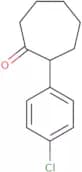
CAS:Versatile small molecule scaffoldFormula:C14H20OPurity:Min. 95%Molecular weight:204.31 g/mol2-(4-Chlorophenyl)cycloheptan-1-one
CAS:Versatile small molecule scaffoldFormula:C13H15ClOPurity:Min. 95%Molecular weight:222.71 g/mol3-{[5-(Propan-2-yl)-1,3,4-thiadiazol-2-yl]carbamoyl}propanoic acid
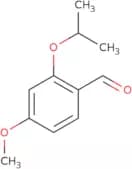
CAS:Versatile small molecule scaffoldFormula:C9H13N3O3SPurity:Min. 95%Molecular weight:243.29 g/mol4-Methoxy-2-(propan-2-yloxy)benzaldehyde
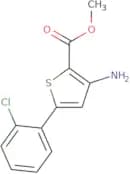
CAS:4-Methoxy-2-(propan-2-yloxy)benzaldehyde is a heterobifunctional linker that can be used to connect two molecules. It inhibits the activity of HCT116 cells and has been shown to be an inhibitor of imidazoline receptors. This compound also has the ability to inhibit the E3 ubiquitin ligase and may be useful in cancer therapy.Formula:C11H14O3Purity:Min. 95%Molecular weight:194.23 g/molMethyl 3-amino-5-(2-chlorophenyl)thiophene-2-carboxylate
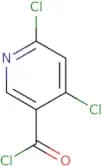
CAS:Versatile small molecule scaffoldFormula:C12H10ClNO2SPurity:Min. 95%Molecular weight:267.73 g/mol4,6-Dichloropyridine-3-carbonyl chloride
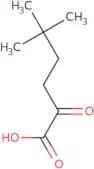
CAS:Versatile small molecule scaffoldFormula:C6H2Cl3NOPurity:Min. 95%Molecular weight:210.4 g/mol5,5-Dimethyl-2-oxohexanoic acid
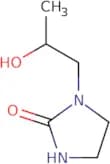
CAS:Versatile small molecule scaffoldFormula:C8H14O3Purity:Min. 95%Color and Shape:PowderMolecular weight:158.19 g/mol1-(2-Hydroxypropyl)imidazolidin-2-one
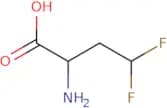
CAS:Versatile small molecule scaffoldFormula:C6H12N2O2Purity:Min. 95%Molecular weight:144.17 g/mol2-Amino-4,4-difluorobutanoic acid
CAS:2-Amino-4,4-difluorobutanoic acid is an amino acid that is the precursor to l-amino acids and δ opioid peptides. It can be synthesized in mammals by the enzyme δ aminobutyric acid (GABA) aminotransferase. This compound has been shown to have analgesic effects in animal models by acting as a δ opioid receptor agonist. 2-Amino-4,4-difluorobutanoic acid has also been shown to inhibit virus replication through inhibition of NS3 protease. Its antiviral activity is selective for influenza A virus and herpes simplex virus type 1 (HSV1). 2-Amino-4,4-difluorobutanoic acid has also been shown to be a competitive inhibitor of enkephalinase, which may contribute to its analgesic effects.Formula:C4H7F2NO2Purity:Min. 95%Molecular weight:139.1 g/mol2-{3H-Imidazo[4,5-b]pyridin-2-yl}acetonitrile
CAS:Versatile small molecule scaffoldFormula:C8H6N4Purity:Min. 95%Molecular weight:158.16 g/molN'-Hydroxy-2-{3H-imidazo[4,5-b]pyridin-2-yl}ethanimidamide
CAS:Versatile small molecule scaffoldFormula:C8H9N5OPurity:Min. 95%Molecular weight:191.19 g/mol




![3-{[5-(Propan-2-yl)-1,3,4-thiadiazol-2-yl]carbamoyl}propanoic acid](/_next/image/?url=https%3A%2Fstatic.cymitquimica.com%2Fproducts%2F3D%2Fthumb-webp%2FHEA81108.webp&w=3840&q=75)
![2-{3H-Imidazo[4,5-b]pyridin-2-yl}acetonitrile](/_next/image/?url=https%3A%2Fstatic.cymitquimica.com%2Fproducts%2F3D%2Fthumb-webp%2FHEA93297.webp&w=3840&q=75)
![N'-Hydroxy-2-{3H-imidazo[4,5-b]pyridin-2-yl}ethanimidamide](/_next/image/?url=https%3A%2Fstatic.cymitquimica.com%2Fproducts%2F3D%2Fthumb-webp%2FHEA93305.webp&w=3840&q=75)