Building Blocks
Subcategories of "Building Blocks"
- Boronic Acids & Boronic Acid Derivatives(5,786 products)
- Chiral Building Blocks(1,246 products)
- Hydrocarbon Building Blocks(6,107 products)
- Organic Building Blocks(61,079 products)
Found 205461 products of "Building Blocks"
5,6-Diphenyl-2,3-dihydropyridazin-3-one
CAS:Vinblastine is a cytotoxic drug that inhibits the growth of cells by binding to DNA. It is used in the treatment of cancers and other diseases such as Hodgkin's disease. Vinblastine binds to the hepg2 cell, an enzyme involved in RNA synthesis. This binding prevents guanosine from functioning as a building block for RNA synthesis, leading to decreased protein synthesis and cell death. The kinetic data obtained from this study was used to calculate the molecular weight of vinblastine, which was found to be 594 Da. Vinblastine has been shown to inhibit the growth of bacteria including typhimurium and subtilis, and it also has some effect against chlorinated hydrocarbons.
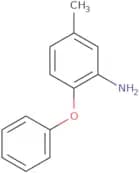
Formula:C16H12N2OPurity:Min. 95%Molecular weight:248.28 g/mol5-Methyl-2-phenoxyaniline
CAS:Versatile small molecule scaffold
Formula:C13H13NOPurity:Min. 95%Molecular weight:199.25 g/mol2-Methyl-2-phenylpropan-1-ol
CAS:2-Methyl-2-phenylpropan-1-ol is a diketone that can be used as a copper catalyst in the synthesis of styrene. 2-Methyl-2-phenylpropan-1-ol can also be used for the methylation of phenols and chloroarenes, as well as for the conversion of nitrobenzenes to anilines. This reagent has been shown to be useful for the methylation of various organic compounds and is also commonly used in spectroscopy experiments. 2-Methyl-2-phenylpropan-1-ol has been shown to convert alkenes to transmetallated products with both copper and palladium catalysts, which are often difficult to remove from organic compounds.Formula:C10H14OPurity:Min. 95%Molecular weight:150.22 g/mol2-[4-(Benzyloxy)-3,5-dimethoxyphenyl]ethan-1-amine hydrochloride
CAS:Controlled ProductVersatile small molecule scaffoldFormula:C17H22ClNO3Purity:Min. 95%Molecular weight:323.8 g/mol1-Benzyl-3-phenylpiperidin-4-amine dihydrochloride
CAS:Versatile small molecule scaffold
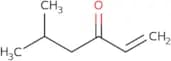
Formula:C18H24Cl2N2Purity:Min. 95%Molecular weight:339.3 g/molIso-butyl vinyl ketone (stabilized with BHT)
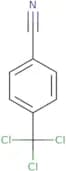
CAS:Versatile small molecule scaffoldFormula:C7H12OPurity:Min. 95%Molecular weight:112.17 g/mol4-(Trichloromethyl)benzonitrile
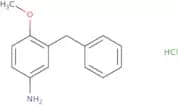
CAS:4-(Trichloromethyl)benzonitrile is an organochlorine compound that can be chlorinating, chlorinating and chlorinating. It can also form mixtures with chlorine, chloride and methyl groups. 4-(Trichloromethyl)benzonitrile is a colorless liquid with a strong odor of chlorine.Formula:C8H4Cl3NPurity:Min. 95%Molecular weight:220.5 g/mol3-Benzyl-4-methoxyaniline hydrochloride
CAS:Versatile small molecule scaffold
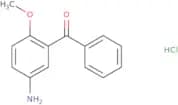
Formula:C14H16ClNOPurity:Min. 95%Molecular weight:249.73 g/mol3-Benzoyl-4-methoxyaniline hydrochloride
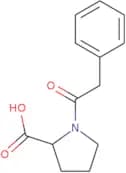
CAS:Versatile small molecule scaffoldFormula:C14H14ClNO2Purity:Min. 95%Molecular weight:263.72 g/mol1-(2-Phenylacetyl)pyrrolidine-2-carboxylic acid
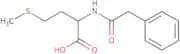
CAS:1-(2-Phenylacetyl)pyrrolidine-2-carboxylic acid is a synthetic acylase inhibitor. It is prepared from valine, chloroacetic acid, and phenylacetyl chloride by condensation of the carboxylic acid chloride with the amine in the presence of a base, followed by hydrolysis of the ester. 1-(2-Phenylacetyl)pyrrolidine-2-carboxylic acid can be used to prepare other compounds that have an acylase activity. This compound has been shown to inhibit acylases that are involved in reactions involving organic solvents or amino acids such as valine and methionine. The reaction rate for this compound is determined by its kinetic, which is stereospecific.Formula:C13H15NO3Purity:Min. 95%Molecular weight:233.26 g/mol4-(Methylsulfanyl)-2-(2-phenylacetamido)butanoic acid
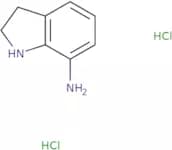
CAS:Versatile small molecule scaffoldFormula:C13H17NO3SPurity:Min. 95%Molecular weight:267.35 g/molIndolin-7-amine dihydrochloride
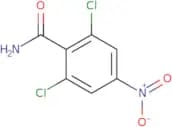
CAS:Versatile small molecule scaffoldFormula:C8H10N2·2HClPurity:Min. 95%Molecular weight:207.1 g/mol2,6-Dichloro-4-nitrobenzamide
CAS:2,6-Dichloro-4-nitrobenzamide is a chemical compound that is used in the manufacture of other chemicals. It can be synthesized by the diazotization of an amino acid or nitrite with sodium nitrite and hydrolysing the resulting cyanohydrin with an inorganic acid or alkali metal. This compound is typically used as a feed additive to control coccidiosis in poultry, although it also has anticoccidial properties against some bacteria. 2,6-Dichloro-4-nitrobenzamide is used for the treatment of humans as a salt orally or intravenously, and as an anticoccidial agent that is effective against Eimeria tenella and Eimeria acervulina. It is also used to treat bacterial infections such as typhoid fever, cholera, dysentery and salmonellosis.
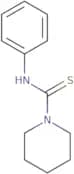
Formula:C7H4Cl2N2O3Purity:Min. 95%Molecular weight:235.02 g/molN-Phenylpiperidine-1-carbothioamide
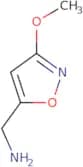
CAS:N-Phenylpiperidine-1-carbothioamide is a piperidine derivative. It has a crystal structure that is composed of phenyl and hydrogen bonds.Formula:C12H16N2SPurity:Min. 95%Molecular weight:220.34 g/mol(3-Methoxy-1,2-oxazol-5-yl)methanamine
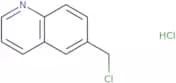
CAS:Versatile small molecule scaffoldFormula:C5H8N2O2Purity:Min. 95%Molecular weight:128.13 g/mol6-(Chloromethyl)quinoline hydrochloride
CAS:Versatile small molecule scaffoldFormula:C10H9Cl2NPurity:Min. 95%Molecular weight:214.09 g/mol4-Hydroxy-3,4-dihydro-2H-1λ⁶-benzothiopyran-1,1-dione
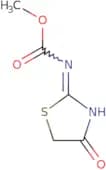
CAS:Versatile small molecule scaffoldFormula:C9H10O3SPurity:Min. 95%Molecular weight:198.24 g/molMethyl N-(4-oxo-4,5-dihydro-1,3-thiazol-2-yl)carbamate
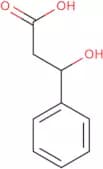
CAS:Versatile small molecule scaffoldFormula:C5H6N2O3SPurity:Min. 95%Molecular weight:174.2 g/mol(3R)-3-Hydroxy-3-phenylpropanoic acid
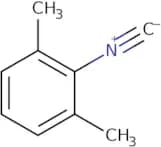
CAS:(3R)-3-Hydroxy-3-phenylpropanoic acid is a fatty acid that is involved in the biosynthesis of erythroxylum. It has an innovative function for valorisation because it can be used to produce hydroxy fatty acids through a reaction with oleaginous materials. The synthesis of this compound is driven by the catalytic function of enzymes and the reaction system, which are made up of biocatalysts and substrates. The reaction products are compounds with a hydroxy group and an enantiomer. This process is catalyzed by esterases. The reactions take place at temperatures between 30°C and 50°C, with a pH range between 7 and 11.Formula:C9H10O3Purity:Min. 95%Molecular weight:166.17 g/mol2-Isocyano-1,3-dimethyl-benzene
CAS:2-Isocyano-1,3-dimethyl-benzene is an organic compound that is used to synthesize other compounds. It has a redox potential of -0.6 volts and a crystallography of orthorhombic with a space group of Pbca. It reacts with nitrogen atoms in the reaction solution to form stable complexes and can react with copper ions to form a copper complex. 2-Isocyano-1,3-dimethyl-benzene has been shown to undergo transfer reactions with molybdenum in the presence of xylene as solvent and ammonia gas as a catalyst. This chemical reaction mechanism leads to the formation of an isocyanide intermediate, which then reacts with water molecules to create an aminium ion and hydrogen cyanide. Titration calorimetry experiments have shown that 2-isocyano-1,3-dimethylbenzene has an enthalpy change of -2Formula:C9H9NPurity:Min. 95%Molecular weight:131.17 g/mol



![2-[4-(Benzyloxy)-3,5-dimethoxyphenyl]ethan-1-amine hydrochloride](/_next/image/?url=https%3A%2Fstatic.cymitquimica.com%2Fproducts%2F3D%2Fthumb-webp%2FCAA17615.webp&w=3840&q=75)