Building Blocks
This section contains fundamental products for the synthesis of organic and biological compounds. Building blocks are the essential starting materials used to construct complex molecules through various chemical reactions. They play a critical role in drug discovery, material science, and chemical research. At CymitQuimica, we offer a diverse range of high-quality building blocks to support your innovative research and industrial projects, ensuring you have the essential components for successful synthesis.
Subcategories of "Building Blocks"
- Boronic Acids & Boronic Acid Derivatives(5,778 products)
- Chiral Building Blocks(1,242 products)
- Hydrocarbon Building Blocks(6,098 products)
- Organic Building Blocks(61,059 products)
Found 199580 products of "Building Blocks"
Sort by
Purity (%)
0
100
|
0
|
50
|
90
|
95
|
100
2-(4-Bromophenyl)propan-1-amine hydrochloride
CAS:Controlled Product<p>Versatile small molecule scaffold</p>Formula:C9H13BrClNPurity:Min. 95%Molecular weight:250.56 g/mol2-(4-tert-Butylphenyl)-2-methylpropan-1-amine
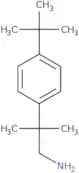
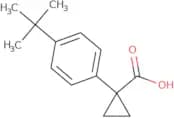
CAS:<p>Versatile small molecule scaffold</p>Formula:C14H23NPurity:Min. 95%Molecular weight:205.34 g/mol1-(4-tert-Butylphenyl)cyclopropane-1-carboxylic acid
CAS:<p>Versatile small molecule scaffold</p>Formula:C14H18O2Purity:Min. 95%Molecular weight:218.29 g/mol[1-(4-tert-Butylphenyl)cyclopropyl]methanamine
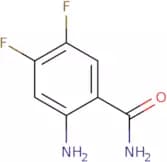
CAS:<p>Versatile small molecule scaffold</p>Formula:C14H21NPurity:Min. 95%Molecular weight:203.32 g/mol2-Amino-4,5-difluorobenzamide
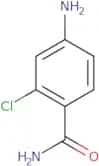
CAS:<p>2-Amino-4,5-difluorobenzamide is a reagent that can be used in the amidation reaction to form amides with carboxylic acids. It can also be used as a chlorination reagent and reacts with alkalis to form hydrochlorides. 2-Amino-4,5-difluorobenzamide is insoluble in water but soluble in glycols and aromatic solvents. This product has been shown to react at high temperatures and when heated in the presence of triethylene glycol or cyclization reaction products. Impurities may include 4,5-dichlorobenzamide and 4,5-difluoroaniline.</p>Formula:C7H6F2N2OPurity:Min. 95%Molecular weight:172.13 g/mol4-Amino-2-chlorobenzamide
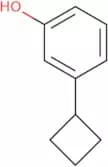
CAS:<p>4-Amino-2-chlorobenzamide is an aminoaryl amide that can be prepared by the reaction of 4-aminobenzoic acid with chloroacetyl chloride. It is used as a reagent for the synthesis of other compounds and has been shown to have microwave and irradiation properties. The compound is soluble in water, ethanol, ether, chloroform, benzene, carbon tetrachloride, acetone, and ethyl acetate. 4-Amino-2-chlorobenzamide has been shown to react with ketones and anilides to form substituted ureas.</p>Formula:C7H7ClN2OPurity:Min. 95%Molecular weight:170.6 g/mol3-Cyclobutylphenol
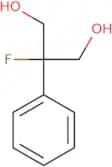
CAS:<p>Versatile small molecule scaffold</p>Formula:C10H12OPurity:Min. 95%Molecular weight:148.2 g/mol2-Fluoro-2-phenylpropane-1,3-diol
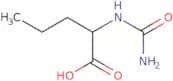
CAS:<p>Versatile small molecule scaffold</p>Formula:C9H11FO2Purity:Min. 95%Molecular weight:170.18 g/mol(2R)-2-(Carbamoylamino)pentanoic acid
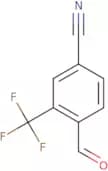
CAS:<p>Versatile small molecule scaffold</p>Formula:C6H12N2O3Purity:Min. 95%Molecular weight:160.17 g/mol4-Formyl-3-(trifluoromethyl)benzonitrile
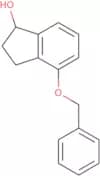
CAS:Versatile small molecule scaffoldFormula:C9H4F3NOPurity:Min. 95%Molecular weight:199.13 g/mol4-(Benzyloxy)-2,3-dihydro-1H-inden-1-ol
CAS:Versatile small molecule scaffoldFormula:C16H16O2Purity:Min. 95%Molecular weight:240.3 g/moltert-Butyl N-[(1-hydroxy-2-methylpropan-2-yl)oxy]carbamate
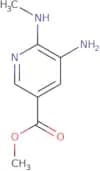
CAS:Versatile small molecule scaffoldFormula:C9H19NO4Purity:Min. 95%Molecular weight:205.25 g/molMethyl 5-amino-6-(methylamino)pyridine-3-carboxylate
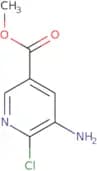
CAS:<p>Versatile small molecule scaffold</p>Formula:C8H11N3O2Purity:Min. 95%Molecular weight:181.19 g/molMethyl 5-amino-6-chloropyridine-3-carboxylate
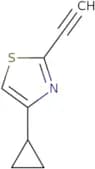
CAS:Versatile small molecule scaffoldFormula:C7H7ClN2O2Purity:Min. 95%Molecular weight:186.6 g/mol4-Cyclopropyl-2-ethynyl-1,3-thiazole
CAS:Versatile small molecule scaffoldFormula:C8H7NSPurity:Min. 95%Molecular weight:149.21 g/mol2-Ethynyl-4-methylthiazole
CAS:<p>2-Ethynyl-4-methylthiazole is a cell-based kinase inhibitor that binds to the ATP binding site on the enzyme and inhibits phosphorylation. It was shown to inhibit cell growth in vitro by interfering with the production of TGF-β, activin, and other growth factors. The inhibitory activity of 2-Ethynyl-4-methylthiazole is selective for receptor kinases and is not effective against alk5 kinase. This drug has been shown to be an inhibitor of cellular growth in vitro and may be useful for the treatment of cancer.</p>Formula:C6H5NSPurity:Min. 95%Molecular weight:123.17 g/mol4-Propyl-1,3-thiazole-2-carbaldehyde
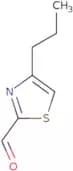
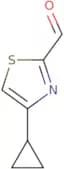
CAS:Versatile small molecule scaffoldFormula:C7H9NOSPurity:Min. 95%Molecular weight:155.22 g/mol2-Thiazolecarboxaldehyde, 4-cyclopropyl-
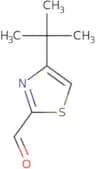
CAS:Versatile small molecule scaffoldFormula:C7H7NOSPurity:Min. 95%Molecular weight:153.2 g/mol4-tert-Butyl-1,3-thiazole-2-carbaldehyde
CAS:Versatile small molecule scaffoldFormula:C8H11NOSPurity:Min. 95%Molecular weight:169.25 g/mol(3-Chlorophenyl)(cyclohexyl)methanone
CAS:<p>Versatile small molecule scaffold</p>Formula:C13H15ClOPurity:Min. 95%Molecular weight:222.71 g/mol

![[1-(4-tert-Butylphenyl)cyclopropyl]methanamine](/_next/image/?url=https%3A%2Fstatic.cymitquimica.com%2Fproducts%2F3D%2Fthumb-webp%2FLIA31508.webp&w=3840&q=75)
![tert-Butyl N-[(1-hydroxy-2-methylpropan-2-yl)oxy]carbamate](/_next/image/?url=https%3A%2Fstatic.cymitquimica.com%2Fproducts%2F3D%2Fthumb-webp%2FLIA81204.webp&w=3840&q=75)