


Building Blocks
This section contains fundamental products for the synthesis of organic and biological compounds. Building blocks are the essential starting materials used to construct complex molecules through various chemical reactions. They play a critical role in drug discovery, material science, and chemical research. At CymitQuimica, we offer a diverse range of high-quality building blocks to support your innovative research and industrial projects, ensuring you have the essential components for successful synthesis.
Subcategories of "Building Blocks"
- Boronic Acids & Boronic Acid Derivatives(5,778 products)
- Chiral Building Blocks(1,242 products)
- Hydrocarbon Building Blocks(6,098 products)
- Organic Building Blocks(61,084 products)
Found 198714 products of "Building Blocks"
Sort by
Purity (%)
0
100
|
0
|
50
|
90
|
95
|
100
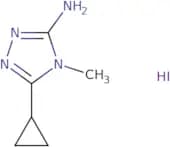
5-Cyclopropyl-4-methyl-4H-1,2,4-triazol-3-amine hydroiodide
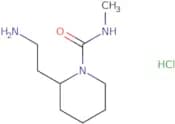
CAS:Versatile small molecule scaffoldFormula:C6H11IN4Purity:Min. 95%Molecular weight:266.08 g/mol2-(2-Aminoethyl)-N-methylpiperidine-1-carboxamide hydrochloride
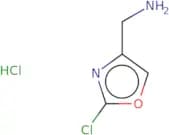
CAS:Versatile small molecule scaffoldFormula:C9H20ClN3OPurity:Min. 95%Molecular weight:221.73 g/mol(2-Chloro-1,3-oxazol-4-yl)methanamine hydrochloride
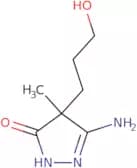
CAS:Versatile small molecule scaffoldFormula:C4H6Cl2N2OPurity:Min. 95%Molecular weight:169 g/mol3-Amino-4-(3-hydroxypropyl)-4-methyl-4,5-dihydro-1H-pyrazol-5-one
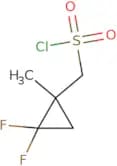
CAS:Versatile small molecule scaffoldFormula:C7H13N3O2Purity:Min. 95%Molecular weight:171.2 g/mol(2,2-Difluoro-1-methylcyclopropyl)methanesulfonyl chloride
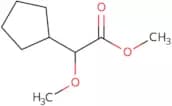
CAS:<p>Versatile small molecule scaffold</p>Formula:C5H7ClF2O2SPurity:Min. 95%Molecular weight:204.62 g/molMethyl 2-cyclopentyl-2-methoxyacetate
CAS:<p>Versatile small molecule scaffold</p>Formula:C9H16O3Purity:Min. 95%Molecular weight:172.22 g/molEthyl 2-amino-3-chloropyridine-4-carboxylate
CAS:<p>Versatile small molecule scaffold</p>Formula:C8H9ClN2O2Purity:Min. 95%Molecular weight:200.62 g/mol4-[(4-tert-Butyl-1,3-thiazol-2-yl)methyl]piperidine dihydrochloride
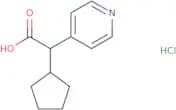
CAS:<p>Versatile small molecule scaffold</p>Formula:C13H24Cl2N2SPurity:Min. 95%Molecular weight:311.3 g/mol2-Cyclopentyl-2-(pyridin-4-yl)acetic acid hydrochloride
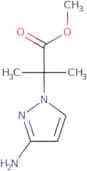
CAS:Versatile small molecule scaffoldFormula:C12H16ClNO2Purity:Min. 95%Molecular weight:241.71 g/molMethyl 2-(3-amino-1H-pyrazol-1-yl)-2-methylpropanoate
CAS:Versatile small molecule scaffoldFormula:C8H13N3O2Purity:Min. 95%Molecular weight:183.21 g/molFmoc-Arg(Pbf)-OH (U-13C6, U-15N4)
CAS:<p>Please enquire for more information about Fmoc-Arg(Pbf)-OH (U-13C6, U-15N4) including the price, delivery time and more detailed product information at the technical inquiry form on this page</p>Formula:C28C)6H40N)4O7SPurity:Min. 95%Molecular weight:658.7 g/molFluocinolone acetonide-21-carboxylic acid
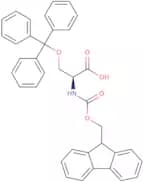
CAS:<p>Please enquire for more information about Fluocinolone acetonide-21-carboxylic acid including the price, delivery time and more detailed product information at the technical inquiry form on this page</p>Formula:C24H28F2O7Purity:Min. 95%Color and Shape:PowderMolecular weight:466.47 g/molFmoc-O-trityl-L-serine
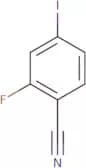
CAS:<p>Fmoc-O-trityl-L-serine is a synthetic molecule that is not naturally occurring. It has been shown to have inhibitory effects on the growth of cancer cells in vitro and in vivo, but does not affect healthy cells. Fmoc-O-trityl-L-serine binds to the membrane of cancer cells and inhibits protein synthesis by binding to ribosomes. This drug also inhibits cell growth by interfering with the membrane interactions necessary for cellular metabolism. Fmoc-O-trityl-L-serine is toxic to red blood cells, which may be due to its ability to induce hemolysis.</p>Formula:C37H31NO5Purity:Min. 95%Molecular weight:569.65 g/mol2-Fluoro-4-iodobenzonitrile
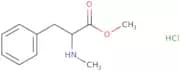
CAS:<p>2-fluoro-4-iodobenzonitrile is a potent inhibitor of the functions of VEGFR receptors. It inhibits the proliferation and migration of cancer cells by binding to VEGFR receptors, which are tyrosine kinases that regulate cell growth and differentiation. 2-Fluoro-4-iodobenzonitrile has been shown to inhibit angiogenesis, or the formation of new blood vessels, in vitro. This drug also has potent inhibitory activity against tumor growth in vivo. Clinical trials have shown that 2-fluoro-4-iodobenzonitrile can be used to treat various types of cancers, including breast cancer and colon cancer.</p>Formula:C7H3FINPurity:Min. 95%Color and Shape:PowderMolecular weight:247.01 g/molN-Methyl-D-phenylalanine methyl ester hydrochloride
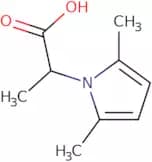
CAS:Versatile small molecule scaffoldFormula:C11H16ClNO2Purity:Min. 95%Molecular weight:229.7 g/mol2-(2,5-Dimethyl-1H-pyrrol-1-yl)propanoic acid
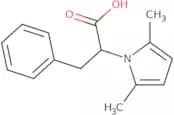
CAS:<p>Versatile small molecule scaffold</p>Formula:C9H13NO2Purity:Min. 95%Molecular weight:167.2 g/mol2-(2,5-Dimethyl-1H-pyrrol-1-yl)-3-phenylpropanoic acid
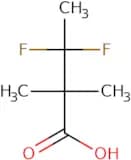
CAS:Versatile small molecule scaffoldFormula:C15H17NO2Purity:Min. 95%Molecular weight:243.3 g/mol3,3-Difluoro-2,2-dimethylbutanoic acid
CAS:<p>Versatile small molecule scaffold</p>Formula:C6H10F2O2Purity:Min. 95%Molecular weight:152.14 g/mol6-Chloro-1-phenyl-1H,4H,5H-pyrazolo[3,4-d]pyrimidine
CAS:<p>Versatile small molecule scaffold</p>Formula:C11H9ClN4Purity:Min. 95%Molecular weight:232.67 g/molmethyl 4-[(chlorosulfonyl)methyl]benzoate
CAS:Methyl 4-[(chlorosulfonyl)methyl]benzoate is a potent and selective inhibitor of nuclear receptors that are involved in the inflammatory response. It has been shown to inhibit tumor cell proliferation in a xenograft model. Methyl 4-[(chlorosulfonyl)methyl]benzoate inhibits the activity of nuclear receptors by binding to an allosteric site on their ligand-binding domain and preventing coactivator binding. This leads to reduced transcriptional activation, which inhibits the production of proinflammatory molecules. Methyl 4-[(chlorosulfonyl)methyl]benzoate is orally bioavailable and has been shown to have anti-tumor effects in mice with neuroblastoma tumors.Formula:C9H9ClO4SPurity:Min. 95%Molecular weight:248.7 g/mol


![4-[(4-tert-Butyl-1,3-thiazol-2-yl)methyl]piperidine dihydrochloride](/_next/image/?url=https%3A%2Fstatic.cymitquimica.com%2Fproducts%2F3D%2Fthumb-webp%2FFDD54870.webp&w=3840&q=75)


![6-Chloro-1-phenyl-1H,4H,5H-pyrazolo[3,4-d]pyrimidine](/_next/image/?url=https%3A%2Fstatic.cymitquimica.com%2Fproducts%2F3D%2Fthumb-webp%2FFFA02405.webp&w=3840&q=75)
![methyl 4-[(chlorosulfonyl)methyl]benzoate](/_next/image/?url=https%3A%2Fstatic.cymitquimica.com%2Fproducts%2F3D%2Fthumb-webp%2FFFA04714.webp&w=3840&q=75)