Building Blocks
This section contains fundamental products for the synthesis of organic and biological compounds. Building blocks are the essential starting materials used to construct complex molecules through various chemical reactions. They play a critical role in drug discovery, material science, and chemical research. At CymitQuimica, we offer a diverse range of high-quality building blocks to support your innovative research and industrial projects, ensuring you have the essential components for successful synthesis.
Subcategories of "Building Blocks"
- Boronic Acids & Boronic Acid Derivatives(5,778 products)
- Chiral Building Blocks(1,242 products)
- Hydrocarbon Building Blocks(6,098 products)
- Organic Building Blocks(61,084 products)
Found 198714 products of "Building Blocks"
Sort by
Purity (%)
0
100
|
0
|
50
|
90
|
95
|
100
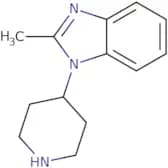
2-Methyl-1-(piperidin-4-yl)-1H-1,3-benzodiazole
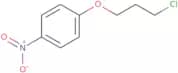
CAS:Versatile small molecule scaffoldFormula:C13H17N3Purity:Min. 95%Molecular weight:215.29 g/mol1-(3-Chloropropoxy)-4-nitrobenzene
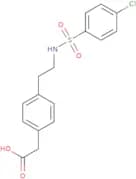
CAS:Versatile small molecule scaffoldFormula:C9H10ClNO3Purity:Min. 95%Molecular weight:215.63 g/molDaltroban
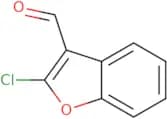
CAS:<p>Daltroban is a 5-hydroxytryptamine receptor antagonist that has been shown to inhibit the 5-HT2 receptors. It has been used to treat primary pulmonary hypertension, and experimental models have shown that it inhibits platelet aggregation. Daltroban also acts as a pressor and causes an increase in blood pressure when given intravenously, which may be due to its ability to block the sodium citrate-induced vasodilation. There are no known drug interactions with Daltroban, but it can cause an increase in heart rate and blood pressure when administered with other drugs.</p>Formula:C16H16ClNO4SPurity:Min. 95%Molecular weight:353.82 g/mol2-Chloro-1-benzofuran-3-carbaldehyde
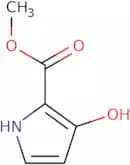
CAS:Versatile small molecule scaffoldFormula:C9H5ClO2Purity:Min. 95%Molecular weight:180.59 g/molMethyl 3-hydroxy-1H-pyrrole-2-carboxylate
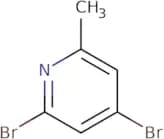
CAS:Versatile small molecule scaffoldFormula:C6H7NO3Purity:Min. 95%Molecular weight:141.12 g/mol2,4-Dibromo-6-methylpyridine
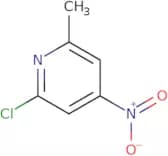
CAS:<p>Versatile small molecule scaffold</p>Formula:C6H5Br2NPurity:Min. 95%Molecular weight:250.92 g/mol2-Chloro-6-methyl-4-nitropyridine
CAS:<p>2-Chloro-6-methyl-4-nitropyridine is a pyridine molecule with the molecular formula C6H5ClN3O2. This compound has a resonance energy of -331.9 kcal/mol. It is magnetic, with a spectrum that includes electron and electronic spectra. The multinuclear nature of this molecule results in different transition energies and intensities, which can be seen in the resonance and transition data.</p>Formula:C6H5ClN2O2Purity:Min. 95%Molecular weight:172.57 g/mol2-Amino-5-chloro-4-methoxy-benzoic acid
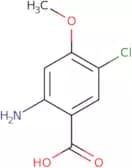
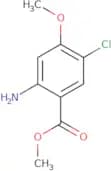
CAS:2-Amino-5-chloro-4-methoxybenzoic acid is an alkynyl, piperazine, piperazino, alkoxy, and chlorinated molecule. It has a blood pressure lowering effect when orally administered to rats. This active form is hydrolyzed by carboxylesterase to 2-amino-5-(hydroxymethyl) benzoic acid and 2-aminoethanol. This product also reduces the level of lactic acid in the blood. The chlorination causes a change in the structure of the molecule that leads to increased water solubility and decreased lipid solubility.Formula:C8H8ClNO3Purity:Min. 95%Molecular weight:201.61 g/molMethyl 2-amino-5-chloro-4-methoxybenzoate
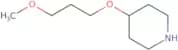
CAS:Versatile small molecule scaffoldFormula:C9H10ClNO3Purity:Min. 95%Molecular weight:215.63 g/mol4-(3-Methoxypropoxy)piperidine
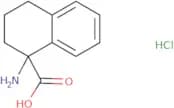
CAS:<p>Versatile small molecule scaffold</p>Formula:C9H19NO2Purity:Min. 95%Molecular weight:173.25 g/mol1-Amino-1,2,3,4-tetrahydro-1-naphthalenecarboxylic acid hydrochloride
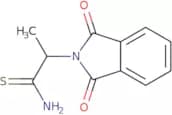
CAS:Versatile small molecule scaffoldFormula:C11H14ClNO2Purity:Min. 95%Molecular weight:227.69 g/mol2-(1,3-Dioxo-2,3-dihydro-1H-isoindol-2-yl)propanethioamide
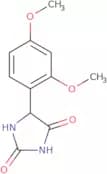
CAS:Versatile small molecule scaffoldFormula:C11H10N2O2SPurity:Min. 95%Molecular weight:234.28 g/mol5-(2,4-Dimethoxyphenyl)imidazolidine-2,4-dione
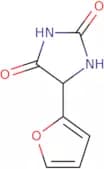
CAS:<p>Versatile small molecule scaffold</p>Formula:C11H12N2O4Purity:Min. 95%Molecular weight:236.22 g/mol5-(Furan-2-yl)imidazolidine-2,4-dione
CAS:<p>5-(Furan-2-yl)imidazolidine-2,4-dione is an organic compound that is used in the synthesis of other chemical compounds. It reacts with chlorine gas to form a chlorinated derivative, which can then be converted into a wide range of compounds. 5-(Furan-2-yl)imidazolidine-2,4-dione also reacts with thionyl chloride to form a chlorinating agent. The reaction scheme shows how 5-(Furan-2-yl)imidazolidine-2,4-dione can be converted into various compounds using hydroxylamine and ammonium carbonate as catalysts. Hydroxylamine converts furan to oxazine and ammonia; ammonium carbonate converts furan to hydantoin and ammonia. Chlorination with sodium hypochlorite gives furyl chloride as well as butylidene chloride. Chlorination with thionyl chloride gives chlor</p>Formula:C7H6N2O3Purity:Min. 95%Molecular weight:166.13 g/mol2-Amino-3-phenyl-1-(piperidin-1-yl)propan-1-one
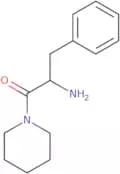
CAS:<p>Versatile small molecule scaffold</p>Formula:C14H20N2OPurity:Min. 95%Molecular weight:232.32 g/mol(1-Bromo-2-methoxyethyl)benzene
CAS:<p>Versatile small molecule scaffold</p>Formula:C9H11BrOPurity:Min. 95%Molecular weight:215.09 g/molAzocane-1-sulfonamide
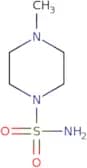
CAS:<p>Versatile small molecule scaffold</p>Formula:C7H16N2O2SPurity:Min. 95%Molecular weight:192.28 g/mol4-Methylpiperazine-1-sulfonamide
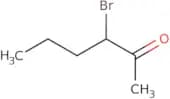
CAS:<p>Versatile small molecule scaffold</p>Formula:C5H13N3O2SPurity:Min. 95%Molecular weight:179.24 g/mol3-Bromohexan-2-one
CAS:<p>Versatile small molecule scaffold</p>Formula:C6H11BrOPurity:Min. 95%Molecular weight:179.05 g/mol3-Cyclopropyl-thiophene
CAS:<p>Cyclopropylthiophene is a compound that can be synthesized by arylation of 3-cyclopropyl-thiophene with an aryl iodide in the presence of copper. The reaction can be catalyzed by diaryliodonium salts, and the selectivities are determined by the counterion. Cyclopropylthiophene is used as a model substrate for mechanistic studies on asymmetric catalysis. Cyclopropylthiophene can also be applied to the synthesis of nanoparticles for catalysis in organic reactions.</p>Formula:C7H8SPurity:Min. 95%Molecular weight:124.21 g/mol