Building Blocks
This section contains fundamental products for the synthesis of organic and biological compounds. Building blocks are the essential starting materials used to construct complex molecules through various chemical reactions. They play a critical role in drug discovery, material science, and chemical research. At CymitQuimica, we offer a diverse range of high-quality building blocks to support your innovative research and industrial projects, ensuring you have the essential components for successful synthesis.
Subcategories of "Building Blocks"
- Boronic Acids & Boronic Acid Derivatives(5,778 products)
- Chiral Building Blocks(1,243 products)
- Hydrocarbon Building Blocks(6,097 products)
- Organic Building Blocks(61,052 products)
Found 201390 products of "Building Blocks"
Sort by
Purity (%)
0
100
|
0
|
50
|
90
|
95
|
100
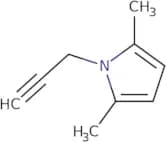
2,5-dimethyl-1-(prop-2-yn-1-yl)-1H-pyrrole
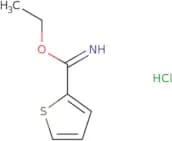
CAS:Versatile small molecule scaffoldFormula:C9H11NPurity:Min. 95%Molecular weight:133.19 g/molEthyl thiophene-2-carboximidoate hydrochloride
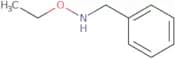
CAS:Versatile small molecule scaffoldFormula:C7H10ClNOSPurity:Min. 95%Molecular weight:191.68 g/molBenzyl(ethoxy)amine
CAS:<p>Benzyl(ethoxy)amine is a pyrimidine compound that is used as a pharmaceutical preparation. Benzyl(ethoxy)amine has been shown to be beneficial in the treatment of tuberculosis, syncytial virus infection, and congestive heart failure. It is synthesized by reacting benzyl alcohol with ethylene diamine. The two functional groups of benzyl (ethoxy)amine are hydroxybenzoic acid and the amine group. The amine group is responsible for receptor agonism, cell apoptosis, and inhibition of viral replication. The hydroxybenzoic acid group has been shown to inhibit the growth of bacteria such as Streptococcus pneumoniae and Mycoplasma pneumoniae. This drug also inhibits HIV-1 reverse transcriptase activity.<br>END></p>Formula:C9H13NOPurity:Min. 95%Molecular weight:151.21 g/mol[(4-Chlorophenyl)methyl](methoxy)amine
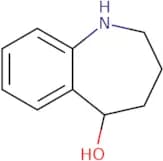
CAS:<p>Versatile small molecule scaffold</p>Formula:C8H10ClNOPurity:Min. 95%Molecular weight:171.62 g/mol2,3,4,5-Tetrahydro-1H-1-benzazepin-5-ol
CAS:Versatile small molecule scaffoldFormula:C10H13NOPurity:Min. 95%Molecular weight:163.22 g/mol8-Amino-1,4-dioxaspiro[4.5]decane-8-carbonitrile
CAS:Versatile small molecule scaffoldFormula:C9H14N2O2Purity:Min. 95%Molecular weight:182.22 g/mol9,12-Dioxa-1,3-diazadispiro[4.2.4.2]tetradecane-2,4-dione
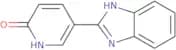
CAS:Versatile small molecule scaffoldFormula:C10H14N2O4Purity:Min. 95%Molecular weight:226.23 g/mol5-(1H-Benzimidazol-2-yl)pyridin-2-ol
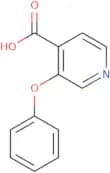
CAS:<p>5-(1H-Benzimidazol-2-yl)pyridin-2-ol is a proapoptotic agent that is synthesized from the reaction of benzimidazole with 2-chloroacetic acid. This compound was found to be cytotoxic and proapoptotic in ovarian cancer cells, as it inhibits DNA polymerase activity and induces apoptosis. 5-(1H-Benzimidazol-2-yl)pyridin-2-ol has been shown to activate caspase 3, which may lead to the activation of downstream events such as mitochondrial membrane permeabilization, cytochrome c release, and caspase 9 activation. The mechanism of action for this drug is still under investigation.</p>Formula:C12H9N3OPurity:Min. 95%Molecular weight:211.21 g/mol3-Phenoxypyridine-4-carboxylic acid
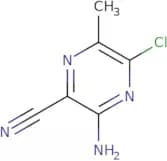
CAS:<p>Versatile small molecule scaffold</p>Formula:C12H9NO3Purity:Min. 95%Molecular weight:215.2 g/mol3-Amino-5-chloro-6-methylpyrazine-2-carbonitrile
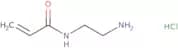
CAS:<p>Versatile small molecule scaffold</p>Formula:C6H5ClN4Purity:Min. 95%Molecular weight:168.58 g/molN-(2-aminoethyl)prop-2-enamide hydrochloride
CAS:N-(2-aminoethyl)prop-2-enamide hydrochloride is a monomer that has a molecular weight of about 146.1 g/mol and a chemical formula of C5H14N3O3Cl. It is synthesized through an experimental process involving the reaction of propanoyl chloride with 2-aminoethylamine. The chemical structures of this monomer are shown in Figure 1, which also reveals its resonance, kinetic, and magnetic properties. N-(2-aminoethyl)prop-2-enamide hydrochloride has a viscosity of about 0.7 mPa·s at 25°C and is soluble in water, ethanol, chloroform, ether, and benzene.Formula:C5H11ClN2OPurity:Min. 95%Molecular weight:150.61 g/mol2-Amino-N-(4-chlorophenyl)acetamide hydrochloride
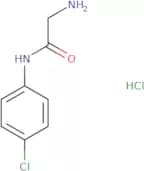
CAS:Versatile small molecule scaffoldFormula:C8H10Cl2N2OPurity:Min. 95%Molecular weight:221.08 g/mol2-Amino-N-(3-methoxyphenyl)acetamide hydrochloride
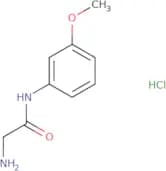
CAS:Versatile small molecule scaffoldFormula:C9H13ClN2O2Purity:Min. 95%Molecular weight:216.66 g/molFuran-3-carboxamidine hydrochloride
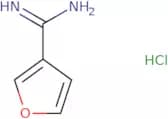
CAS:<p>Versatile small molecule scaffold</p>Formula:C5H6N2O·HClPurity:Min. 95%Molecular weight:146.58 g/molMethyl 2-methylazulene-1-carboxylate
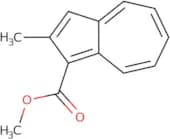
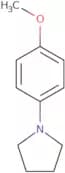
CAS:Methyl 2-methylazulene-1-carboxylate is a natural product that is found in the leaves of the "Mentha" species. It has shown anti-inflammatory, analgesic and antipyretic properties. Methyl 2-methylazulene-1-carboxylate is a cost effective analog of azulene and is used in medicinal preparations. It can be obtained by thermolysis of an ether or vinyl ether with a lactone. This compound has been shown to have optical (light) activity when cycloaddition reactions occur at the double bonds of the molecule. Tropolones are related compounds that also show this optical property.Formula:C13H12O2Purity:Min. 95%Molecular weight:200.23 g/mol1-(4-Methoxyphenyl)pyrrolidine
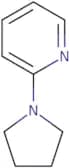
CAS:<p>1-(4-Methoxyphenyl)pyrrolidine is an amide that is structurally related to buspirone and diazepam. It has been shown to have a high affinity for serotonin receptors. 1-(4-Methoxyphenyl)pyrrolidine has been found to be an antagonist of diazepam in the brain, and it also inhibits the binding of lidocaine to the sodium channel. In addition, 1-(4-Methoxyphenyl)pyrrolidine has pharmacological properties similar to those of procaine and lidocaine, which are used as local anesthetics. This drug was found to be acutely toxic in rats, but not at levels that would be harmful for humans.</p>Formula:C11H15NOPurity:Min. 95%Molecular weight:177.24 g/mol2-(Pyrrolidin-1-yl)pyridine
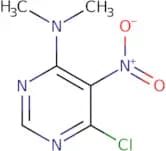
CAS:<p>2-(Pyrrolidin-1-yl)pyridine is a chiral compound that belongs to the group of nucleophilic compounds. It can be synthesized in two different configurations, as either the erythro or threo isomer. The synthesis of 2-(pyrrolidin-1-yl)pyridine requires an asymmetric synthesis and involves the reaction of an acyl chloride with 2,6-dichloropyrimidine. The erythro isomer has been shown to have receptor activity at cb2 receptors and has been shown to reduce inflammation in animal models. The threo isomer has been shown to have reduced activity at cb2 receptors and does not show anti-inflammatory properties.</p>Formula:C9H12N2Purity:Min. 95%Molecular weight:148.2 g/mol6-Chloro-N,N-dimethyl-5-nitropyrimidin-4-amine
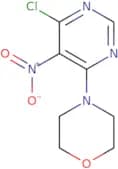
CAS:Versatile small molecule scaffoldFormula:C6H7ClN4O2Purity:Min. 95%Molecular weight:202.6 g/mol4-(6-Chloro-5-nitropyrimidin-4-yl)morpholine
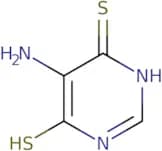
CAS:Versatile small molecule scaffoldFormula:C8H9ClN4O3Purity:Min. 95%Molecular weight:244.63 g/mol5-Aminopyrimidine-4,6-dithiol
CAS:<p>Versatile small molecule scaffold</p>Formula:C4H5N3S2Purity:Min. 95%Molecular weight:159.2 g/mol

amine](/_next/image/?url=https%3A%2Fstatic.cymitquimica.com%2Fproducts%2F3D%2Fthumb-webp%2FECA61516.webp&w=3840&q=75)
![8-Amino-1,4-dioxaspiro[4.5]decane-8-carbonitrile](/_next/image/?url=https%3A%2Fstatic.cymitquimica.com%2Fproducts%2F3D%2Fthumb-webp%2FECA62116.webp&w=3840&q=75)
![9,12-Dioxa-1,3-diazadispiro[4.2.4.2]tetradecane-2,4-dione](/_next/image/?url=https%3A%2Fstatic.cymitquimica.com%2Fproducts%2F3D%2Fthumb-webp%2FECA62117.webp&w=3840&q=75)