Building Blocks
This section contains fundamental products for the synthesis of organic and biological compounds. Building blocks are the essential starting materials used to construct complex molecules through various chemical reactions. They play a critical role in drug discovery, material science, and chemical research. At CymitQuimica, we offer a diverse range of high-quality building blocks to support your innovative research and industrial projects, ensuring you have the essential components for successful synthesis.
Subcategories of "Building Blocks"
- Boronic Acids & Boronic Acid Derivatives(5,778 products)
- Chiral Building Blocks(1,242 products)
- Hydrocarbon Building Blocks(6,098 products)
- Organic Building Blocks(61,059 products)
Found 199580 products of "Building Blocks"
Sort by
Purity (%)
0
100
|
0
|
50
|
90
|
95
|
100
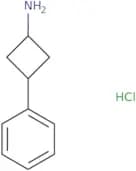
3-Phenylcyclobutan-1-amine hydrochloride
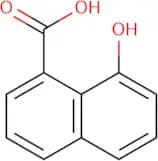
CAS:<p>Versatile small molecule scaffold</p>Formula:C10H14ClNPurity:Min. 95%Molecular weight:183.68 g/mol8-Hydroxynaphthalene-1-carboxylic acid
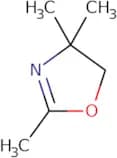
CAS:The 8-hydroxynaphthalene-1-carboxylic acid (8HNCA) is a nonfluorescent, organic molecule that has been shown to form lactone at the interface with water. The 8HNCA has a diameter of 1.73 Å and is able to react at rates up to 10 times faster than in bulk solution. It can be used as an indicator for reactions occurring at the interface between two different liquids. The fluorescence of 8HNCA can be observed when it is excited by laser light and its reaction rate can be measured by observing the time dependence of the fluorescence emission intensity.Formula:C11H8O3Purity:Min. 95%Molecular weight:188.18 g/mol2,4,4-Trimethyl-2-oxazoline
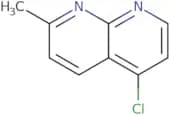
CAS:<p>2,4,4-Trimethyl-2-oxazoline is a potassium hydride reagent that has been used to study the mechanism of nucleophilic addition reactions. The acidity of this compound is determined by the presence of an acidic hydrogen atom on one side of the molecule. 2,4,4-Trimethyl-2-oxazoline can be used as a cationic polymerization monomer to produce polymers with high molecular weights. This compound is prepared by an ultrasonic preparative method in a solvent containing water and a base such as pyridine or triethylamine. Preparations must be done in an acidic environment because 2,4,4-trimethyl-2-oxazoline hydrolyzes readily in basic conditions. The viscosity of 2,4,4-trimethyl-2-oxazoline increases with increasing concentration and temperature. It also has a tendency to form hydrogen bonds with other molecules.</p>Formula:C6H11NOPurity:Min. 95%Molecular weight:113.16 g/mol5-Chloro-2-methyl-1,8-naphthyridine
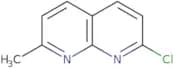
CAS:<p>Versatile small molecule scaffold</p>Formula:C9H7ClN2Purity:Min. 95%Molecular weight:178.62 g/mol2-Chloro-7-methyl-1,8-naphthyridine
CAS:<p>Versatile small molecule scaffold</p>Formula:C9H7ClN2Purity:Min. 95%Molecular weight:178.62 g/mol[(adamantan-1-yl)methyl](methyl)amine hydrochloride
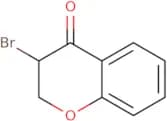
CAS:Versatile small molecule scaffoldFormula:C12H22ClNPurity:Min. 95%Molecular weight:215.77 g/mol3-bromo-2,3-dihydro-4H-chromen-4-one
CAS:<p>3-Bromo-2,3-dihydro-4H-chromen-4-one is a borohydride reduction and molecular modeling study of an analog of the natural product. The 14α-demethylase enzyme catalyzes the conversion of 3β,14α-dihydroxyandrostane to 3β,14β-dihydroxyandrostane. This enzyme has stereoselective activity in the synthesis of androgens from progesterone. The hydrogen bond interactions between the active site residues and solvent molecules are important for the enzymatic activity.</p>Formula:C9H7BrO2Purity:Min. 95%Molecular weight:227.06 g/molRel-(1R,3R,5S)-bicyclo[3.1.0]hexane-3-carboxylic acid
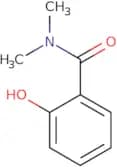
CAS:Versatile small molecule scaffoldFormula:C7H10O2Purity:Min. 95%Molecular weight:126.15 g/mol2-Hydroxy-N,N-dimethylbenzamide
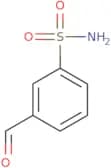
CAS:<p>2-Hydroxy-N,N-dimethylbenzamide is a hydrophobic amide that has been shown to form micelles in the presence of water. It has also been shown to be a potent inhibitor of rat liver microsomes and non-polymeric in pharmaceutical formulations. 2-Hydroxy-N,N-dimethylbenzamide is used as an intermediate for the synthesis of piperidone and carbonyl group, which are used in pharmaceuticals. 2-Hydroxy-N,N-dimethylbenzamide has been shown to react with carbon tetrachloride, forming intramolecular hydrogen bonds between the hydroxyl groups and methyl groups on adjacent molecules.</p>Formula:C9H11NO2Purity:Min. 95%Molecular weight:165.19 g/mol3-Formylbenzene-1-sulfonamide
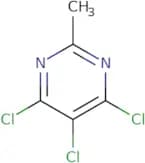
CAS:<p>3-Formylbenzene-1-sulfonamide is a small molecule that has been shown to block the function of ion channels and may be useful in the treatment of neurological diseases. This compound has been shown to inhibit voltage-gated sodium channels and potassium channels, which are responsible for neuronal activity. 3-Formylbenzene-1-sulfonamide was also found to have a positive effect on nerve cells and may be useful in the treatment of neurodegenerative disorders such as Parkinson's disease. The molecular structure of this drug is similar to acetylcholine, which is a neurotransmitter that plays an important role in the nervous system. Acetylcholine binds to receptors at synapses between neurons and transmits signals directly across the synaptic cleft or indirectly through release from axon terminals. 3-Formylbenzene-1-sulfonamide is thought to bind to one of these receptors, blocking transmission at nerve synapses.</p>Formula:C7H7NO3SPurity:Min. 95%Molecular weight:185.2 g/mol4,5,6-Trichloro-2-methylpyrimidine
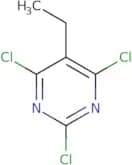
CAS:<p>Versatile small molecule scaffold</p>Formula:C5H3Cl3N2Purity:Min. 95%Molecular weight:197.44 g/mol2,4,6-Trichloro-5-ethylpyrimidine
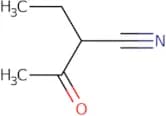
CAS:<p>Versatile small molecule scaffold</p>Formula:C6H5Cl3N2Purity:Min. 95%Molecular weight:211.48 g/mol2-Ethyl-3-oxobutanenitrile
CAS:Versatile small molecule scaffoldFormula:C6H9NOPurity:Min. 95%Molecular weight:111.14 g/mol6-(Trifluoromethyl)-1H-pyrazolo[3,4-d]pyrimidin-4-ol
CAS:Versatile small molecule scaffoldFormula:C6H3F3N4OPurity:Min. 95%Molecular weight:204.11 g/molSpiro[5.5]undecan-2-one
CAS:<p>Spiro[5.5]undecan-2-one is a reactive intermediate that can be generated by the aldol reaction between acetaldehyde and acetone. It is also produced in the olefination of methyl acrylate with 2-bromoethanol, and intramolecular aldol condensation of cyclopentenone with itself. Spiro[5.5]undecan-2-one has been shown to be an effective inhibitor of DNA gyrase, which is an enzyme that maintains the integrity of bacterial DNA. This active form binds to the 16S ribosomal RNA and inhibits protein synthesis, leading to cell death by inhibiting the production of proteins vital for cell division.</p>Formula:C11H18OPurity:Min. 95%Molecular weight:166.26 g/molSpiro[5.5]undecan-1-one
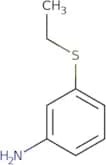
CAS:<p>Versatile small molecule scaffold</p>Formula:C11H18OPurity:Min. 95%Molecular weight:166.26 g/mol3-(Ethylsulfanyl)aniline
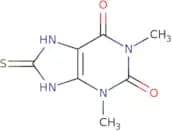
CAS:<p>Versatile small molecule scaffold</p>Formula:C8H11NSPurity:Min. 95%Molecular weight:153.25 g/mol1,3-Dimethyl-8-sulfanyl-2,3,6,7-tetrahydro-1H-purine-2,6-dione
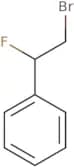
CAS:1,3-Dimethyl-8-sulfanyl-2,3,6,7-tetrahydro-1H-purine-2,6-dione is a cyclic compound that is used to synthesize copper complexes. It has four nitrogen atoms in the molecule and yields a polynuclear complex when reacted with copper ions. This ligand also has x-ray crystallographic data and can form coordination compounds with thiourea. 1,3-Dimethyl-8-sulfanyl-2,3,6,7-tetrahydro-1H-purine-2,6-dione is an ionizable anion that can be mononuclear or polynuclear depending on the solvent.Formula:C7H8N4O2SPurity:Min. 95%Molecular weight:212.23 g/mol(2-Bromo-1-fluoroethyl)benzene
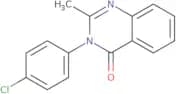
CAS:<p>2-Bromo-1-fluoroethylbenzene is a reductive amination reagent that is used to synthesize carboxamides and other heterocycles. It has been shown to be highly regioselective for the formation of the desired products, with high yields and good selectivity. This compound can be used as a homochiral building block in asymmetric synthesis. 2-Bromo-1-fluoroethylbenzene is also an inhibitor of cyanide production from hydrolysis of cyanide salts and organic compounds containing nitro groups.<br>2-Bromo-1-fluoroethylbenzene is a crystallization reagent that can be used to purify active molecules by precipitation. It is also used as an enzyme cofactor in biosynthesis reactions.</p>Formula:C8H8BrFPurity:Min. 95%Molecular weight:203.05 g/mol3-(4-Chlorophenyl)-2-methyl-3,4-dihydroquinazolin-4-one
CAS:Controlled Product<p>3-(4-Chlorophenyl)-2-methyl-3,4-dihydroquinazolin-4-one (CLQ) is a compound that has been shown to have a hypothermic effect in animals. CLQ also has pharmacological properties and has been used in experiments to study the correlation between maximal concentration and hypothermic effects. The drug was found to be active when administered at a dose of 0.5 mg/kg body weight. CLQ has not been tested for its effects on seizures or epilepsy, but it is thought that it may have antiseizure activity due to its inhibition of nitric oxide synthase.</p>Formula:C15H11ClN2OPurity:Min. 95%Molecular weight:270.71 g/mol

amine hydrochloride](/_next/image/?url=https%3A%2Fstatic.cymitquimica.com%2Fproducts%2F3D%2Fthumb-webp%2FBAA77399.webp&w=3840&q=75)
![Rel-(1R,3R,5S)-bicyclo[3.1.0]hexane-3-carboxylic acid](/_next/image/?url=https%3A%2Fstatic.cymitquimica.com%2Fproducts%2F3D%2Fthumb-webp%2FBAA77745.webp&w=3840&q=75)
![6-(Trifluoromethyl)-1H-pyrazolo[3,4-d]pyrimidin-4-ol](/_next/image/?url=https%3A%2Fstatic.cymitquimica.com%2Fproducts%2F3D%2Fthumb-webp%2FBAA78079.webp&w=3840&q=75)
![Spiro[5.5]undecan-2-one](/_next/image/?url=https%3A%2Fstatic.cymitquimica.com%2Fproducts%2F3D%2Fthumb-webp%2FBAA78181.webp&w=3840&q=75)
![Spiro[5.5]undecan-1-one](/_next/image/?url=https%3A%2Fstatic.cymitquimica.com%2Fproducts%2F3D%2Fthumb-webp%2FBAA78183.webp&w=3840&q=75)