Building Blocks
This section contains fundamental products for the synthesis of organic and biological compounds. Building blocks are the essential starting materials used to construct complex molecules through various chemical reactions. They play a critical role in drug discovery, material science, and chemical research. At CymitQuimica, we offer a diverse range of high-quality building blocks to support your innovative research and industrial projects, ensuring you have the essential components for successful synthesis.
Subcategories of "Building Blocks"
- Boronic Acids & Boronic Acid Derivatives(5,778 products)
- Chiral Building Blocks(1,242 products)
- Hydrocarbon Building Blocks(6,098 products)
- Organic Building Blocks(61,084 products)
Found 198714 products of "Building Blocks"
Sort by
Purity (%)
0
100
|
0
|
50
|
90
|
95
|
100
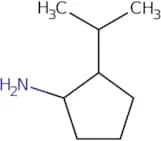
2-(Propan-2-yl)cyclopentan-1-amine
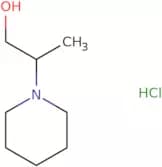
CAS:<p>Versatile small molecule scaffold</p>Formula:C8H17NPurity:Min. 95%Molecular weight:127.23 g/mol2-(Piperidin-1-yl)propan-1-ol hydrochloride
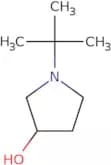
CAS:Versatile small molecule scaffoldFormula:C8H18ClNOPurity:Min. 95%Molecular weight:179.69 g/mol1-tert-Butylpyrrolidin-3-ol
CAS:<p>Versatile small molecule scaffold</p>Formula:C8H17NOPurity:Min. 95%Molecular weight:143.23 g/mol2-[4-(2-Hydroxyethyl)-1-piperazinyl]acetamide hydrochloride
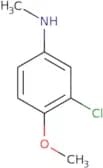
CAS:Versatile small molecule scaffoldFormula:C8H17N3O2Purity:Min. 95%Molecular weight:187.24 g/mol3-Chloro-4-methoxy-N-methylaniline
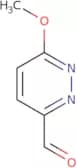
CAS:<p>Versatile small molecule scaffold</p>Formula:C8H10ClNOPurity:Min. 95%Molecular weight:171.62 g/mol6-Methoxypyridazine-3-carbaldehyde
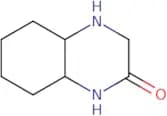
CAS:<p>Versatile small molecule scaffold</p>Formula:C6H6N2O2Purity:Min. 95%Molecular weight:138.12 g/molDecahydroquinoxalin-2-one
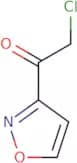
CAS:Decahydroquinoxalin-2-one is a mitochondrial membrane potential stabilizer. It binds to the imine moiety of the mitochondrial membrane and prevents collapse of the mitochondrial membrane potential, which is essential for cell survival. Decahydroquinoxalin-2-one also has an antiproliferative effect on cancer cells. The proapoptotic activity of decahydroquinoxalin-2-one has been shown in some studies; however, this activity has not been demonstrated in all cases, suggesting that it may have other mechanisms of action. Decahydroquinoxalin-2-one is currently being studied as a possible treatment for cancer and Parkinson’s disease.Formula:C8H14N2OPurity:Min. 95%Molecular weight:154.21 g/mol2-Chloro-1-(1,2-oxazol-3-yl)ethan-1-one
CAS:Versatile small molecule scaffoldFormula:C5H4ClNO2Purity:Min. 95%Molecular weight:145.54 g/mol4-(Thiomorpholin-4-yl)benzonitrile
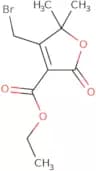
CAS:<p>Versatile small molecule scaffold</p>Formula:C11H12N2SPurity:Min. 95%Molecular weight:204.29 g/molEthyl 4-(bromomethyl)-5,5-dimethyl-2-oxo-2,5-dihydrofuran-3-carboxylate
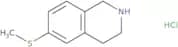
CAS:Versatile small molecule scaffoldFormula:C10H13BrO4Purity:Min. 95%Molecular weight:277.11 g/mol6-(Methylthio)-1,2,3,4-tetrahydroisoquinoline hydrochloride
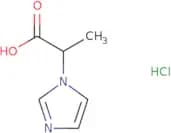
CAS:<p>Versatile small molecule scaffold</p>Formula:C10H14ClNSPurity:Min. 95%Molecular weight:215.74 g/mol2-Imidazol-1-yl-propionic acidhydrochloride
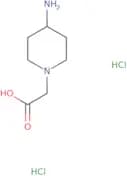
CAS:<p>Versatile small molecule scaffold</p>Formula:C6H9ClN2O2Purity:Min. 95%Molecular weight:176.6 g/mol2-(4-Aminopiperidin-1-yl)acetic acid dihydrochloride
CAS:<p>Versatile small molecule scaffold</p>Formula:C7H16Cl2N2O2Purity:Min. 95%Molecular weight:231.12 g/mol2-[(2-Aminophenyl)sulfanyl]acetamide
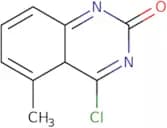
CAS:Versatile small molecule scaffoldFormula:C8H10N2OSPurity:Min. 95%Molecular weight:182.25 g/mol4-chloro-5-methylquinazoline
CAS:Versatile small molecule scaffoldFormula:C9H7ClN2Purity:Min. 95%Molecular weight:178.62 g/mol2-Chloro-N-[4-(furan-2-yl)-1,3-thiazol-2-yl]acetamide
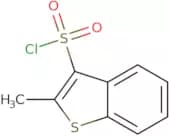
CAS:<p>Versatile small molecule scaffold</p>Formula:C9H7ClN2O2SPurity:Min. 95%Molecular weight:242.68 g/mol2-Methyl-1-benzothiophene-3-sulfonyl chloride
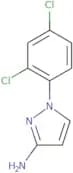
CAS:<p>Versatile small molecule scaffold</p>Formula:C9H7ClO2S2Purity:Min. 95%Molecular weight:246.7 g/mol1-(2,4-Dichlorophenyl)-1H-pyrazol-3-amine
CAS:<p>Versatile small molecule scaffold</p>Formula:C9H7Cl2N3Purity:Min. 95%Molecular weight:228.07 g/mol2-[(4-Cyanophenyl)formamido]acetic acid
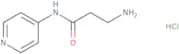
CAS:2-[(4-Cyanophenyl)formamido]acetic acid is a secondary metabolite that is found in plants. It has been isolated from the leaves of the plant, Aerva lanata. 2-[(4-Cyanophenyl)formamido]acetic acid has been used as an analytical standard and as a reference material for quality control testing in the pharmaceutical industry. This compound is also being studied for its bioactive properties, including anti-inflammatory and antimicrobial activities.Formula:C10H8N2O3Purity:Min. 95%Molecular weight:204.18 g/mol3-Amino-N-(pyridin-4-yl)propanamide hydrochloride
CAS:<p>Versatile small molecule scaffold</p>Formula:C8H12ClN3OPurity:Min. 95%Molecular weight:201.65 g/mol

![2-[4-(2-Hydroxyethyl)-1-piperazinyl]acetamide hydrochloride](/_next/image/?url=https%3A%2Fstatic.cymitquimica.com%2Fproducts%2F3D%2Fthumb-webp%2FQDA22811.webp&w=3840&q=75)

![2-[(2-Aminophenyl)sulfanyl]acetamide](/_next/image/?url=https%3A%2Fstatic.cymitquimica.com%2Fproducts%2F3D%2Fthumb-webp%2FQDA27133.webp&w=3840&q=75)
![2-Chloro-N-[4-(furan-2-yl)-1,3-thiazol-2-yl]acetamide](/_next/image/?url=https%3A%2Fstatic.cymitquimica.com%2Fproducts%2F3D%2Fthumb-webp%2FQDA27300.webp&w=3840&q=75)
![2-[(4-Cyanophenyl)formamido]acetic acid](/_next/image/?url=https%3A%2Fstatic.cymitquimica.com%2Fproducts%2F3D%2Fthumb-webp%2FQDA29083.webp&w=3840&q=75)