Building Blocks
This section contains fundamental products for the synthesis of organic and biological compounds. Building blocks are the essential starting materials used to construct complex molecules through various chemical reactions. They play a critical role in drug discovery, material science, and chemical research. At CymitQuimica, we offer a diverse range of high-quality building blocks to support your innovative research and industrial projects, ensuring you have the essential components for successful synthesis.
Subcategories of "Building Blocks"
- Boronic Acids & Boronic Acid Derivatives(5,778 products)
- Chiral Building Blocks(1,242 products)
- Hydrocarbon Building Blocks(6,098 products)
- Organic Building Blocks(61,034 products)
Found 199601 products of "Building Blocks"
Sort by
Purity (%)
0
100
|
0
|
50
|
90
|
95
|
100
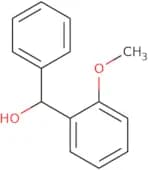
(2-Methoxyphenyl)(phenyl)methanol
CAS:<p>2-Methoxyphenyl)(phenyl)methanol is a protonated molecule that becomes deuterium-labeled when it is treated with deuterium gas. The deuterium label can be used to measure the rate of proton transport in biological systems, including mitochondria and chloroplasts. 2-Methoxyphenyl)(phenyl)methanol has been shown to have a high yield of labeled product, which allows for the study of reactions involving carbonyl groups. This compound can also be used for labeling chalcones and other elements. It has been shown to catalyze benzene ring formation from phenol.</p>Formula:C14H14O2Purity:Min. 95%Molecular weight:214.26 g/mol4-(Trichloromethyl)pyridine
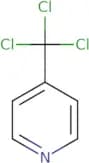
CAS:<p>4-(Trichloromethyl)pyridine is an organic compound that can be used as a pesticide. It is the main active ingredient in chloropicrin, which is used primarily for agricultural purposes to help protect crops from insect damage. 4-(Trichloromethyl)pyridine has been shown to have toxic effects on animals, including humans, and may cause adverse health effects such as headaches, nausea, vomiting and dizziness. The chemical reacts with hydrogen chloride in the presence of an organic solvent to form the chlorinated derivative of 4-chloropyridinol. The reactivity of 4-(trichloromethyl)pyridine towards nucleophilic inorganic bases has also been studied and it was found that it reacts with potassium hydroxide at room temperature to form a 1:1 mixture of 4-chloropyridinol and potassium chloride.</p>Formula:C6H4Cl3NPurity:Min. 95%Molecular weight:196.5 g/mol(3-Methylpyridin-4-yl)methanamine
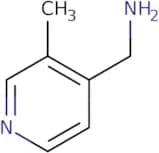
CAS:<p>Versatile small molecule scaffold</p>Formula:C7H10N2Purity:Min. 95%Molecular weight:122.17 g/mol2-Cyclohexylbenzoic Acid
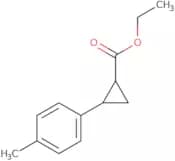
CAS:<p>2-Cyclohexylbenzoic acid is a chiral compound that belongs to the class of pharmaceutical preparations. It is used as an inhibitor of enzymes such as hydroxylase, which is involved in the production of prostaglandins and leukotrienes, and has been shown to be effective in treating bowel disease. 2-Cyclohexylbenzoic acid may also be effective in the treatment of chronic bronchitis and autoimmune diseases. <br>2-Cyclohexylbenzoic acid binds to the active site on certain enzymes, thereby inhibiting their function. This drug also has a strong inhibitory effect on inflammation and oxidative stress, which may be due to its ability to inhibit phospholipase A2 (PLA2), an enzyme that triggers inflammatory reactions by catalyzing the release of arachidonic acid from membrane phospholipids. The light exposure can cause photochemical damage to the skin by inducing oxidation or perox</p>Formula:C13H16O2Purity:Min. 95%Molecular weight:204.26 g/molEthyl 2-(4-methylphenyl)cyclopropane-1-carboxylate
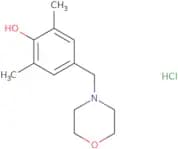
CAS:Versatile small molecule scaffoldFormula:C13H16O2Purity:Min. 95%Molecular weight:204.26 g/mol2,6-Dimethyl-4-(morpholin-4-ylmethyl)phenol hydrochloride
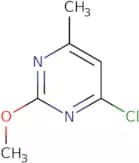
CAS:<p>Versatile small molecule scaffold</p>Formula:C13H20ClNO2Purity:Min. 95%Molecular weight:257.75 g/mol4-Chloro-2-methoxy-6-methylpyrimidine
CAS:<p>Versatile small molecule scaffold</p>Formula:C6H7ClN2OPurity:Min. 95%Molecular weight:158.59 g/mol1,2-benzothiazol-6-amine
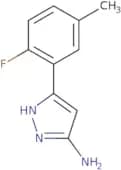
CAS:<p>Versatile small molecule scaffold</p>Formula:C7H6N2SPurity:Min. 95%Molecular weight:150.2 g/mol3-(2-Fluoro-5-methylphenyl)-1H-pyrazol-5-amine
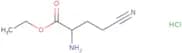
CAS:<p>Versatile small molecule scaffold</p>Formula:C10H10FN3Purity:Min. 95%Molecular weight:191.2 g/molEthyl 2-amino-4-cyanobutanoate hydrochloride
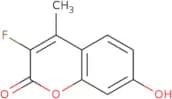
CAS:<p>Versatile small molecule scaffold</p>Formula:C7H13ClN2O2Purity:Min. 95%Molecular weight:192.6 g/mol3-Fluoro-7-hydroxy-4-methyl-2H-chromen-2-one
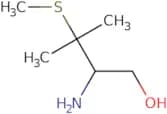
CAS:<p>Versatile small molecule scaffold</p>Formula:C10H7FO3Purity:Min. 95%Molecular weight:194.16 g/mol(2R)-2-Amino-3-methyl-3-(methylsulfanyl)butan-1-ol
CAS:<p>Versatile small molecule scaffold</p>Formula:C6H15NOSPurity:Min. 95%Molecular weight:149.3 g/mol2-(5-Methylfuran-2-yl)piperidine
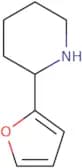
CAS:<p>Versatile small molecule scaffold</p>Formula:C10H15NOPurity:Min. 95%Molecular weight:165.23 g/mol2-(Furan-2-yl)piperidine
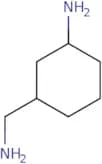
CAS:<p>Versatile small molecule scaffold</p>Formula:C9H13NOPurity:Min. 95%Molecular weight:151.21 g/mol3-(Aminomethyl)cyclohexan-1-amine
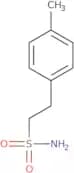
CAS:<p>Versatile small molecule scaffold</p>Formula:C7H16N2Purity:Min. 95%Molecular weight:128.22 g/mol2-(4-Methylphenyl)ethane-1-sulfonamide
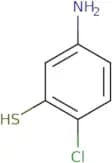
CAS:<p>Versatile small molecule scaffold</p>Formula:C9H13NO2SPurity:Min. 95%Molecular weight:199.27 g/mol5-Amino-2-chlorobenzene-1-thiol
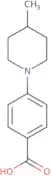
CAS:<p>5-Amino-2-chlorobenzene-1-thiol is a herbicide that is used to control weeds in wheat, soybean, and other crops. It is a hydrolysis product of 2,4-dichlorophenol (2,4-D) and reacts with chloride ions to form the hydrochloric acid. 5-Amino-2-chlorobenzene-1-thiol inhibits the growth of plants by inhibiting chlorophyll synthesis. This product also has phytotoxic properties and can be found in fruit juice as an additive to prevent browning. 5-Amino-2-chlorobenzene-1 thiol may cause skin irritation or burns when it comes into contact with skin.</p>Formula:C6H6ClNSPurity:Min. 95%Molecular weight:159.64 g/mol4-(4-Methylpiperidin-1-yl)benzoic acid
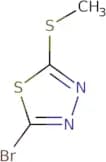
CAS:<p>Versatile small molecule scaffold</p>Formula:C13H17NO2Purity:Min. 95%Molecular weight:219.28 g/mol2-Bromo-5-(methylsulfanyl)-1,3,4-thiadiazole
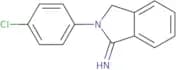
CAS:<p>Versatile small molecule scaffold</p>Formula:C3H3BrN2S2Purity:Min. 95%Molecular weight:211.1 g/mol2-(4-Chlorophenyl)-2,3-dihydro-1H-isoindol-1-imine
CAS:<p>Versatile small molecule scaffold</p>Formula:C14H11ClN2Purity:Min. 95%Molecular weight:242.7 g/mol