Building Blocks
This section contains fundamental products for the synthesis of organic and biological compounds. Building blocks are the essential starting materials used to construct complex molecules through various chemical reactions. They play a critical role in drug discovery, material science, and chemical research. At CymitQuimica, we offer a diverse range of high-quality building blocks to support your innovative research and industrial projects, ensuring you have the essential components for successful synthesis.
Subcategories of "Building Blocks"
- Boronic Acids & Boronic Acid Derivatives(5,778 products)
- Chiral Building Blocks(1,243 products)
- Hydrocarbon Building Blocks(6,098 products)
- Organic Building Blocks(61,057 products)
Found 200716 products of "Building Blocks"
Sort by
Purity (%)
0
100
|
0
|
50
|
90
|
95
|
100
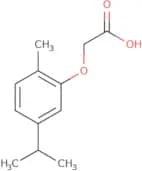
(5-Isopropyl-2-methyl-phenoxy)-acetic acid
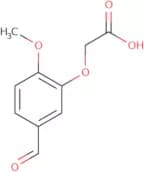
CAS:Versatile small molecule scaffoldFormula:C12H16O3Purity:Min. 95%Molecular weight:208.26 g/mol2-(5-Formyl-2-methoxyphenoxy)acetic acid
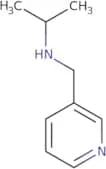
CAS:Versatile small molecule scaffoldFormula:C10H10O5Purity:Min. 95%Molecular weight:210.18 g/molN-(Pyridin-3-ylmethyl)propan-2-amine
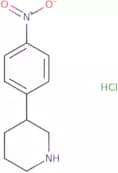
CAS:Versatile small molecule scaffoldFormula:C9H14N2Purity:Min. 95%Molecular weight:150.22 g/mol3-(4-Nitrophenyl)piperidine hydrochloride
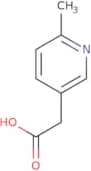
CAS:Versatile small molecule scaffoldFormula:C11H15ClN2O2Purity:Min. 95%Molecular weight:242.7 g/mol(6-Methylpyridin-3-yl)acetic acid
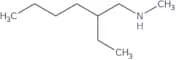
CAS:<p>Versatile small molecule scaffold</p>Formula:C8H9NO2Purity:Min. 95%Molecular weight:151.17 g/mol(2-Ethylhexyl)(methyl)amine
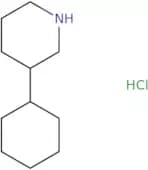
CAS:<p>Versatile small molecule scaffold</p>Formula:C9H21NPurity:Min. 95%Molecular weight:143.27 g/mol3-Cyclohexylpiperidine hydrochloride
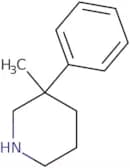
CAS:Versatile small molecule scaffoldFormula:C11H22ClNPurity:Min. 95%Molecular weight:203.75 g/mol3-Methyl-3-phenylpiperidine
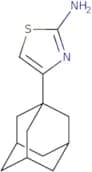
CAS:<p>3-Methyl-3-phenylpiperidine is a tertiary amine that contains a quaternary carbon. It has three different conformers, which can be determined by the presence of trifluoromethanesulfonic acid. The tertiary amine has two hydrogen atoms on the nitrogen atom and one hydrogen atom on the methyl group. 3-Methyl-3-phenylpiperidine is stable at room temperature in ethanol and preferentially reacts with sodium borohydride to form sodium N-(3-methyl-3-phenylpiperidinium) borohydride. This compound also has an electron withdrawing substituent, so it will have a higher thermodynamic stability than benzene or pyridinium salts.</p>Formula:C12H17NPurity:Min. 95%Molecular weight:175.27 g/mol4-(1-adamantyl)2-aminothiazole
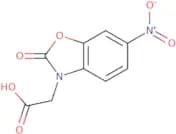
CAS:<p>Versatile small molecule scaffold</p>Formula:C13H18N2SPurity:Min. 95%Molecular weight:234.36 g/mol2-(6-Nitro-2-oxo-2,3-dihydro-1,3-benzoxazol-3-yl)acetic acid
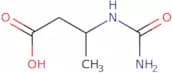
CAS:Versatile small molecule scaffoldFormula:C9H6N2O6Purity:Min. 95%Molecular weight:238.15 g/mol3-(Carbamoylamino)butanoic acid
CAS:<p>Versatile small molecule scaffold</p>Formula:C5H10N2O3Purity:Min. 95%Molecular weight:146.14 g/mol1,3-dimethyl-1H-pyrazolo[3,4-b]pyridine-5-carboxylic Acid
CAS:Versatile small molecule scaffoldFormula:C9H9N3O2Purity:Min. 95%Molecular weight:191.18 g/mol2-Chloro-N-[4-(1H-indol-3-yl)-1,3-thiazol-2-yl]acetamide
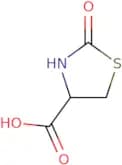
CAS:Versatile small molecule scaffoldFormula:C13H10ClN3OSPurity:Min. 95%Molecular weight:291.76 g/mol2-Oxo-1,3-thiazolidine-4-carboxylic acid
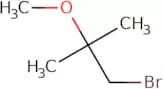
CAS:2-Oxo-1,3-thiazolidine-4-carboxylic acid is an immunosuppressive agent that binds to the IL2 receptor. It has been shown in toxicological studies to have a low level of toxicity and no mutagenic activity. 2-Oxo-1,3-thiazolidine-4-carboxylic acid has also been shown to bind to DNA polymerase and inhibit the enzyme's activity in vitro. Clinical pathology studies on rats have shown that 2-Oxo-1,3-thiazolidine-4 carboxylic acid induces an increase in eosinophil cationic protein levels. The drug also inhibits growth factor β1 and can be used as a model system for leukemia inhibitory factor (LIF).Formula:C4H5NO3SPurity:Min. 95%Molecular weight:147.15 g/mol1-bromo-2-methoxy-2-methylpropane
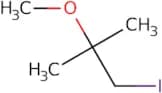
CAS:<p>Versatile small molecule scaffold</p>Formula:C5H11BrOPurity:Min. 95%Molecular weight:167.05 g/mol1-Iodo-2-methoxy-2-methylpropane
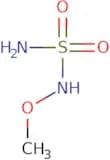
CAS:Versatile small molecule scaffoldFormula:C5H11IOPurity:Min. 95%Molecular weight:214.04 g/mol(Methoxysulfamoyl)amine
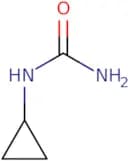
CAS:Versatile small molecule scaffoldFormula:CH6N2O3SPurity:Min. 95%Molecular weight:126.14 g/mol1-Cyclopropylurea
CAS:<p>1-Cyclopropylurea is a synthetic anticancer drug that was originally developed as an antihypertensive agent. It has been shown to have inhibitory effects on cancer cells and inflammatory diseases, including cyclic nucleotide phosphodiesterase (cNPD) and b-raf. 1-Cyclopropylurea also inhibits the synthesis of epoxyeicosatrienoic acids (EETs) in vitro, suggesting that it may be useful for the treatment of cardiovascular diseases such as hypertension.<br>1-Cyclopropylurea has been shown to inhibit cell proliferation in culture by causing G2/M phase arrest and apoptosis. The mechanism of action of 1-cyclopropylurea is not well understood, but it has been suggested that the drug prevents the phosphorylation of b-raf, which prevents the activation of mitogen activated protein kinases (MAPKs).</p>Purity:Min. 95%3-Ethoxy-2-methylpropanoic acid
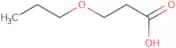
CAS:Versatile small molecule scaffoldFormula:C6H12O3Purity:Min. 95%Molecular weight:132.2 g/mol3-Propoxypropanoic acid
CAS:Versatile small molecule scaffoldFormula:C6H12O3Purity:Min. 95%Molecular weight:132.16 g/mol

![1,3-dimethyl-1H-pyrazolo[3,4-b]pyridine-5-carboxylic Acid](/_next/image/?url=https%3A%2Fstatic.cymitquimica.com%2Fproducts%2F3D%2Fthumb-webp%2FUAA74372.webp&w=3840&q=75)
![2-Chloro-N-[4-(1H-indol-3-yl)-1,3-thiazol-2-yl]acetamide](/_next/image/?url=https%3A%2Fstatic.cymitquimica.com%2Fproducts%2F3D%2Fthumb-webp%2FUAA75029.webp&w=3840&q=75)