Building Blocks
This section contains fundamental products for the synthesis of organic and biological compounds. Building blocks are the essential starting materials used to construct complex molecules through various chemical reactions. They play a critical role in drug discovery, material science, and chemical research. At CymitQuimica, we offer a diverse range of high-quality building blocks to support your innovative research and industrial projects, ensuring you have the essential components for successful synthesis.
Subcategories of "Building Blocks"
- Boronic Acids & Boronic Acid Derivatives(5,778 products)
- Chiral Building Blocks(1,243 products)
- Hydrocarbon Building Blocks(6,098 products)
- Organic Building Blocks(61,057 products)
Found 200716 products of "Building Blocks"
Sort by
Purity (%)
0
100
|
0
|
50
|
90
|
95
|
100
1-Benzyloxy-3-methylamino-propan-2-ol
CAS:<p>Versatile small molecule scaffold</p>Formula:C11H17NO2Purity:Min. 95%Molecular weight:195.26 g/mol2,2-Dimethoxy-1-phenylethan-1-amine
CAS:Versatile small molecule scaffoldFormula:C10H15NO2Purity:Min. 95%Molecular weight:181.23 g/mol6-Benzylpyridin-2-amine
CAS:6-Benzylpyridin-2-amine is a synthetic compound that is used in the synthesis of isoquinoline derivatives. It has been shown to be a potent inhibitor of histamine N-methyltransferase, which is an enzyme involved in the regulation of histamine levels. 6-Benzylpyridin-2-amine inhibits both isoforms of this enzyme and has the potential to be developed as a drug for the treatment of allergies, asthma, or even schizophrenia.Formula:C12H12N2Purity:Min. 95%Molecular weight:184.24 g/mol4,5-Dimethylpyridin-2-amine
CAS:Versatile small molecule scaffoldFormula:C7H10N2Purity:Min. 95%Molecular weight:122.17 g/mol2-(1H-Pyrazol-4-yl)-1H-1,3-benzodiazole
CAS:Versatile small molecule scaffoldFormula:C10H8N4Purity:Min. 95%Molecular weight:184.2 g/molMethyl 3-methyl-2-oxocyclopentane-1-carboxylate
CAS:Methyl 3-methyl-2-oxocyclopentane-1-carboxylate (MECCP) is a fungicide that is used in horticulture. It inhibits the growth of fungi by inhibiting the synthesis of ergosterol, which is an important component of fungal cell membranes. MECCP is synthesized by reacting cyclopentanone with acid methyl ester and sodium hydride in methanol. The product can be hydrolyzed to metconazole, which has fungicidal properties. Methyl 3-methyl-2-oxocyclopentane-1-carboxylate can also be synthesized from methyl 2-oxocyclopentane carboxylate ethyl ester and methyllithium. This compound has a high yield and can be used as a substitute for other compounds such as pentachlorophenol, which have been banned due to their toxicity to humans and animals.Formula:C8H12O3Purity:Min. 95%Molecular weight:156.18 g/mol4,4,4-Trifluoro-1-(4-hydroxyphenyl)butane-1,3-dione
CAS:Versatile small molecule scaffoldFormula:C10H7F3O3Purity:Min. 95%Molecular weight:232.16 g/mol2-[(3,4-Dichlorophenyl)amino]pyridine-3-carboxylic acid
CAS:Versatile small molecule scaffoldFormula:C12H8Cl2N2O2Purity:Min. 95%Molecular weight:283.11 g/mol4-(4-methyl-4H-1,2,4-triazol-3-yl)pyridine
CAS:<p>Versatile small molecule scaffold</p>Formula:C8H8N4Purity:Min. 95%Molecular weight:160.18 g/mol4-(4'-Bromophenyl)-4-hydroxypiperidine
CAS:<p>4-(4'-Bromophenyl)-4-hydroxypiperidine is a nucleophilic compound that is used in assays to identify the presence of amines. It is also used to study the inhibitory effect on intestinal cancer and pharmacokinetic study. 4-(4'-Bromophenyl)-4-hydroxypiperidine has been shown to act as a kinase receptor antagonist and have an inhibiting effect on heterocyclic amines, which are carcinogenic compounds formed when meat is cooked at high temperatures. This compound binds to proteins by means of its hydroxyl group, and it has been shown to be cytotoxic against mammalian cells in vitro. 4-(4'-Bromophenyl)-4-hydroxypiperidine has also been used for crystallographic studies.</p>Formula:C11H14BrNOPurity:Min. 95%Molecular weight:256.14 g/mol2-(Methoxymethyl)benzonitrile
CAS:Versatile small molecule scaffoldFormula:C9H9NOPurity:Min. 95%Molecular weight:147.17 g/mol3-Acetyl-4-methoxybenzonitrile
CAS:Versatile small molecule scaffoldFormula:C10H9NO2Purity:Min. 95%Molecular weight:175.18 g/mol3-(1H-1,2,3-Triazol-1-yl)piperidine
CAS:<p>Versatile small molecule scaffold</p>Formula:C7H12N4Purity:Min. 95%Molecular weight:152.2 g/mol5-Nitro-2-[(oxiran-2-yl)methoxy]phenol
CAS:<p>Versatile small molecule scaffold</p>Formula:C9H9NO5Purity:Min. 95%Molecular weight:211.17 g/mol1-(4-Acetylphenyl)pyrrolidin-2-one
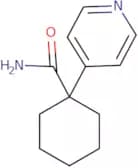
CAS:<p>Versatile small molecule scaffold</p>Formula:C12H13NO2Purity:Min. 95%Molecular weight:203.24 g/mol1-(Pyridin-4-yl)cyclohexane-1-carboxamide
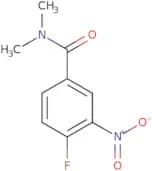
CAS:Versatile small molecule scaffoldFormula:C12H16N2OPurity:Min. 95%Molecular weight:204.27 g/mol4-Fluoro-N,N-dimethyl-3-nitrobenzamide
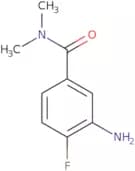
CAS:<p>Versatile small molecule scaffold</p>Formula:C9H9FN2O3Purity:Min. 95%Molecular weight:212.18 g/mol3-Amino-4-fluoro-N,N-dimethylbenzamide
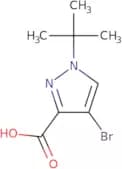
CAS:<p>Versatile small molecule scaffold</p>Formula:C9H11FN2OPurity:Min. 95%Molecular weight:182.19 g/mol4-Bromo-1-tert-butyl-1H-pyrazole-3-carboxylic acid
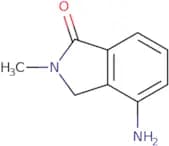
CAS:Versatile small molecule scaffoldFormula:C8H11BrN2O2Purity:Min. 95%Molecular weight:247.09 g/mol4-amino-2-methyl-2,3-dihydro-1H-isoindol-1-one
CAS:<p>Versatile small molecule scaffold</p>Formula:C9H10N2OPurity:Min. 95%Molecular weight:162.19 g/mol


![2-[(3,4-Dichlorophenyl)amino]pyridine-3-carboxylic acid](/_next/image/?url=https%3A%2Fstatic.cymitquimica.com%2Fproducts%2F3D%2Fthumb-webp%2FHCA97849.webp&w=3840&q=75)


![5-Nitro-2-[(oxiran-2-yl)methoxy]phenol](/_next/image/?url=https%3A%2Fstatic.cymitquimica.com%2Fproducts%2F3D%2Fthumb-webp%2FHCB33944.webp&w=3840&q=75)