


Building Blocks
This section contains fundamental products for the synthesis of organic and biological compounds. Building blocks are the essential starting materials used to construct complex molecules through various chemical reactions. They play a critical role in drug discovery, material science, and chemical research. At CymitQuimica, we offer a diverse range of high-quality building blocks to support your innovative research and industrial projects, ensuring you have the essential components for successful synthesis.
Subcategories of "Building Blocks"
- Boronic Acids & Boronic Acid Derivatives(5,778 products)
- Chiral Building Blocks(1,242 products)
- Hydrocarbon Building Blocks(6,098 products)
- Organic Building Blocks(61,034 products)
Found 199601 products of "Building Blocks"
Sort by
Purity (%)
0
100
|
0
|
50
|
90
|
95
|
100
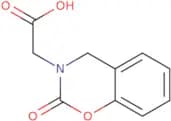
2-(2-Oxo-3,4-dihydro-2H-1,3-benzoxazin-3-yl)acetic acid
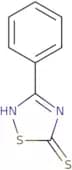
CAS:Versatile small molecule scaffoldFormula:C10H9NO4Purity:Min. 95%Molecular weight:207.18 g/mol3-Phenyl-1,2,4-thiadiazole-5-thiol
CAS:<p>Versatile small molecule scaffold</p>Formula:C8H6N2S2Purity:Min. 95%Molecular weight:194.3 g/molTetrachloropyridazine
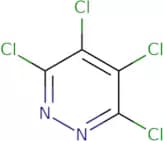
CAS:<p>Tetrachloropyridazine is a reactive chlorine atom that is a byproduct of the production of chlorofluorocarbons. It is an intermediate in the synthesis of the pesticide DDT. The molecule is also used as a reagent in organic synthesis and in the synthesis of other compounds such as trifluoroacetic acid, nitro, and diazonium salt. Tetrachloropyridazine has been shown to be cytotoxic against cancer cells. Tetrachloropyridazine reacts with DNA at N7-position on purines, leading to its reactivity with nucleophiles such as amines and alcohols. The reaction mechanism begins with nucleophilic attack on the electron deficient nitrogen atoms, followed by elimination of hydrogen chloride and formation of a stable heterocycle.</p>Formula:C4Cl4N2Purity:Min. 95%Molecular weight:217.87 g/mol5-Chloropentanal
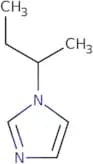
CAS:<p>5-Chloropentanal is an asymmetric synthesis of β-unsaturated aldehydes that was achieved by using a functional group. The presence of the hydroxyl group in this molecule is what gives it its enantioselectivity. This compound has been shown to be active against influenza virus and has been used as a lead compound for the development of anti-influenza compounds. 5-Chloropentanal also has the ability to react with cyanosilylation, which can be used to synthesize peptides or other biomolecules. This chemical can also be used as an intermediate in the synthesis of dimethyl fumarate, which is an effective treatment for multiple sclerosis.</p>Purity:Min. 95%1-(Butan-2-yl)-1H-imidazole
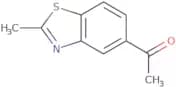
CAS:<p>Versatile small molecule scaffold</p>Formula:C7H12N2Purity:Min. 95%Molecular weight:124.18 g/mol1-(2-Methyl-1,3-benzothiazol-5-yl)ethan-1-one
CAS:<p>Versatile small molecule scaffold</p>Formula:C10H9NOSPurity:Min. 95%Molecular weight:191.25 g/mol4-Chloro-2-[(4-chlorophenyl)sulfanyl]benzoic acid
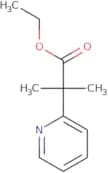
CAS:<p>Versatile small molecule scaffold</p>Formula:C13H8Cl2O2SPurity:Min. 95%Molecular weight:299.2 g/molEthyl 2-methyl-2-(pyridin-2-yl)propanoate
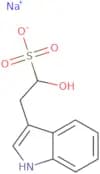
CAS:<p>Versatile small molecule scaffold</p>Formula:C11H15NO2Purity:Min. 95%Molecular weight:193.24 g/molSodium 1-Hydroxy-2-(1H-indol-3-yl)ethane-1-sulfonate
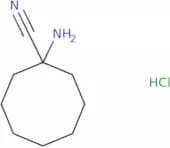
CAS:<p>Versatile small molecule scaffold</p>Formula:C10H10NO4S·NaPurity:Min. 95%Molecular weight:263.24 g/mol1-Aminocyclooctane-1-carbonitrile hydrochloride
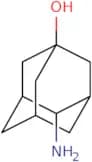
CAS:Versatile small molecule scaffoldFormula:C9H17ClN2Purity:Min. 95%Molecular weight:188.7 g/mol4-Aminoadamantan-1-ol hydrochloride
CAS:<p>4-Aminoadamantan-1-ol hydrochloride is a synthetic compound that can be synthesized by reacting methanol with hydroxylamine in the presence of a high yield salt. The salt formation and recrystallization process are required for obtaining 4-Aminoadamantan-1-ol hydrochloride. The synthesis process is patented, and the hydrogenation reduction is performed using the Raney nickel catalyst. The patent for the synthesis process has expired, and it is now commercially available.</p>Formula:C10H18ClNOPurity:Min. 95%Molecular weight:203.71 g/mol3-(Isopropylamino)propanamide
CAS:<p>Versatile small molecule scaffold</p>Formula:C6H14N2OPurity:Min. 95%Molecular weight:130.19 g/molRef: 3D-VAA10189
1gTo inquire5gTo inquire10gTo inquire25mg333.00€250mg1,242.00€500mgTo inquire2500mg1,146.00€2-(4-Chlorophenyl)acetamide
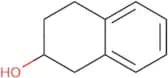
CAS:<p>2-(4-Chlorophenyl)acetamide is an imidazole that has been shown to bind the sirtuin. Sirtuins are enzymes that regulate cellular metabolism and play a role in the aging process. This drug binds to sirtuin and prevents it from binding with NAD+, which is needed for the enzyme's activity. 2-(4-Chlorophenyl)acetamide also inhibits mitogen-activated protein kinase, which plays a role in regulating cell growth and differentiation, as well as inhibiting amide hydrolysis, which leads to its anti-inflammatory effects. 2-(4-Chlorophenyl)acetamide has been shown to inhibit the activity of benzodiazepine receptors. It also has a kinetic reaction with carbonyl compounds and tetrahydrofuran, leading to its dihedral structure.</p>Formula:C8H8ClNOPurity:Min. 95%Molecular weight:169.61 g/mol(2S)-1,2,3,4-Tetrahydronaphthalen-2-ol
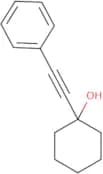
CAS:<p>Versatile small molecule scaffold</p>Formula:C10H12OPurity:Min. 95%Molecular weight:148.2 g/mol1-(Phenylethynyl)cyclohexanol
CAS:<p>Versatile small molecule scaffold</p>Formula:C14H16OPurity:Min. 95%Molecular weight:200.28 g/mol1-((1-(Benzoyloxy)propan-2-yl)oxy)propan-2-yl benzoate
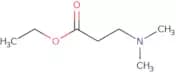
CAS:<p>1-((1-(Benzoyloxy)propan-2-yl)oxy)propan-2-yl benzoate is a synthetic compound that has been shown to inhibit the growth of bacteria by inhibiting enzyme activities in the bacterial cell. It binds to DNA polymerase and prevents the extension of the 3' end of DNA. It also inhibits other enzymes such as RNA polymerase, ribonuclease H, and DNA gyrase. 1-((1-(Benzoyloxy)propan-2-yl)oxy)propan-2-yl benzoate has been shown to be effective against E. coli, which is resistant to many antibiotics because it lacks a cytoplasmic membrane. This compound also inhibits cyclic peptide activity in bacteria, a reaction that is important for growth and replication. The mechanism for this inhibition is not known but may involve hydrophobic interactions or an electrostatic effect.</p>Formula:C20H22O5Purity:Min. 95%Molecular weight:342.4 g/molEthyl 3-(dimethylamino)propanoate
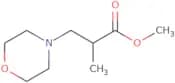
CAS:<p>Ethyl 3-(dimethylamino)propanoate is an organic compound that is soluble in organic solvents and has a boiling point of 114°C. This compound is used to extract metals such as copper, lead, nickel, and zinc from their ores. It also can be used to preconcentrate analytes in the fields of analytical chemistry, food chemistry, and environmental studies. The microextraction technique employs this solvent because it has high efficiency and low analyte loss due to its extraction properties. The solubility of this compound makes it useful for extracting analytes from inorganic samples. This solvent can be switched between being a good solvent for polar compounds and lipids by adjusting the pH level.</p>Formula:C7H15NO2Purity:Min. 95%Molecular weight:145.2 g/molMethyl 2-methyl-3-morpholin-4-ylpropanoate
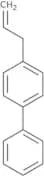
CAS:<p>Versatile small molecule scaffold</p>Formula:C9H17NO3Purity:Min. 95%Molecular weight:187.24 g/mol3-(4-Biphenyl)-1-propene
CAS:<p>Versatile small molecule scaffold</p>Formula:C15H14Purity:Min. 95%Molecular weight:194.27 g/mol3-[1-(Carboxymethyl)cyclohexyl]propanoic acid
CAS:Versatile small molecule scaffoldFormula:C11H18O4Purity:Min. 95%Molecular weight:214.26 g/mol


![4-Chloro-2-[(4-chlorophenyl)sulfanyl]benzoic acid](/_next/image/?url=https%3A%2Fstatic.cymitquimica.com%2Fproducts%2F3D%2Fthumb-webp%2FVAA09254.webp&w=3840&q=75)



![3-[1-(Carboxymethyl)cyclohexyl]propanoic acid](/_next/image/?url=https%3A%2Fstatic.cymitquimica.com%2Fproducts%2F3D%2Fthumb-webp%2FVAA12708.webp&w=3840&q=75)