Building Blocks
This section contains fundamental products for the synthesis of organic and biological compounds. Building blocks are the essential starting materials used to construct complex molecules through various chemical reactions. They play a critical role in drug discovery, material science, and chemical research. At CymitQuimica, we offer a diverse range of high-quality building blocks to support your innovative research and industrial projects, ensuring you have the essential components for successful synthesis.
Subcategories of "Building Blocks"
- Boronic Acids & Boronic Acid Derivatives(5,778 products)
- Chiral Building Blocks(1,243 products)
- Hydrocarbon Building Blocks(6,097 products)
- Organic Building Blocks(61,052 products)
Found 201390 products of "Building Blocks"
Sort by
Purity (%)
0
100
|
0
|
50
|
90
|
95
|
100
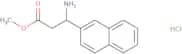
Methyl 3-amino-3-(naphthalen-2-yl)propanoate hydrochloride
CAS:Versatile small molecule scaffoldFormula:C14H16ClNO2Purity:Min. 95%Molecular weight:265.73 g/molMethyl (2S)-2-bromo-2-[(4S)-2,2-dimethyl-1,3-dioxolan-4-yl]acetate
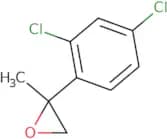
CAS:Versatile small molecule scaffoldFormula:C8H13BrO4Purity:Min. 95%Molecular weight:253.09 g/mol2-(2,4-Dichlorophenyl)-2-methyloxirane
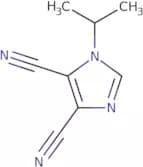
CAS:<p>Versatile small molecule scaffold</p>Formula:C9H8Cl2OPurity:Min. 95%Molecular weight:203.06 g/mol1-(Propan-2-yl)-1H-imidazole-4,5-dicarbonitrile
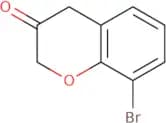
CAS:Versatile small molecule scaffoldFormula:C8H8N4Purity:Min. 95%Molecular weight:160.18 g/mol8-Bromochroman-3-one
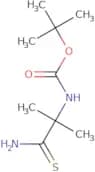
CAS:<p>Versatile small molecule scaffold</p>Formula:C9H7O2BrPurity:Min. 95%Molecular weight:227.05 g/moltert-Butyl N-(1-carbamothioyl-1-methylethyl)carbamate
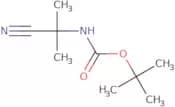
CAS:Versatile small molecule scaffoldFormula:C9H18N2O2SPurity:Min. 95%Molecular weight:218.32 g/moltert-Butyl N-(1-cyano-1-methylethyl)carbamate
CAS:<p>Versatile small molecule scaffold</p>Formula:C9H16N2O2Purity:Min. 95%Molecular weight:184.24 g/mol2-{[(3-Methylphenyl)carbamoyl]amino}acetic acid
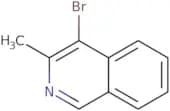
CAS:<p>Versatile small molecule scaffold</p>Formula:C10H12N2O3Purity:Min. 95%Molecular weight:208.21 g/mol4-Bromo-3-methyl-isoquinoline
CAS:<p>Versatile small molecule scaffold</p>Formula:C10H8BrNPurity:Min. 95%Molecular weight:222.08 g/mol(1R,4R)-2-Methyl-2,5-diazabicyclo[2.2.1]heptane diHBr
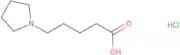
CAS:<p>Versatile small molecule scaffold</p>Formula:C6H14Br2N2Purity:Min. 95%Molecular weight:274 g/mol5-(Pyrrolidin-1-yl)pentanoic acid hydrochloride
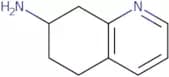
CAS:Versatile small molecule scaffoldFormula:C9H18ClNO2Purity:Min. 95%Molecular weight:207.7 g/mol5,6,7,8-Tetrahydroquinolin-7-amine
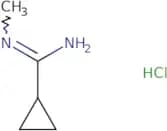
CAS:<p>Versatile small molecule scaffold</p>Formula:C9H12N2Purity:Min. 95%Molecular weight:148.2 g/molN-Methylcyclopropanecarboximidamide hydrochloride
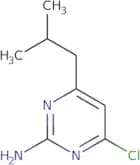
CAS:Versatile small molecule scaffoldFormula:C5H11ClN2Purity:Min. 95%Molecular weight:134.61 g/mol4-Chloro-6-(2-methylpropyl)pyrimidin-2-amine
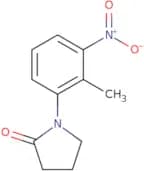
CAS:Versatile small molecule scaffoldFormula:C8H12ClN3Purity:Min. 95%Molecular weight:185.65 g/mol1-(2-Methyl-3-nitrophenyl)pyrrolidin-2-one
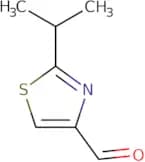
CAS:Versatile small molecule scaffoldFormula:C11H12N2O3Purity:Min. 95%Molecular weight:220.22 g/mol2-Isopropyl-1,3-thiazole-4-carboxaldehyde
CAS:<p>Ritonavir is a protease inhibitor that belongs to the class of HIV-1 protease inhibitors. It inhibits the activity of the virus by binding to the active site of the enzyme and blocking it from cleaving proteins. Ritonavir is used with other antiretroviral drugs as part of highly active antiretroviral therapy (HAART). This drug is also used in combination with other protease inhibitors, such as indinavir and saquinavir, to treat HIV infections that are resistant to these drugs. In some cases, ritonavir can be administered without a booster agent such as cobicistat or lopinavir/ritonavir. This drug has been shown to have pharmacokinetic parameters that are similar in healthy volunteers and patients infected with HIV-1.</p>Formula:C7H9NOSPurity:Min. 95%Molecular weight:155.22 g/mol(2E)-3-(1,3-Thiazol-4-yl)prop-2-enoic acid
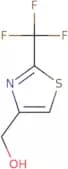
CAS:Versatile small molecule scaffoldFormula:C6H5NO2SPurity:Min. 95%Molecular weight:155.2 g/mol(2-(Trifluoromethyl)thiazol-4-yl)methanol
CAS:(2-(Trifluoromethyl)thiazol-4-yl)methanol is a benzimidazole derivative that inhibits the activity of imidazopyridine N-acetyltransferase, which is an enzyme involved in the synthesis of histamine. It has shown to be selective for this enzyme and not affect other enzymes related to histamine synthesis. (2-(Trifluoromethyl)thiazol-4-yl)methanol does not show mutagenicity or genotoxicity in f344 rats and has a low safety profile when tested on humans. This drug has been shown to have antiobesity effects, which are likely due to its inhibition of histamine synthesis.Formula:C5H4F3NOSPurity:Min. 95%Molecular weight:183.15 g/molEllagic Acid Dihydrate
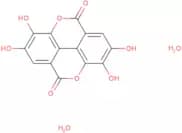
CAS:<p>Ellagic acid is a potent inhibitor of the uptake of carbon nanotubes in animals. It also has antiviral properties, which may be due to its reactive oxygen species-generating properties. Ellagic acid has been shown to inhibit the proliferation of human T cells in vitro and induce apoptosis. This compound also inhibits the growth of cervical cancer cells and blocks viral replication by inhibiting viral protein synthesis. Ellagic acid can be used as a structural biology probe to investigate the reaction between cellulose derivatives and molecules. It is also used in pharmaceutical preparations such as anti-cancer drugs and treatments for herpes simplex type I virus infections.</p>Formula:C14H6O8·2H2OPurity:Min. 95%Molecular weight:338.22 g/mol1-(2,2,2-Trifluoroethoxy)propan-2-ol
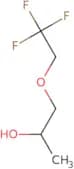
CAS:Versatile small molecule scaffoldFormula:C5H9F3O2Purity:Min. 95%Molecular weight:158.12 g/mol

![Methyl (2S)-2-bromo-2-[(4S)-2,2-dimethyl-1,3-dioxolan-4-yl]acetate](/_next/image/?url=https%3A%2Fstatic.cymitquimica.com%2Fproducts%2F3D%2Fthumb-webp%2FIFA14909.webp&w=3840&q=75)
![2-{[(3-Methylphenyl)carbamoyl]amino}acetic acid](/_next/image/?url=https%3A%2Fstatic.cymitquimica.com%2Fproducts%2F3D%2Fthumb-webp%2FIFA11537.webp&w=3840&q=75)
![(1R,4R)-2-Methyl-2,5-diazabicyclo[2.2.1]heptane diHBr](/_next/image/?url=https%3A%2Fstatic.cymitquimica.com%2Fproducts%2F3D%2Fthumb-webp%2FIFA09795.webp&w=3840&q=75)